The landscape of Catalan Modernism is illuminated by an exceptional discovery that redefines our understanding of one of the most powerful images in its history: the genesis of La Sargantain. It is not every day that one has the privilege of contemplating the birth of an icon, but the appearance of the primordial version of this fundamental work offers us precisely that: a direct window into the creative process of Ramon Casas and the exact moment when the muse became a legend.
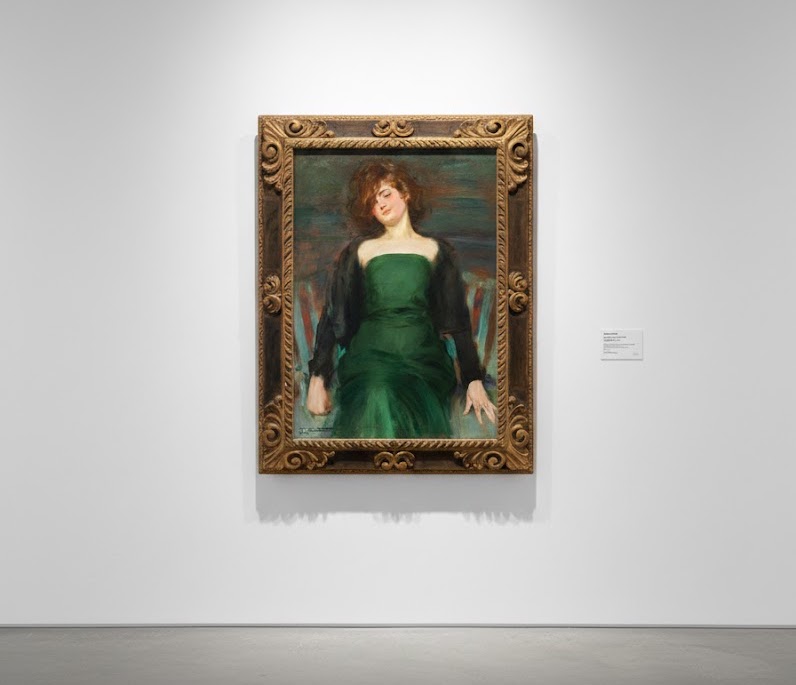
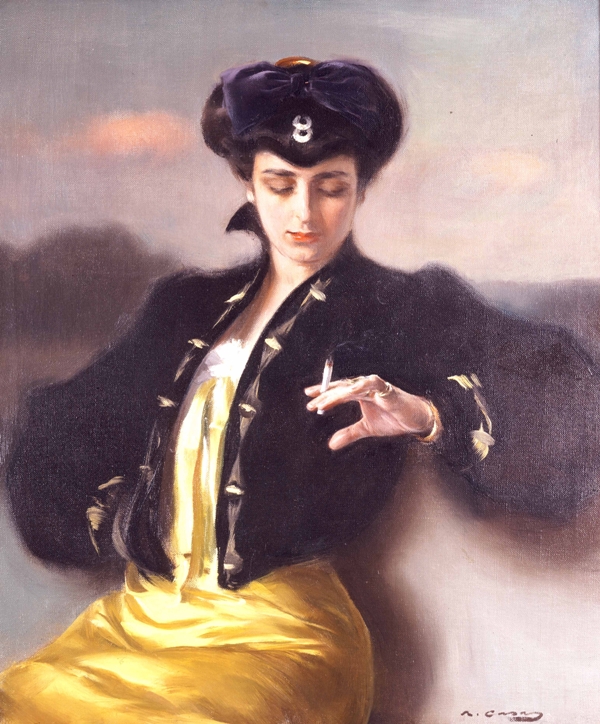
This oil on canvas, identified and certified after an exhaustive study, represents an unprecedented historiographical milestone in the production of Ramon Casas. This is not a simple copy or a minor sketch, but a key piece that allows us to reconstruct the creative process that culminated in the famous work preserved in the Círculo del Liceo. It is well known that Casas, in his most ambitious compositions, worked by means of successive approximations -a method he already applied in masterpieces such as El cigarrillo-and this canvas is the living testimony of that tireless search for perfection.
Ramon Casas and the creative process of La Sargantain
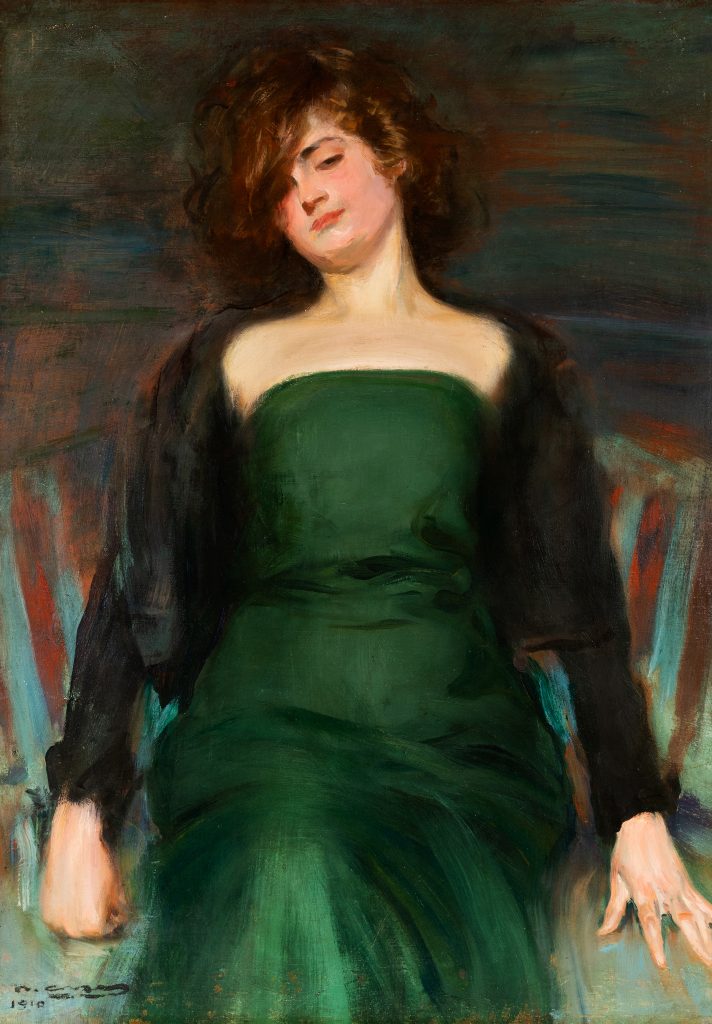
In the context of Catalan modernism, this discovery is fundamental, as it allows us to understand how Ramon Casas progressively refined an aesthetic of sensuality until it became a language of his own.
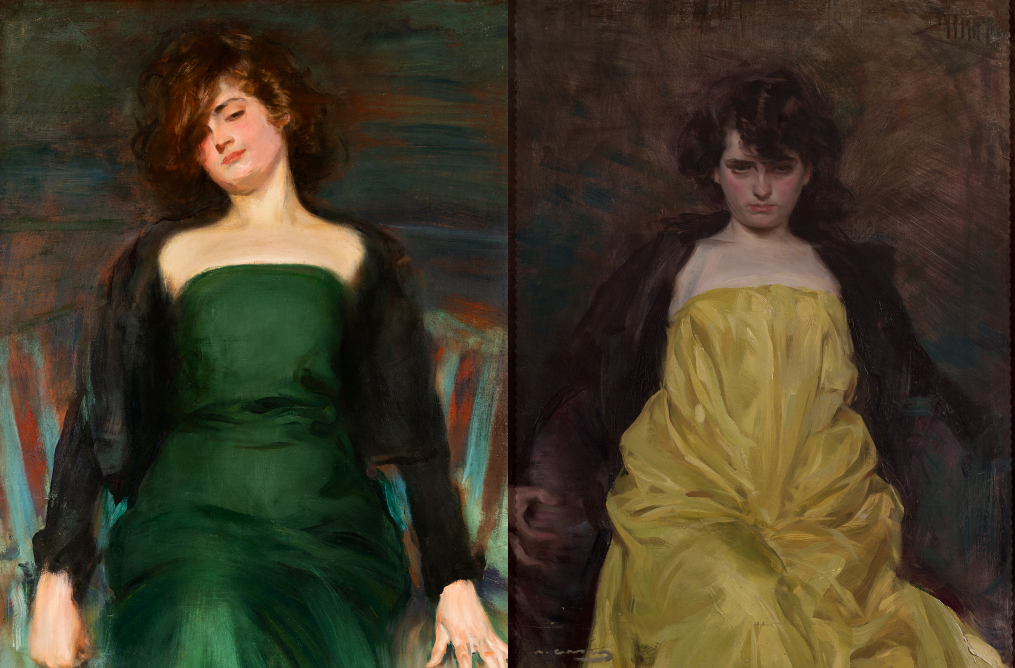
What makes this work truly fascinating are the secrets it reveals about the evolution of the painting. Painted around 1906, when the idyll between Casas and the young Júlia Peraire was just beginning, the painting shows us chromatic and compositional solutions that the artist would decide to veil in the final version of La Sargantain. Here, Júlia does not wear the iconic yellow, but a dark green dress of magnetic elegance, seated on a turquoise French-style chair that Ramon Casas himself brought from Paris in 1900. Even her hands, which in the final work were hidden or simplified by the author’s perfectionist eagerness, appear here with an astonishing naturalness, showing the confidence of a woman who was about to break all the molds of the time.
Júlia Peraire: muse, symbol and modernity
The importance of this finding within the work of Ramon Casas is incalculable. It places Júlia Peraire once again at the epicenter of Catalan modernism, not as a passive model, but as a symbolic construction of the modern woman. Barely 18 years old at the time of this execution, Júlia already embodied that liberal and sensual ideal that challenged the social conservatism of Barcelona. In her brushstrokes one can perceive the fascination of a fully enamored Casas, capable of capturing a psychological charge that only the first contact with the muse can generate.
The irruption of Júlia Peraire in the life of Ramon Casas was not only a romance, but an earthquake that forever transformed his pictorial language. At a time when the female portrait was constrained by the rigid conventions of the Catalan bourgeoisie, the appearance of this young lottery seller was a head-on collision with the conservatism of the time. While Barcelona’s bien-pensant society looked askance at a relationship that defied class barriers, Casas found in her a disturbing authenticity that led him to abandon academic restraint. His love for Júlia acted as the catalyst for a new style of portraiture: one that was more carnal, psychological and direct, where the model’s gaze no longer sought the viewer’s approval, but questioned him with a freedom unknown until then.
A key rediscovery of Catalan modernisme
Certified by Adrià Codina Ferrer, the legitimate representative of the artist’s heirs, this original “Sargantain” not only rewrites a fundamental chapter in the history of Spanish art, but also offers a unique opportunity at Setdart’s next auction. It is an invitation to own the origin of a myth, the first breath of a work that, more than a century later, continues to captivate with its mystery and undeniable modernity.
If you liked this blog you may also be interested in: