The concept of the wall as a canvas does not arise in isolation, but as a response to the saturation of the metropolis. Before Sarah Grilo turned urban typography into poetry, other pioneers had already understood that the wall is the raw record of collective existence, accumulated layer after layer.
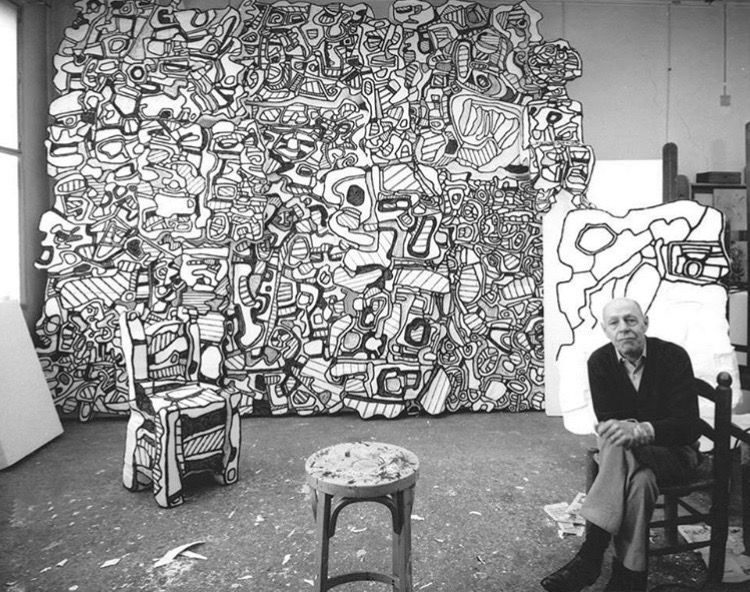
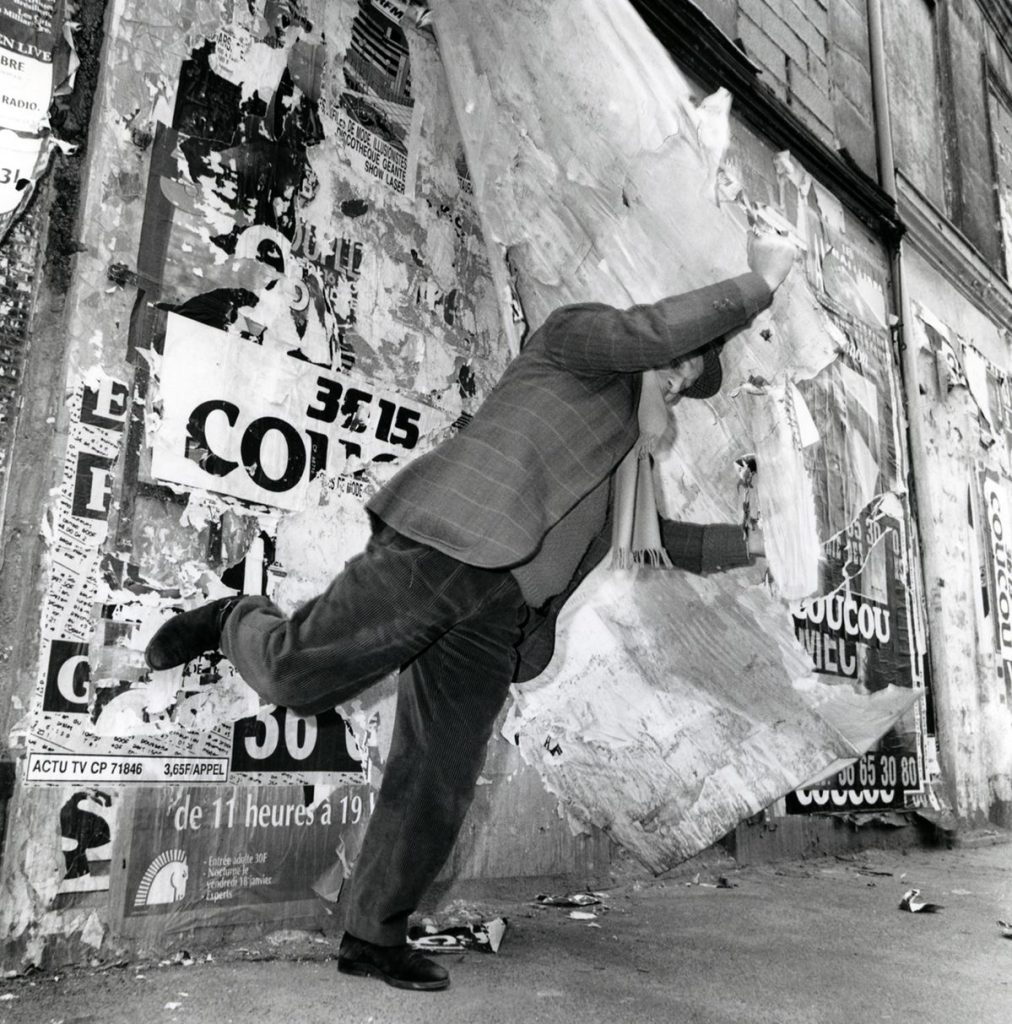
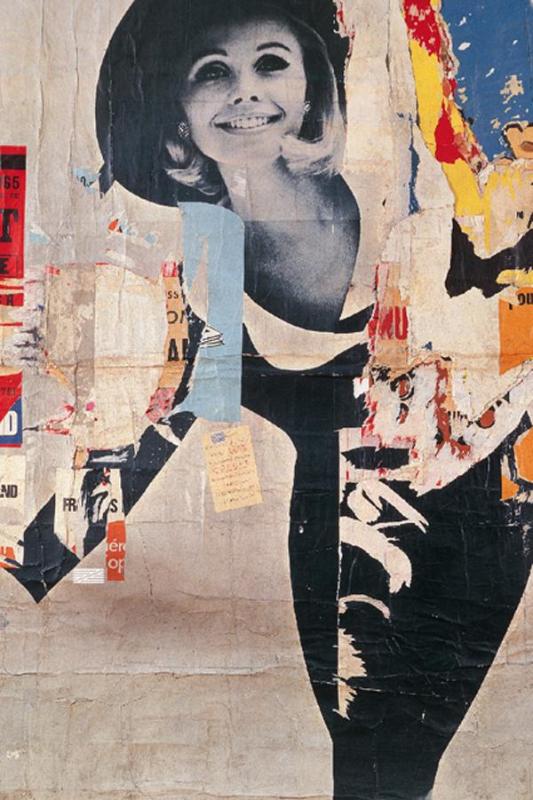
The first antecedents are to be found in European Informalism and Art Brut, where figures like Jean Dubuffet discovered in the walls of Paris -scratched and worn down by the war- a truth that refined painting concealed. This impulse was joined by French affichistes, such as Raymond Hains or Jacques Villeglé, who in the 1950s did not paint, but rather “hijacked” the city by tearing off superimposed posters and revealing the beauty of tearing and the randomness of urban stratification.
The wall in Spain: from El Paso to Antoni Tàpies
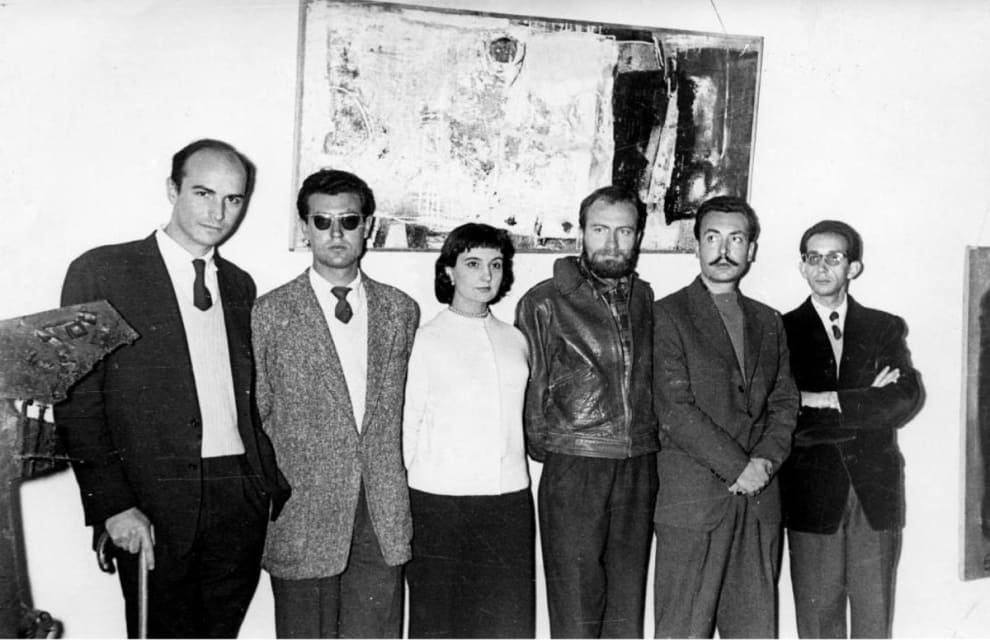
In the Spanish context, this interest in rough surface and material density acquired an almost mystical dimension. While the El Paso group in Madrid explored the wound and the dramatic gesture, Antoni Tàpies elevated the wall to a spiritual category. For Tàpies, the wall was an object of meditation, a block of sand and dust loaded with hermetic signs that referred to the eternal. However, while he was searching for the metaphysical in matter, a different current was beginning to emerge: the city understood not as sacred stone, but as a palimpsest of human communication.
Sarah Grilo and the wall as urban language
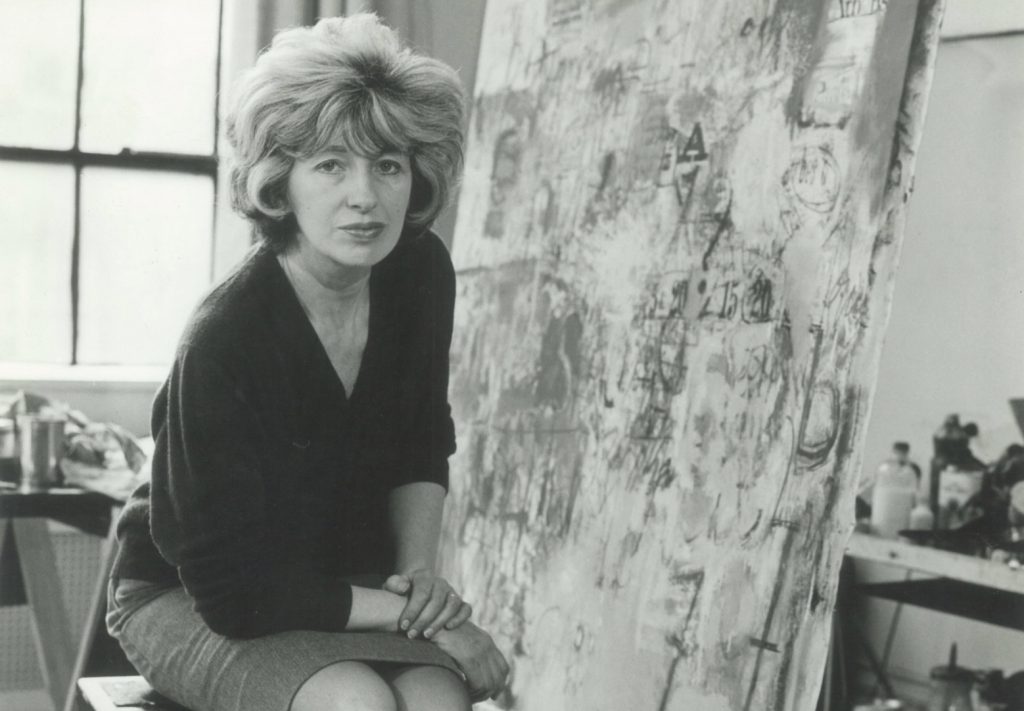
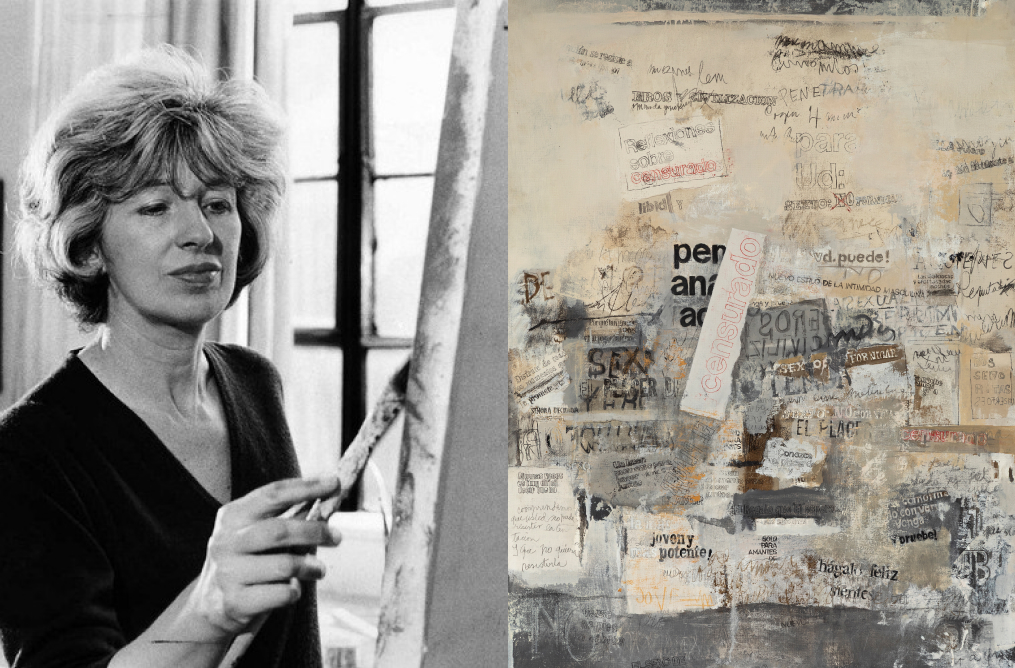
This is where the figure of Sarah Grilo (1917-2007) is revolutionary. After her time in the effervescent New York of the 1960s, Grilo returned to Madrid linked to the Juana Mordó Gallery, bringing with her a look that fused the elegance of the School of Paris with the dynamism of the incipient New York graffiti.
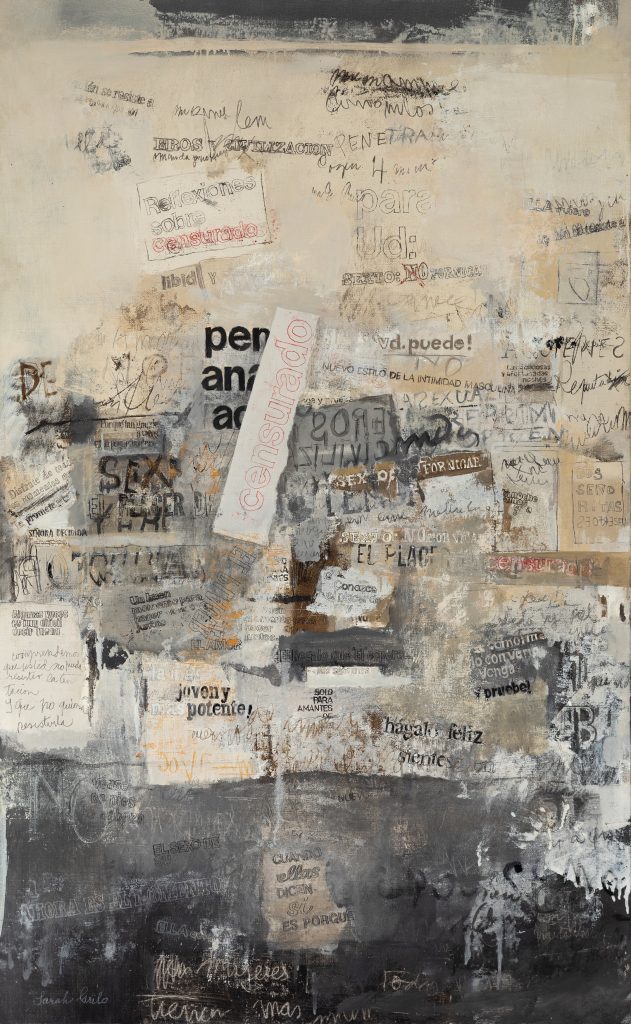
For Sarah Grilo, the wall ceased to be a static surface to become a living, noisy organism. In works such as Eros and Civilization (c. 1970), Sarah Grilo not only pays homage to the tension between instinct and norm -in dialogue with the thought of Herbert Marcuse-, but also captures the vibrant essence of the urban trace. Her painting integrates sign and letter as fragments of memory: they are not legible messages, but echoes of advertising, anonymous figures and erasures that evoke censorship, transit and oblivion.
Unlike the European informalists, Sarah Grilo brings an almost musical lightness. Her surfaces are neither dense nor somber, but dynamic, full of glazes that suggest that the city is built by the sum of anonymous voices. In Sarah Grilo’s work, the wall ceases to be a wound and becomes a rhythm, a visual score where gesture dialogues with urban typography.
Between abstract expressionism and urban art
By transforming the visual waste of the street into a composition of high pictorial maturity, Sarah Grilo established herself as an essential bridge between abstract expressionism and certain sensibilities that would later develop contemporary urban art. Her work demonstrates that in the apparent “dirt” of a wall hides, in reality, the most genuine memory of our civilization.
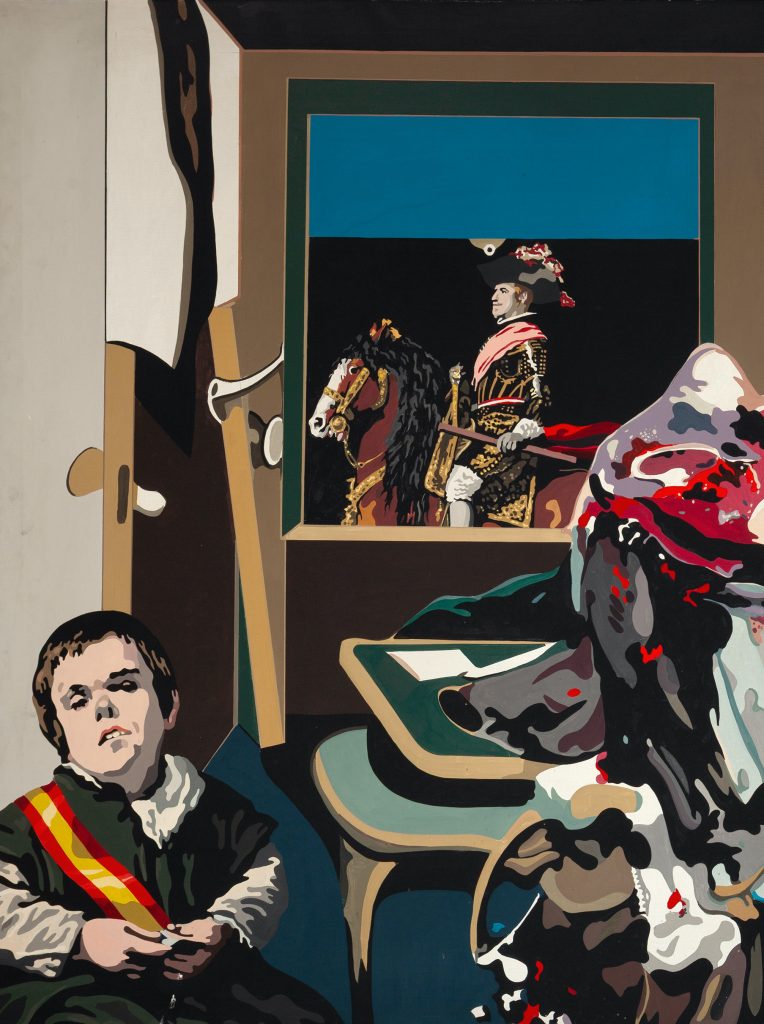
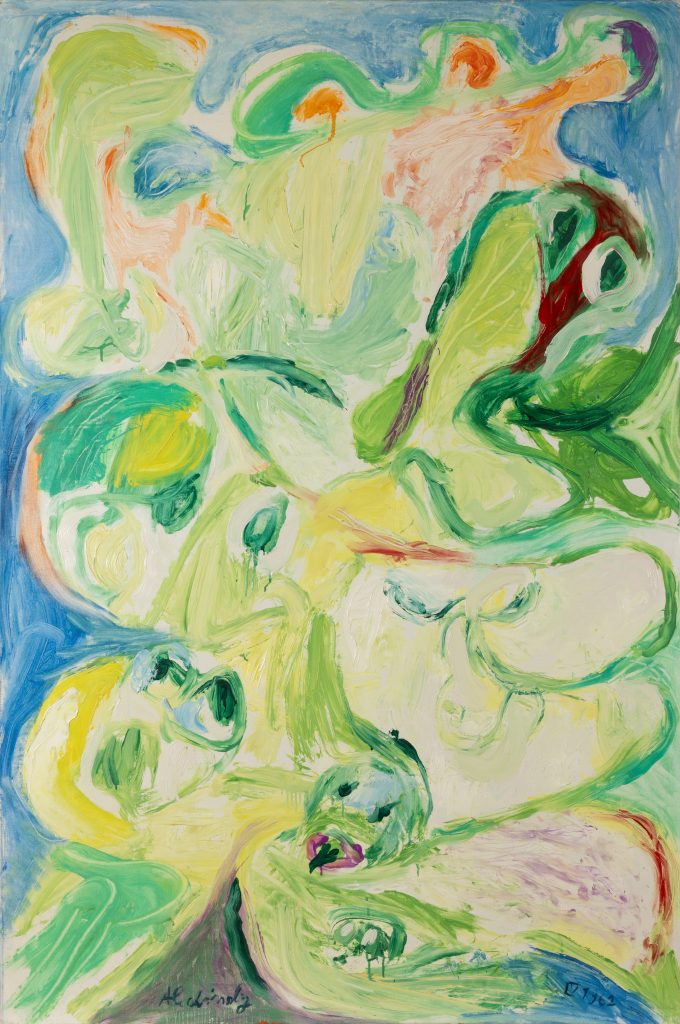
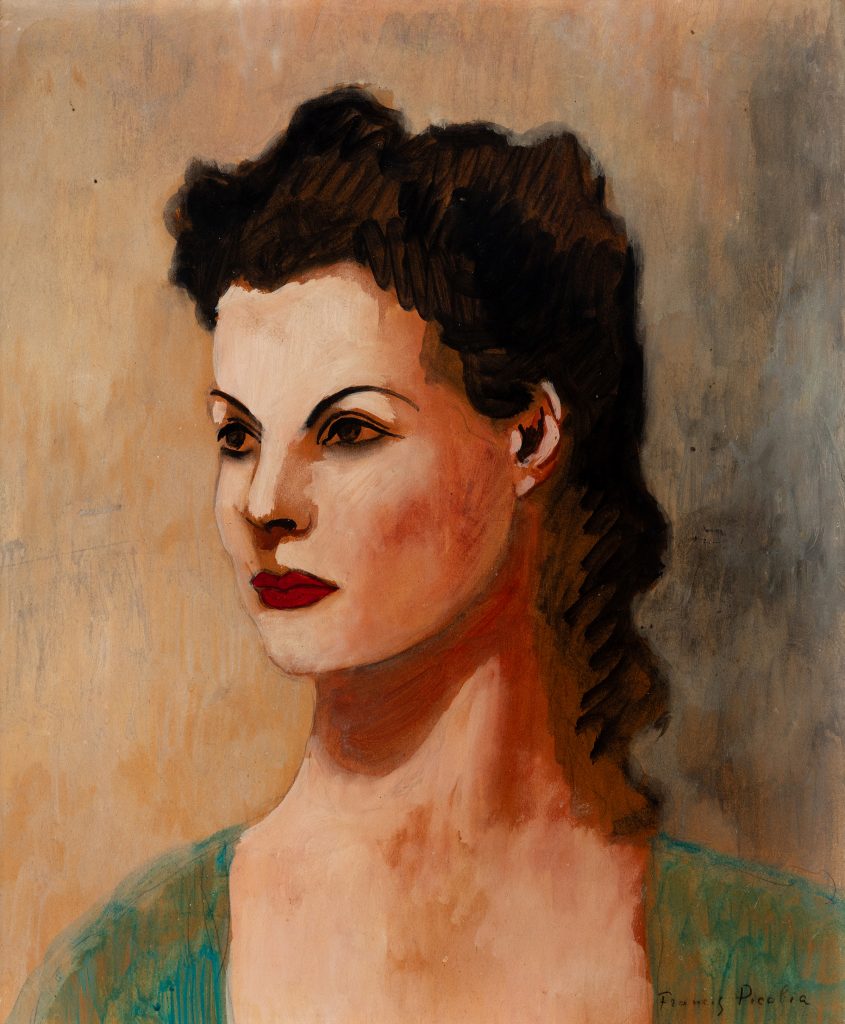
We invite you to explore the Contemporary Art auction on March 19, where you can discover works that showcase the richness and diversity of 20th and 21st century art. Sarah Grilo, Francis Picabia, Pierre Alechinsky, Equipo Crónica, Antonio Saura, Antoni Clavé and many other artists make up this careful selection that we present in Setdart.
Do you have a collection or several works of Contemporary Art and you are thinking of selling them? At Setdart, your pieces will have international visibility and access to first class collectors, maximizing the chances of achieving the best result.