For much of the 20th century, Brazil was the setting for one of the most unique episodes in the history of modern design. While Europe was exploring the possibilities of industrial production and new materials, a generation of Brazilian architects and designers began to formulate a different kind of modernity: one deeply connected to the land, the climate, local ways of life, and, most notably, the extraordinary richness of its woods.
The result was a style that could hardly be confused with any other. Tropical woods, exposed structural elements, organic forms, and a particularly close relationship between craftsmanship, architecture, and furniture gave rise to pieces that are now part of the international canon of 20th-century design.
In the history of Brazilian design, Joaquim Tenreiro and José Zanine Caldas represent two particularly interesting approaches. Separated by a generation and with very different career paths, both found in wood not only a material with which to build furniture, but a true language.
Two works featured in Setdart’s upcoming Design Auction, to be held on October 13, offer a glimpse into these two perspectives on Brazilian design.
Joaquim Tenreiro: Lightness and Precision
Born in Portugal in 1906 and based in Brazil, Joaquim Tenreiro became one of the key figures in the renewal of Brazilian furniture design during the middle decades of the 20th century.
His contribution is particularly interesting because he combined a deep understanding of cabinetmaking with a quest for truly modern furniture. In contrast to the heaviness of much traditional furniture, Tenreiro developed visually light structures, clean lines, and forms capable of engaging with the new Brazilian architecture.
Wood remained the focal point, but it was treated with extraordinary sophistication.
MoMA itself currently houses his famous 1947 “Três Pés” chair, made of laminated wood, and highlights how its organic forms and the use of local woods contributed to the development of a distinctly Brazilian vocabulary of modernity.
Joaquim Tenreiro’s rocking chair, which Setdart will feature in its upcoming auction, dates from that same year, around 1947.
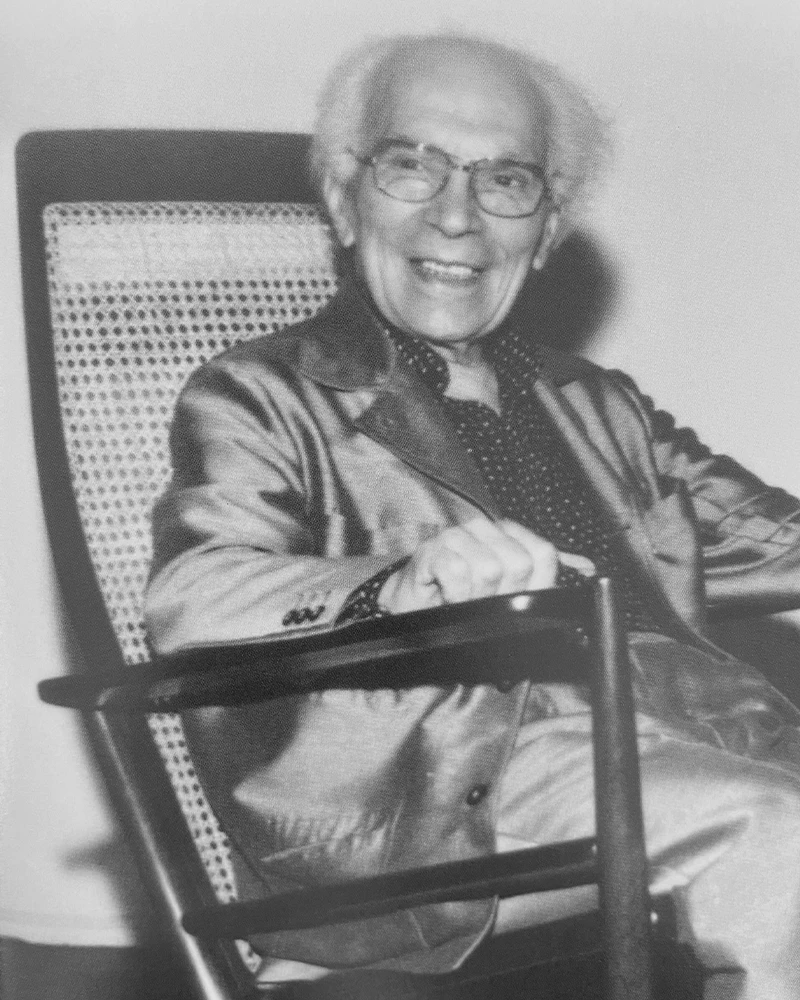
This type of chair had long been a fixture in Brazilian homes, but Tenreiro reinterpreted the traditional form through the lens of modernism. Other examples of his 1947 rocking chairs have been described precisely as a transformation of this Brazilian tradition through lightness and functionality.
In the piece presented by Setdart, this exploration is particularly evident in its silhouette. The long runners trace two curved lines along which an extraordinarily open structure appears to float. The arms, crossbars, and uprights visually lighten the weight of the rosewood, while the mesh backrest adds transparency and further accentuates that sense of lightness.
That is precisely where one of the great paradoxes of Tenreiro’s furniture lies: transforming a fine, visually striking wood into a structure that appears almost weightless.
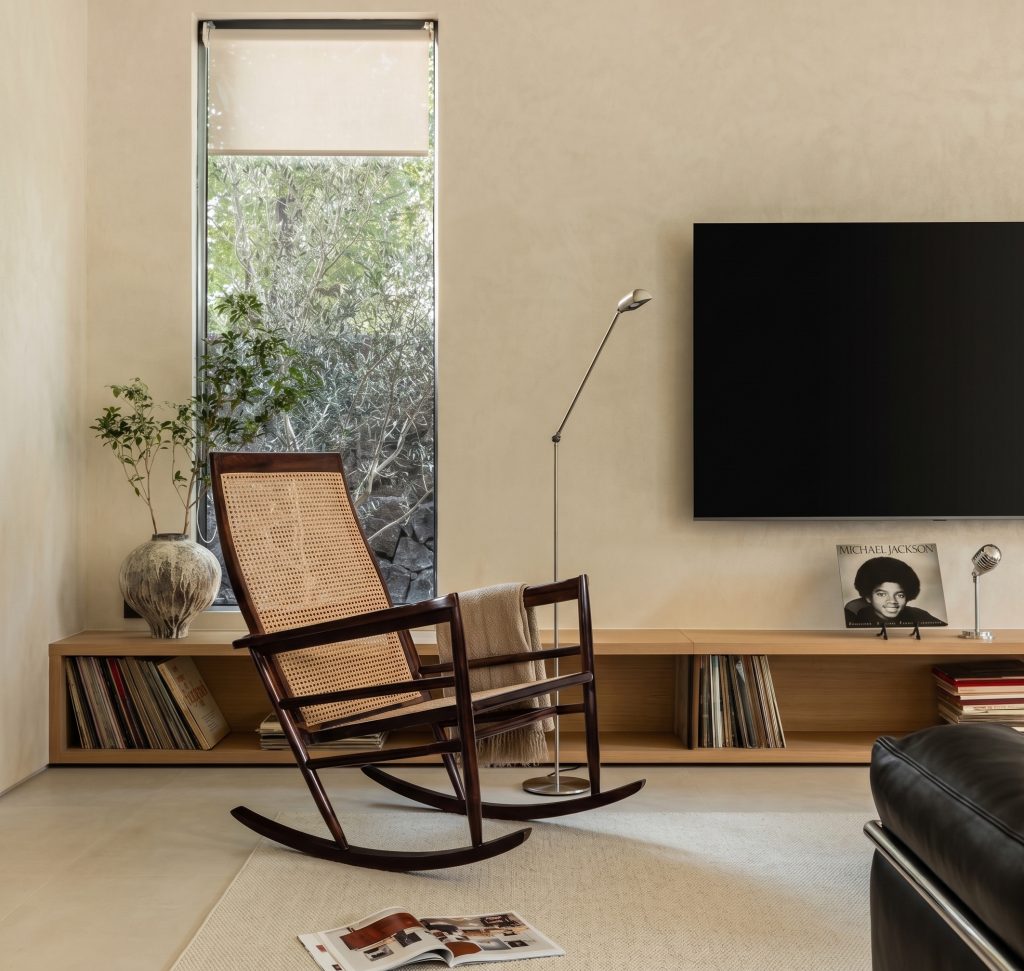
The piece also allows us to place it within a pivotal year for the designer. In 1947, Tenreiro opened his firm, Langenbach & Tenreiro, in Rio de Janeiro alongside Fernando Langenbach, and various sources date his first rocking chairs to this very period of early production.
The rocking chair, which is being auctioned with a starting price of 14,000 euros, thus serves as an excellent introduction to Tenreiro’s world: precision craftsmanship, structural economy, elegance, and a constant pursuit of lightness.
José Zanine Caldas: Wood as a Material
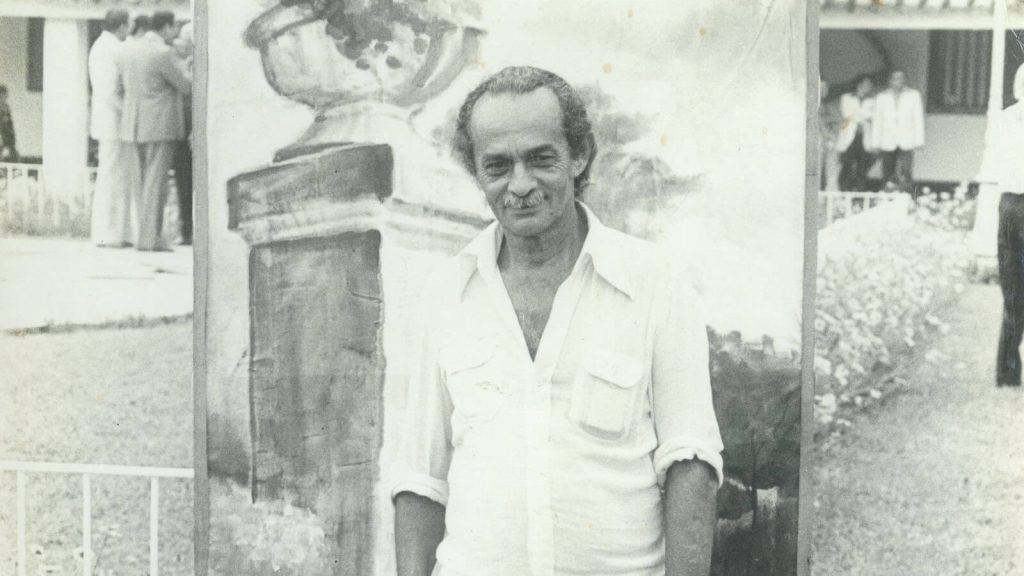
While Tenreiro’s work is characterized by precision, lightness, and refinement, in the work of José Zanine Caldas—another of the most prominent figures in Brazilian design—wood takes on a much more striking presence.
An architect, designer, model maker, and professor born in Bahia in 1919, Zanine developed an extraordinarily intense relationship with this material. The Museu de Arte Moderna do Rio de Janeiro notes that he became known as the “mestre da madeira”—master of wood—and highlights his interest in both its structural and aesthetic possibilities and in the reuse of wood from logging operations.
His career also highlights another of the fundamental tensions in 20th-century Brazilian design: industry versus craftsmanship.
In 1948, he founded Móveis Artísticos Z, where he worked with plywood and modernist-inspired industrial production methods. Decades later, his work would evolve toward a much more sculptural and direct approach to wood.
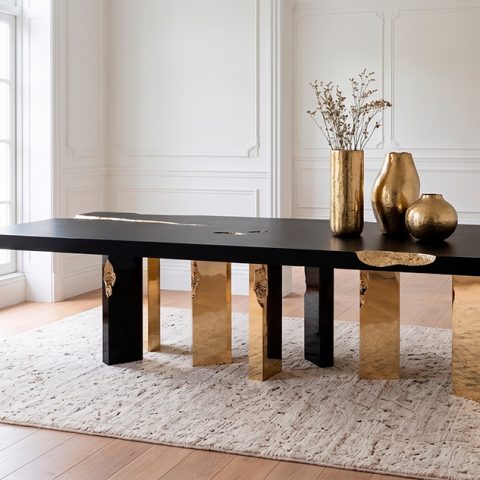
The table by José Zanine Caldas, which will be featured in Setdart’s upcoming auction, belongs precisely to that realm where the line between furniture and sculpture begins to blur.
Crafted from ciriba wood, it features a tabletop measuring 208 × 61 cm resting on a base 71 cm high. The design itself creates a striking contrast between the geometry of the tabletop and the organic form of the lower supports.
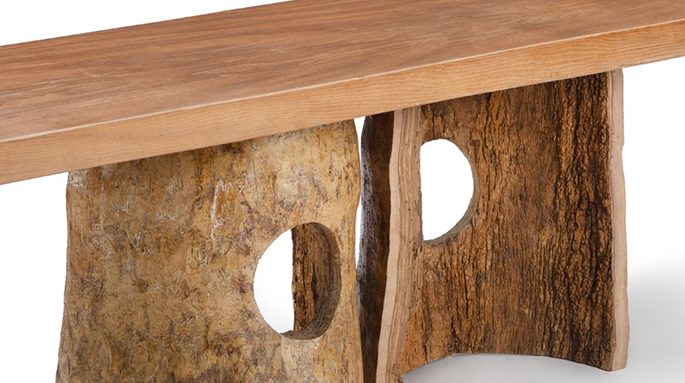
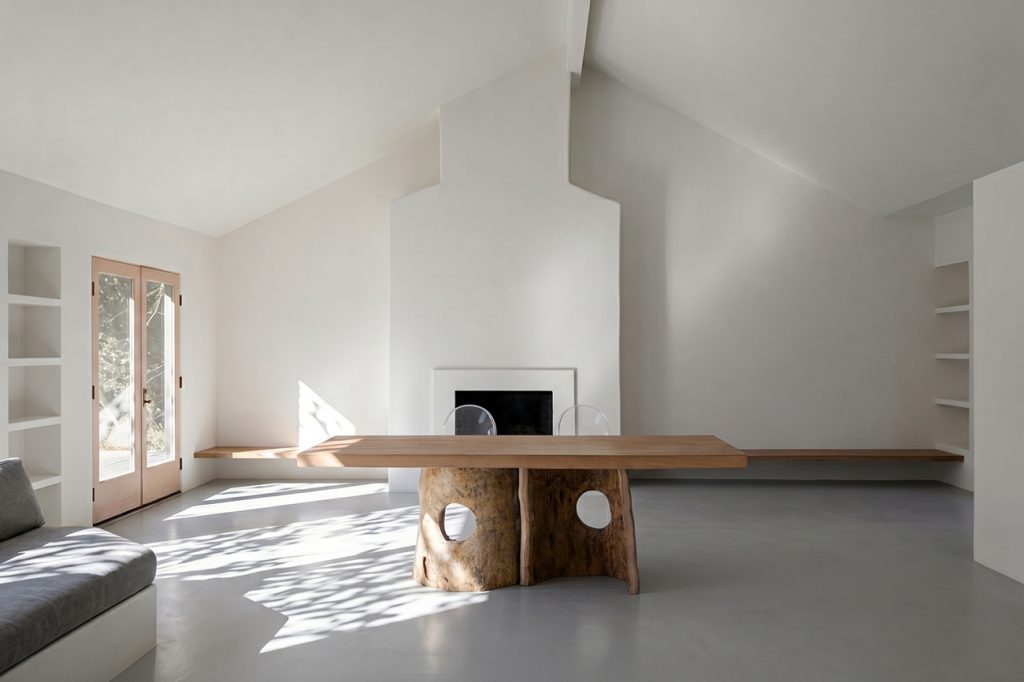
It is precisely these supports that transform the piece of furniture.
Instead of completely smoothing out the wood, its irregular contours and large natural cavities remain visible. The material is not subordinate to the design—it is part of the design. The tree’s markings remain recognizable and transform the base into a composition that is practically sculptural.
The tabletop, on the other hand, features a large horizontal surface with clean, simple lines. This creates a tension—very characteristic of Zanine—between geometry and nature, architecture and sculpture, function and material.
This is not merely a table designed to serve a domestic purpose. Its spatial presence helps explain why much of Zanine’s furniture occupies an ambiguous space between functional object and sculpture.
The table presented by Setdart, with a starting price of 10,000 euros, thus embodies some of the essential principles of the company’s work: the monumentality of wood, the acceptance of its irregularities, and the desire to reveal its true nature.
Brazilian design: an international benchmark
Contemplating both pieces allows us to understand the extraordinary diversity that lies beneath the umbrella term “Brazilian design.” Joaquim Tenreiro’s rocking chair and José Zanine Caldas’s table are both made from a common material—wood—but reveal two profoundly different ways of interpreting it. In Tenreiro’s work, the structure is refined to achieve a surprising sense of lightness; in Zanine’s, the material takes on a bold, organic, and almost sculptural presence. Tenreiro draws with wood; Zanine builds from it.
Two distinct languages that form part of one of the most unique chapters in 20th-century design. Alongside Tenreiro and Zanine Caldas, figures such as Sérgio Rodrigues, Jorge Zalszupin, Lina Bo Bardi, Martin Eisler, Carlo Hauner, and Oscar Niemeyer helped forge a distinctly Brazilian modern identity, while, decades later, Fernando and Humberto Campana took that spirit of experimentation into new territories.
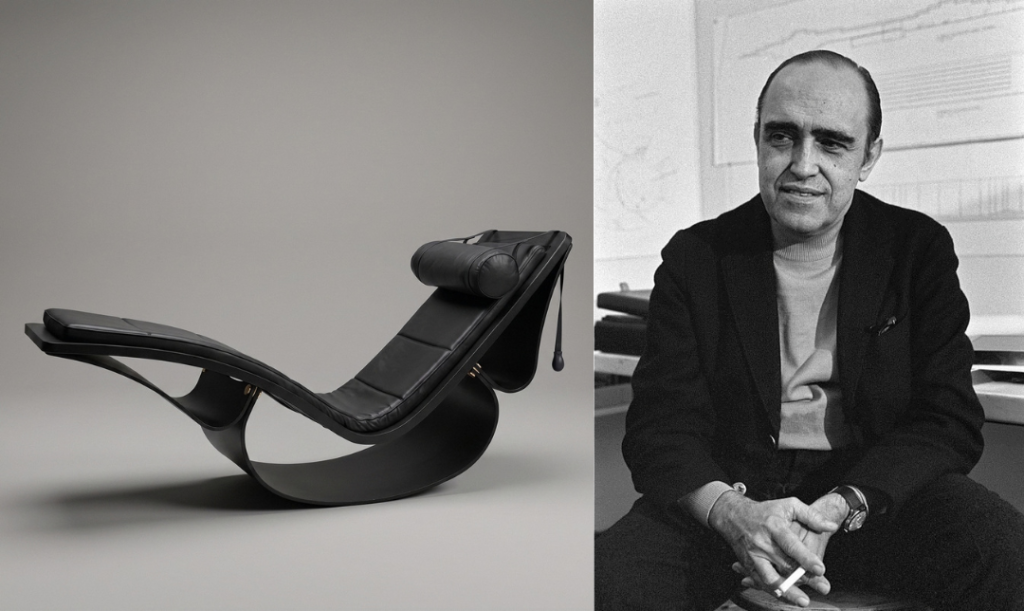
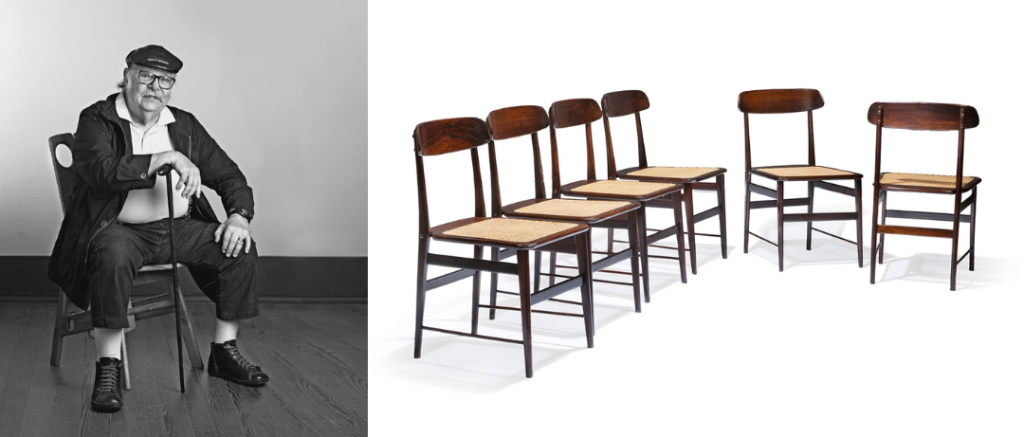
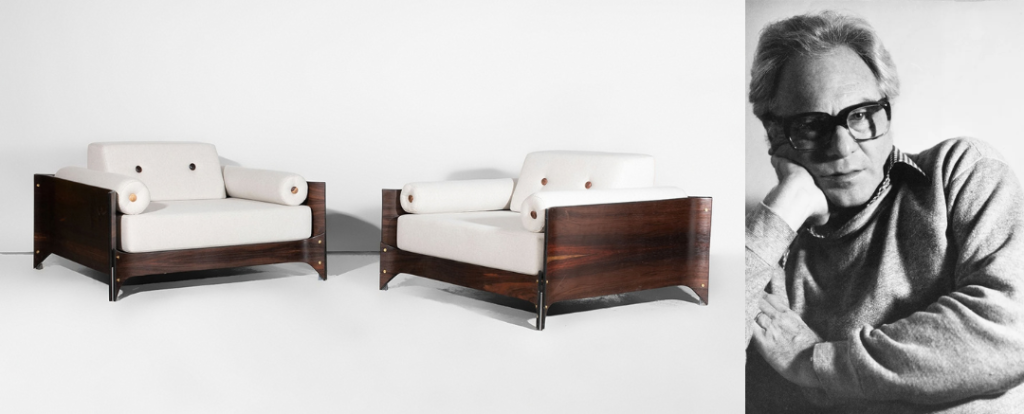
In recent years, this legacy has gained increasing international visibility, both among collectors and within institutions and research centers dedicated to the history of design. This attention has made it possible to reconsider Brazilian Modernism not as a peripheral offshoot of European movements, but as a distinct chapter in its own right, capable of reconciling modernity, artisanal tradition, formal innovation, and an exceptional relationship with indigenous materials.
That is precisely where much of its current appeal lies. There is no single formula for Brazilian design: we find everything from the sophistication and lightness of Tenreiro to the monumentality of Zanine Caldas, the sensuality of Sérgio Rodrigues’s forms, the constructive elegance of Zalszupin, and the radicalism of Lina Bo Bardi. Different approaches united by a shared desire to develop a modern language closely linked to Brazil’s cultural and material context.


Joaquim Tenreiro’s rocking chair, c. 1947, and José Zanine Caldas’s table—the highlights of Setdart’s upcoming Design Auction on October 13—offer a glimpse into two of the key figures in this history. These two very different works, brought together in a single selection, showcase the richness, personality, and extraordinary relevance of Brazilian design, which today holds a central place in the international collecting world.
You may also be interested in