In Pere Pruna’s paintings, the circus does not appear merely as a subject. It is, above all, a space of performance in which the human figure can break free from everyday reality to take on a more stylized, silent, and poetic dimension. Harlequins, Amazons, acrobats, and masked characters are part of a visual universe where classical tradition, the experiences of the Parisian avant-garde, and a deeply theatrical conception of the image converge.
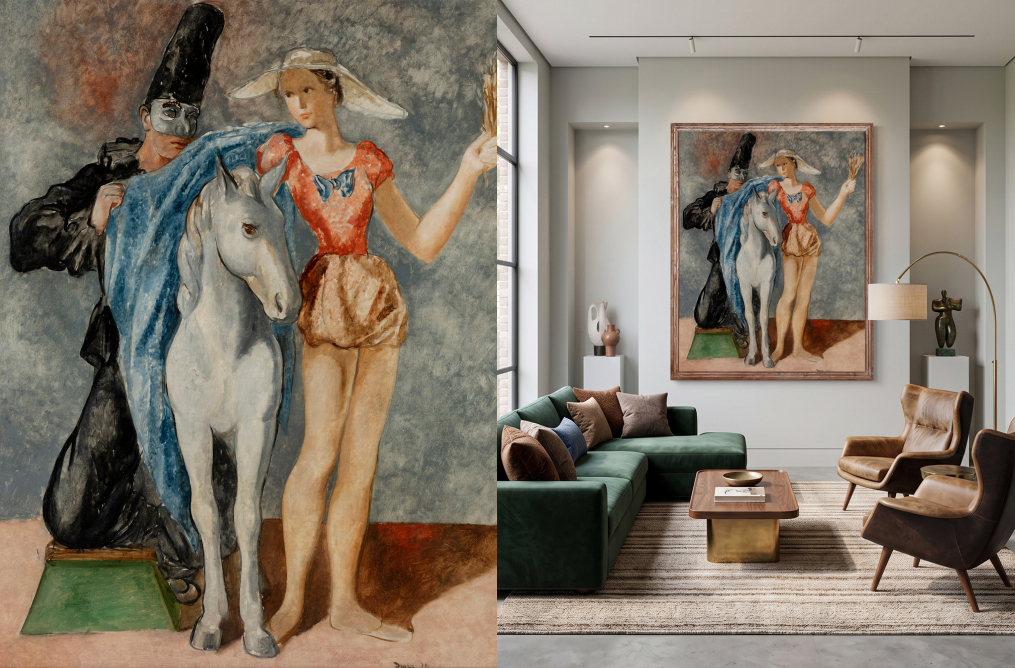
This aspect finds particularly significant expression in Circus Scene, a 1934 oil on canvas that brings together several of the characteristic elements of Pruna’s artistic language. The composition depicts a young circus performer alongside a white horse and a masked male figure. Its monumental dimensions—161.8 × 130.2 cm—lend the figures an almost sculptural presence, while the neutrality of the background eliminates any anecdotal references and focuses attention on the gestures, postures, and relationships between the figures.
The Circus as a stage for modernity
Modern artists’ interest in the world of the circus has a long tradition. Since the late 19th century, circus characters have offered an alternative to academic subjects and allowed artists to depict bodies in motion, shifting identities, and situations that defy social conventions. But the circus also introduced a question central to modernity: the distinction between person and character, reality and representation.
Picasso made this universe one of the central themes of his work during his Rose Period. The acrobats, harlequins, and performers in those compositions typically appear in ambiguous spaces, suspended between everyday life and the stage. Rather than depicting a performance, Picasso uses them to explore identity, vulnerability, and the artist’s condition.
In Circus Scene, Pruna draws on a familiar sensibility, though he transforms it in accordance with his own artistic language. His figures lose some of the psychological tension characteristic of Picasso and take on an almost timeless serenity. The circus ceases to be merely a spectacle and becomes a suspended stage, populated by elegant, silent figures.
Pere Pruna and Picasso: a defining relationship
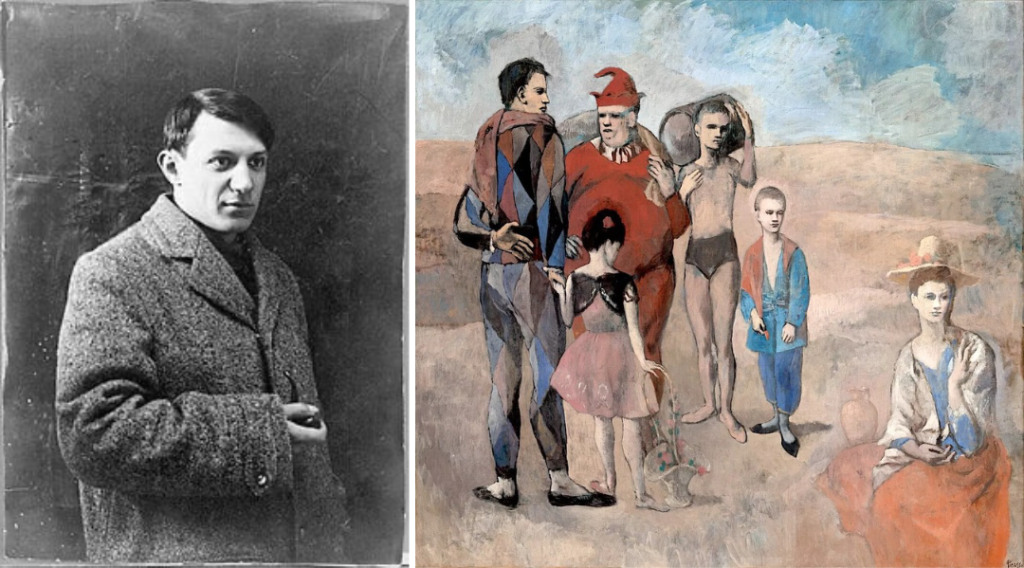
The connection to Picasso is particularly important for understanding this work. Pruna arrived in Paris in 1921, at just seventeen years old and with only a rudimentary artistic education. Thanks to a letter from Sebastià Sunyer, he was able to meet Picasso, who became a pivotal figure during his early years in the French capital. His connection with the artist from Málaga facilitated his entry into Parisian artistic and intellectual circles and helped launch his career.
Picasso’s influence on Pruna is particularly evident during the 1920s, when Picasso was immersed in his return to classical tradition. In contrast to the radical break with tradition represented by the early avant-garde movements, Picasso was then exploring a new sense of monumentality rooted in the Mediterranean tradition, reviving the figure, volume, and compositional clarity.
Pruna found this style particularly appealing. Her stylized female figures, with their elongated proportions and restrained color palette, are part of this return to figurative art, but they also incorporate references to Italian classicism and a sensibility close to that of the Novecento movement. Far from merely reproducing Picasso’s style, she developed her own aesthetic characterized by formal elegance, serenity, and an idealized conception of the figure.
From Paris to the stage: the theatrical experience
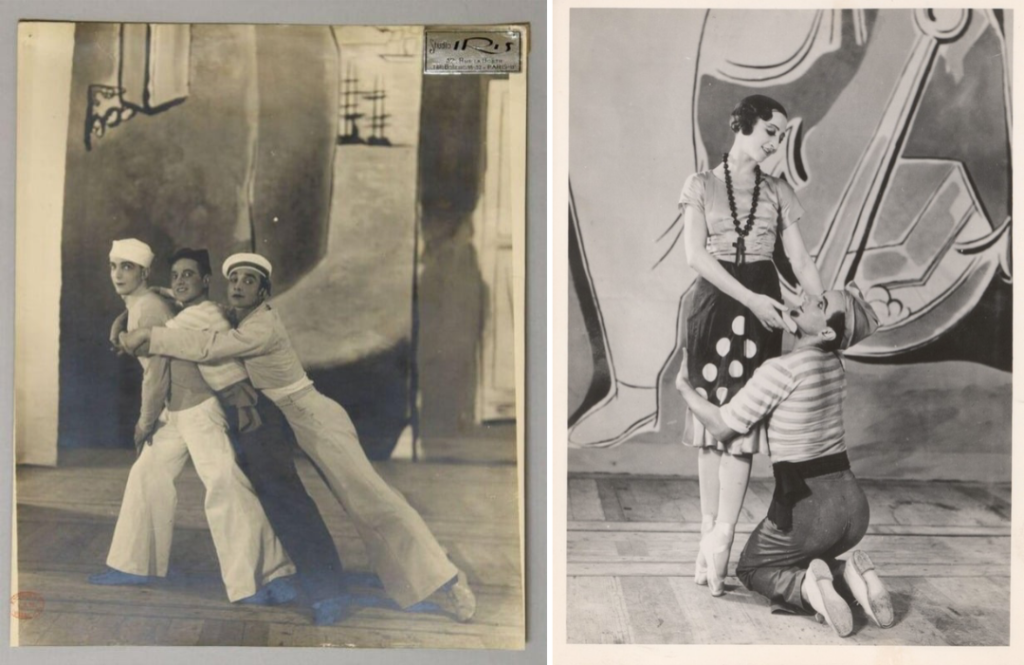
Pruna’s connection to the world of the performing arts provides another key to interpreting Escena circense. During his time in Paris, the artist did not limit himself to painting: in 1925, he was commissioned by the ballet company Les Matelots to create the sets and costumes for the ballet Les Matelots, marking the beginning of a career linked to set design and costume design.
This experience helps us understand the theatrical nature of many of his compositions. In them, the characters seem to be conceived simultaneously as pictorial figures and as performers. Costumes take on particular importance; gestures are carefully restrained, and the positioning of the bodies follows a theatrical logic.
In Circus Scene, this dimension is particularly evident. The white horse, the performer, and the masked figure seem to be part of a scene frozen in time. We are not witnessing the climax of a performance, but rather a moment of suspension in which the stage becomes a mental space.
Pere Pruna: between the Avant-Garde and Classicism
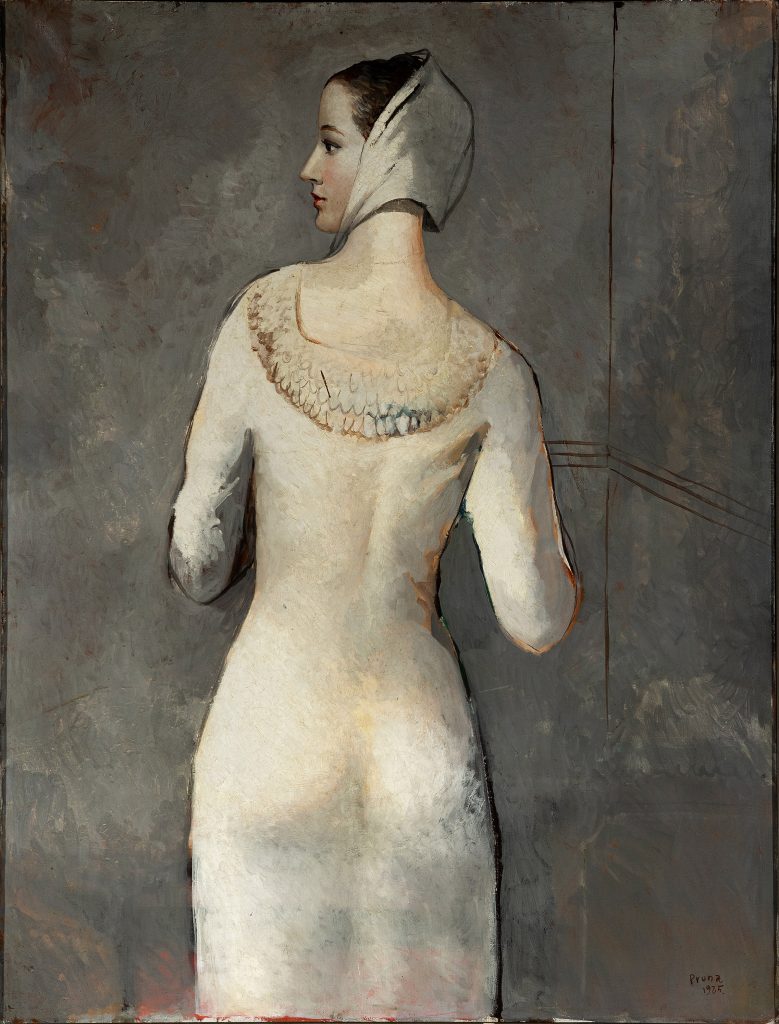
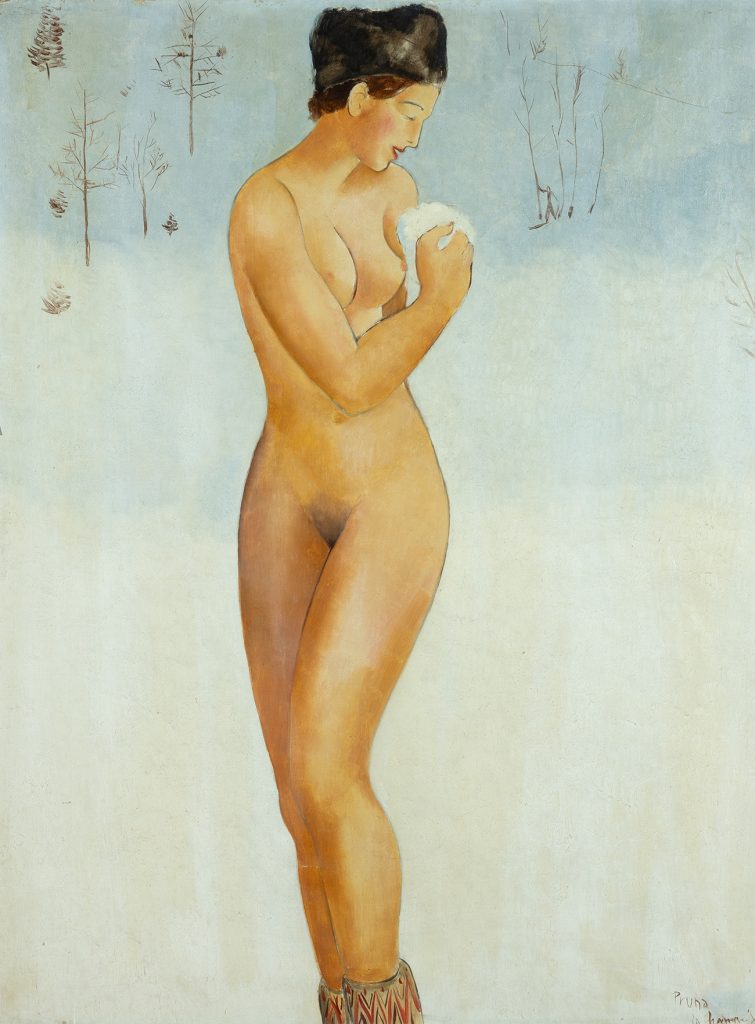
One of the most interesting aspects of Pruna lies precisely in his place within 20th-century Spanish painting. His career unfolded at a time when European artists were torn between avant-garde innovation and a return to certain values of the figurative tradition.
In this context, the so-called “return to order” took on special significance during the 1920s. The avant-garde movement did not disappear, but many artists returned to the human figure, compositional clarity, and certain models from Antiquity and the Renaissance. Picasso was one of the key figures in this process, and Pruna found in this new figurative style a way to develop his own artistic language.
In Circus Scene, this synthesis is particularly evident: the subject matter draws from modern culture and popular entertainment, but the treatment of the figures reflects a classical conception of beauty. The bodies are refined, the gestures restrained, and the space reduced to the essentials. The modernity of the work does not lie in the disappearance of tradition, but in the way it is reinterpreted.
A work at a pivotal moment in his career
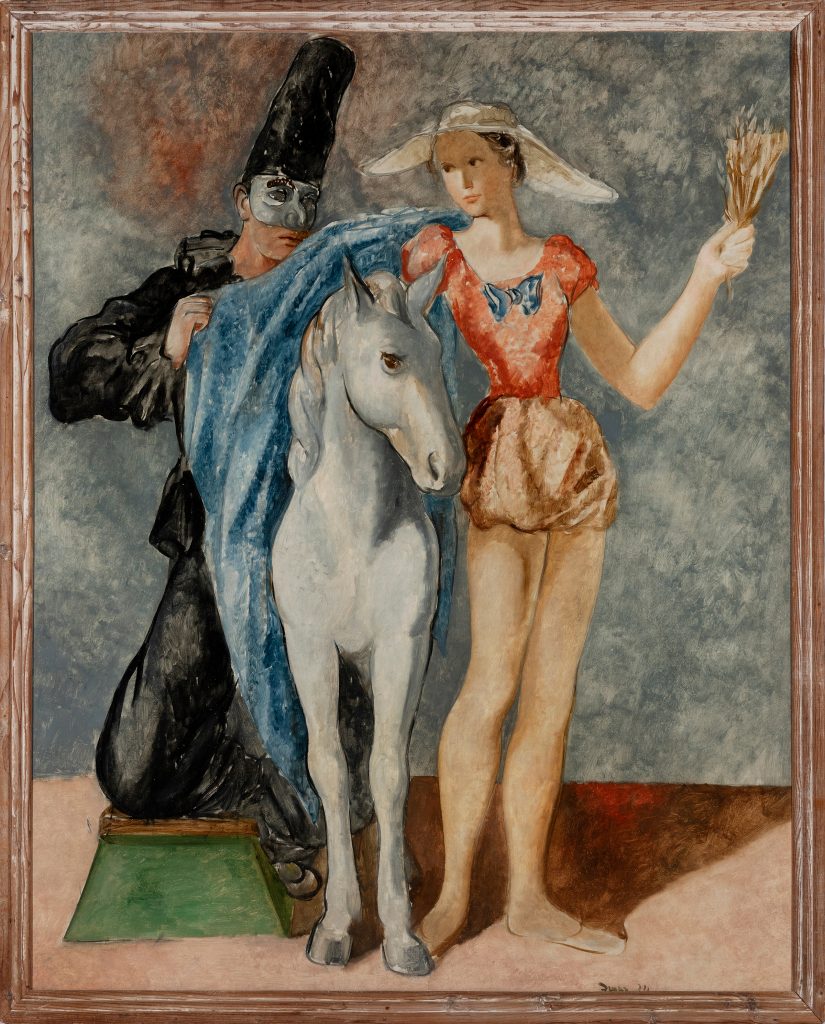
Dated 1934, Circus Scene marks a period of artistic maturity in Pruna’s career, following his years of international recognition in Paris and his experiences in theater and with the Ballets Russes. In 1928, he had won second prize at the Carnegie Institute exhibition in Pittsburgh, confirming the international recognition his work had achieved.
The painting thus encapsulates several of the themes that run through his body of work: the centrality of the figure, the influence of modern classicism, the legacy of Picasso, an interest in the world of entertainment, and a unique pursuit of beauty based on proportion, chromatic harmony, and formal refinement.
Beyond his relationship with Picasso, Circus Scene offers insight into the unique place Pere Pruna occupies in 20th-century Catalan and Spanish painting. His work establishes a dialogue between Paris and Barcelona, between the avant-garde and a return to figuration, and between painting and the stage.
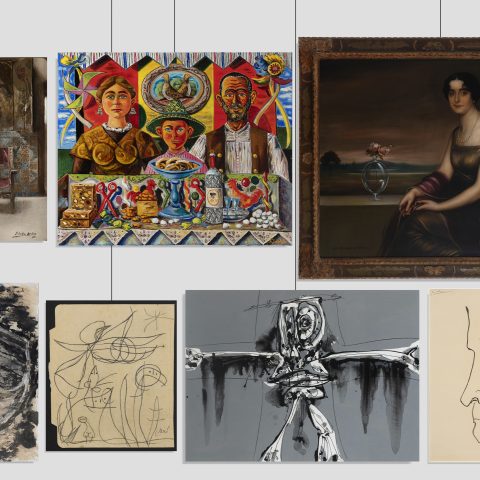
Pere Pruna’s work Circus Scene is part of Setdart’s upcoming 19th- and 20th-Century Classics Auction, to be held on October 26. This selection invites viewers to discover different artistic sensibilities and styles through works by artists such as Darío de Regoyos, Eliseo Meifrèn, José Benlliure, and Carles Nadal.