Ramon Martí Alsina, a pivotal innovator in 19th-century Catalan painting, opens the door to a legacy that transcends his own body of work. Paintings, drawings, sculptures, archaeological finds, and objects from different eras and cultural backgrounds come together to form a collection whose uniqueness lies both in its family connections and in the breadth of the artistic horizons it encompasses.
The history of a collection does not always follow a single criterion, nor can it be explained through a single discipline. At times, its appeal lies precisely in the coexistence of works of diverse nature, in the possibility of establishing connections between distant eras, and in the presence of different ways of understanding and representing the world. The Martí Alsina–Martí Aguiló family legacy presented by Setdart offers a glimpse into this complexity: a collection in which 19th-century Catalan painting forms a central core, but whose breadth allows the viewer to expand their perspective to other historical periods and artistic traditions.
At the heart of this exhibition is Ramon Martí Alsina (Barcelona, 1826–1894), one of the key figures of the Catalan pictorial renewal, whose career allows us to situate the collection within the context of a decisive transformation of 19th-century visual culture. Surrounding him, the presence of works linked to Ricard Martí Aguiló, his son, introduces a familial dimension that invites us to consider the continuity of an artistic practice and the transmission of a legacy across generations. Beyond this core, the remaining pieces broaden the collection’s scope and prompt reflection on the diversity of the preserved artistic heritage.
Ramon Martí Alsina: A New Relationship with Reality
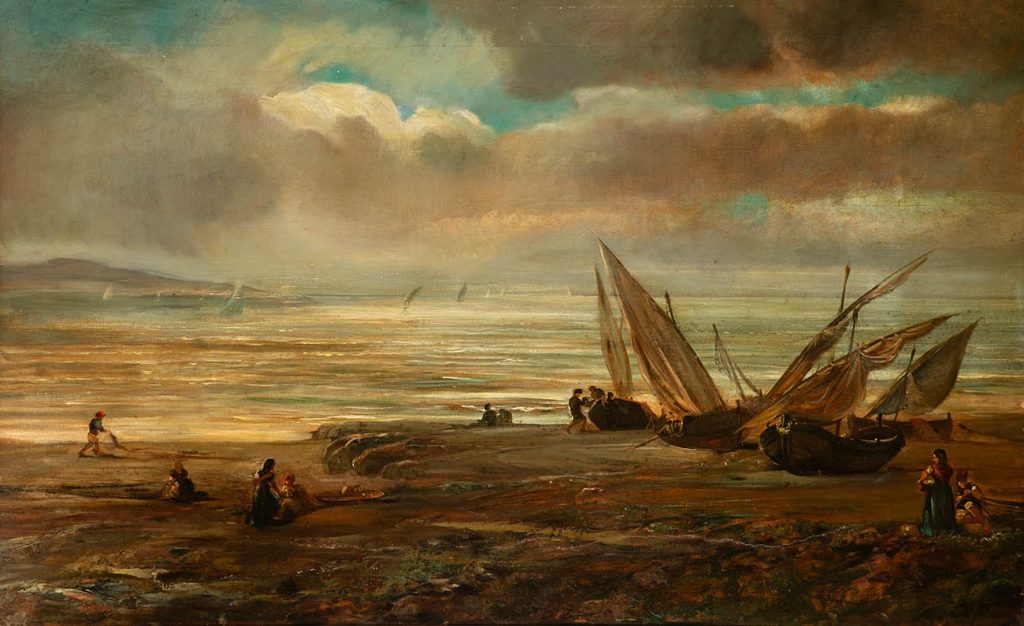
Martí Alsina’s significance in the history of Catalan painting lies in his contribution to the consolidation of realism and in his commitment to placing direct observation at the center of the creative process. In contrast to academic conventions and the idealization of traditional models, his painting placed increasing emphasis on the study of nature, the physical presence of figures, and the depiction of everyday settings.
His body of work includes landscapes, seascapes, portraits, genre scenes, and compositions with greater narrative ambition. This variety of genres does not prevent us from recognizing a common theme: the quest for a convincing representation of reality, with attention to light, the structure of forms, and the relationship between the figures and their surroundings.
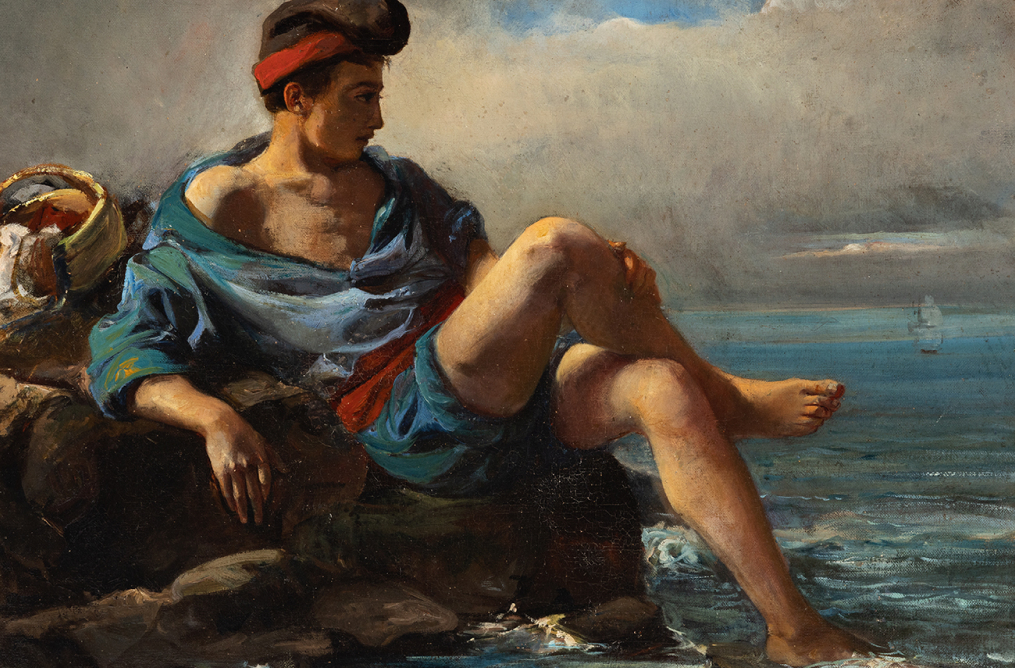
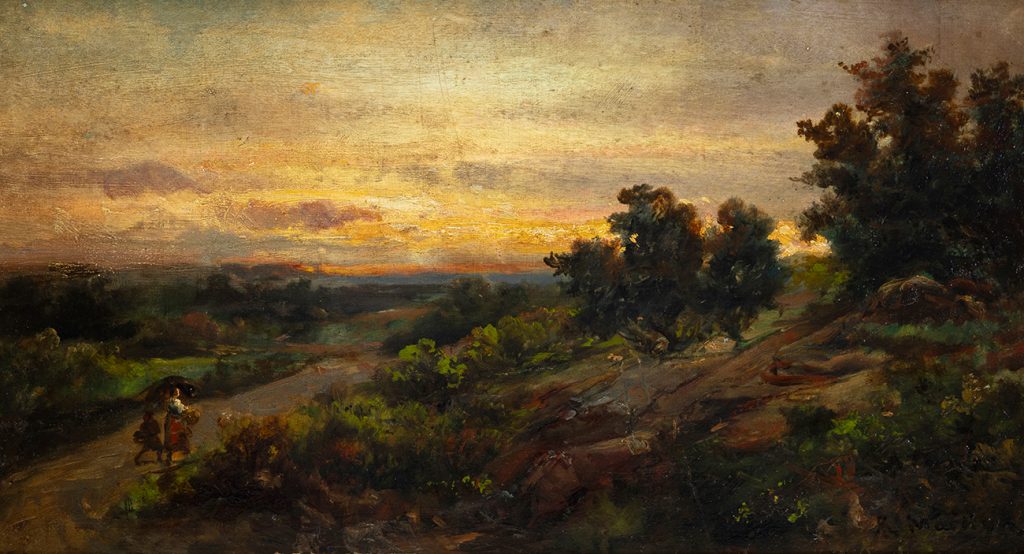
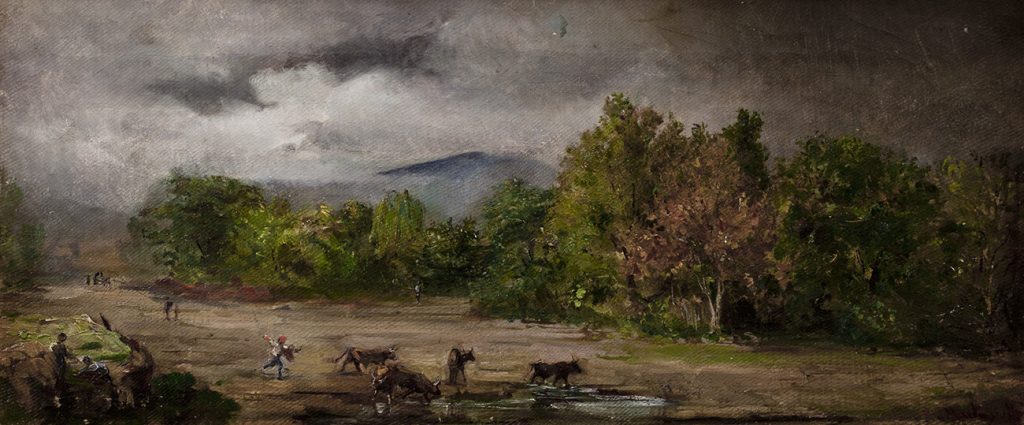
The works brought together in this auction offer insight into various aspects of his art. *Mother and Son*, dated 1867, highlights the human dimension of his painting, while compositions such as *Seascape* or *Landscape with Figures at Dusk* provide insight into his approach to landscape and atmospheric effects. In works such as *La Tardor*, the observation of nature becomes an exercise in pictorial synthesis, in which composition and light contribute to establishing the presence of the subject.
These examples help us understand that Martí Alsina’s realism should not be reduced to a meticulous reproduction of the visible. His contribution also lies in the way he organizes the visual experience and translates it into pictorial language. His attention to the outside world coexists with a growing freedom of execution, evident in the variety of approaches he adopted throughout his career.
A Family History: Ramon Martí Alsina and Ricard Martí Aguiló
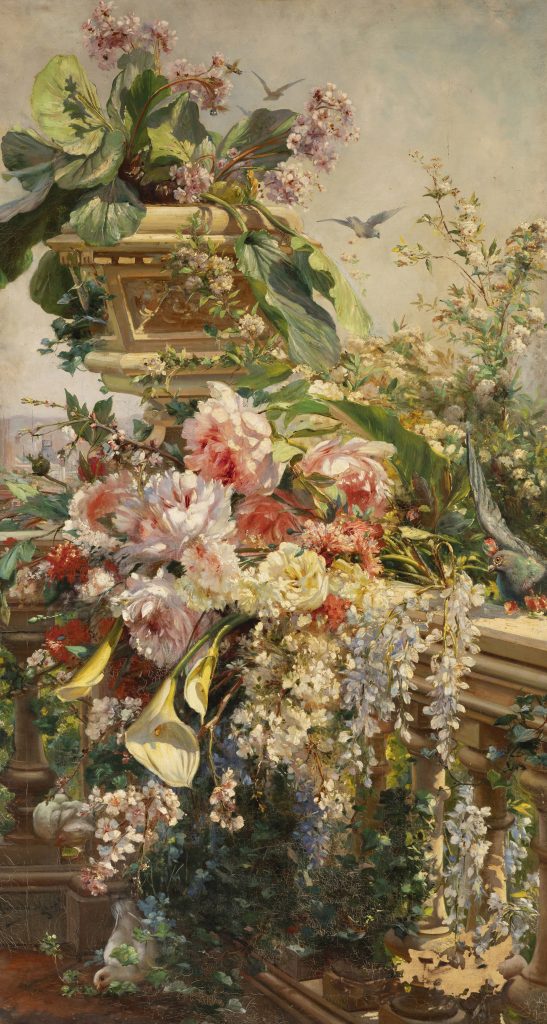
The presence of Ricard Martí Aguiló—the son of Ramon Martí Alsina and also a painter—adds a significant dimension to the exhibition as a whole. His inclusion allows us to place the artist’s work within a family context and expand the narrative beyond an individual career.
Continuity across generations is a significant aspect of art history. Education, daily exposure to artistic practice, and the transmission of knowledge can create an environment in which certain artistic concerns find continuity, even as each artist develops his own artistic language. In this sense, the relationship between Martí Alsina and Martí Aguiló offers a starting point for reflecting on the transmission of artistic experience within the family context.
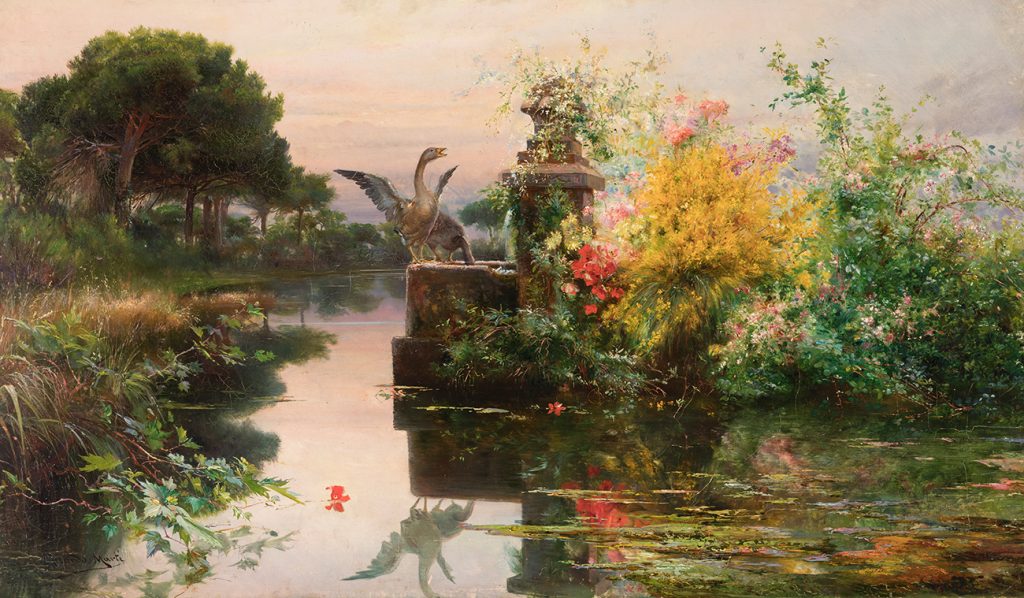
It is important to distinguish, however, between this family continuity and the material history of the collection. The presence of works by both artists allows us to establish a link between their careers, while reconstructing the provenance of each piece and the circumstances under which they were preserved requires examining the specific documentation for the collection as a whole.
This distinction does not diminish the legacy’s significance; on the contrary, it allows us to explore it in greater depth. The collection thus becomes a space where the history of the artists and the subsequent history of their works converge—two dimensions that complement each other without becoming conflated.
Beyond Painting: The Scope of a Legacy
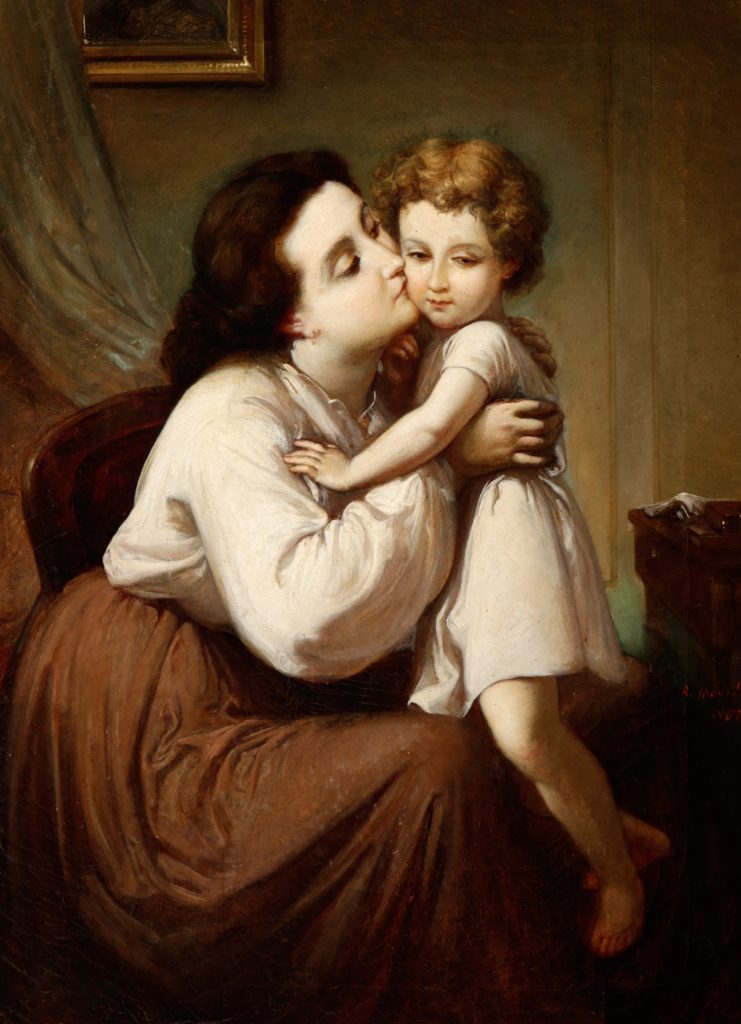
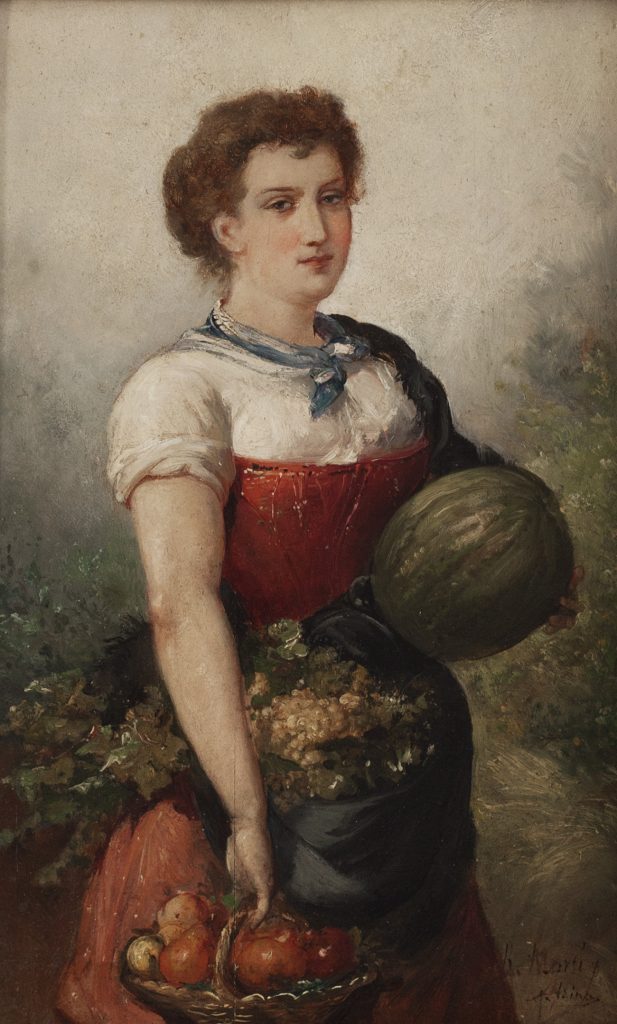
One of the most distinctive features of the collection is the diversity of disciplines, time periods, and cultural backgrounds represented. Alongside the paintings and drawings associated with the family, the various sections bring together works by other artists, as well as sculpture, furniture, clocks, decorative objects, and archaeological artifacts that reflect very different historical contexts.
This breadth changes the perspective from which the legacy is viewed. The collection is not limited to a single artistic school or a specific period, but rather allows visitors to explore various expressions of creativity and material culture. Works from the 19th century are displayed alongside objects dating from antiquity to much more recent times, creating a diverse panorama that invites visitors to examine each piece both for its own characteristics and for the place it occupies within the collection as a whole.
The archaeology section features some of the most significant examples of this diversity. Female heads and depictions of deities from the Roman world, an Etruscan head, and a female figure from Tanagra reflect different traditions of Mediterranean antiquity. These are joined by pieces from other cultures, such as a head of Vishnu from India, which broadens the collection’s geographical and religious scope.
The capitals are another focal point of interest. The pieces, which reflect Roman, Byzantine, and Romanesque traditions, offer insight into the evolution of architectural and ornamental forms across widely separated periods. Their original function, linked to architecture, contrasts with the way they can now be viewed as independent works of art, worthy of study within the history of sculpture, architecture, and the decorative arts.
The juxtaposition of these works with Martí Alsina’s paintings does not imply establishing direct stylistic connections between them. Their appeal lies, precisely, in the opportunity to observe distinct visual languages: from the realistic perspective on 19th-century nature and society to the forms of symbolic, religious, and ornamental representation developed by other cultures.
Legacy as Memory and Heritage
The diversity of this legacy allows us to address a central issue in the history of collecting: the way in which objects of different kinds take on new meanings when brought together and passed down. Each work retains its historical context, its original function, and its material characteristics, but its inclusion in a collection also introduces a new interpretive dimension.
In a heterogeneous collection, unity does not necessarily depend on stylistic homogeneity. It can arise from the collection’s own history, from family ties, or from the coexistence of diverse artistic interests. For this reason, the study of a bequest requires attention to both the individual pieces and the relationships that can be established between them, without forcing a coherence that the documentation does not support.
In the case of the Martí Alsina–Martí Aguiló legacy, the figure of the painter provides a recognizable historical axis, while the presence of works from other periods and cultures broadens the scope of interpretation. The collection invites us to view artistic heritage not as a static reality, but as a sum of individual trajectories, historical contexts, and processes of transmission.
The auction offers a glimpse into a collection whose richness lies in the coexistence of two complementary dimensions. On the one hand, the presence of Ramon Martí Alsina and Ricard Martí Aguiló brings 19th-century Catalan painting and the continuity of a family artistic tradition to the forefront. On the other hand, the variety of disciplines, time periods, and cultural backgrounds broadens the scope to other areas of art history.
This combination invites us to view this legacy from a perspective that transcends the boundaries of a monographic collection. Painting, drawing, sculpture, archaeology, and the decorative arts do not appear here as isolated categories, but rather as distinct manifestations of a single reality: the diversity of ways in which societies have produced, used, and preserved objects of artistic and cultural significance.
If you liked this article you may also be interested in: