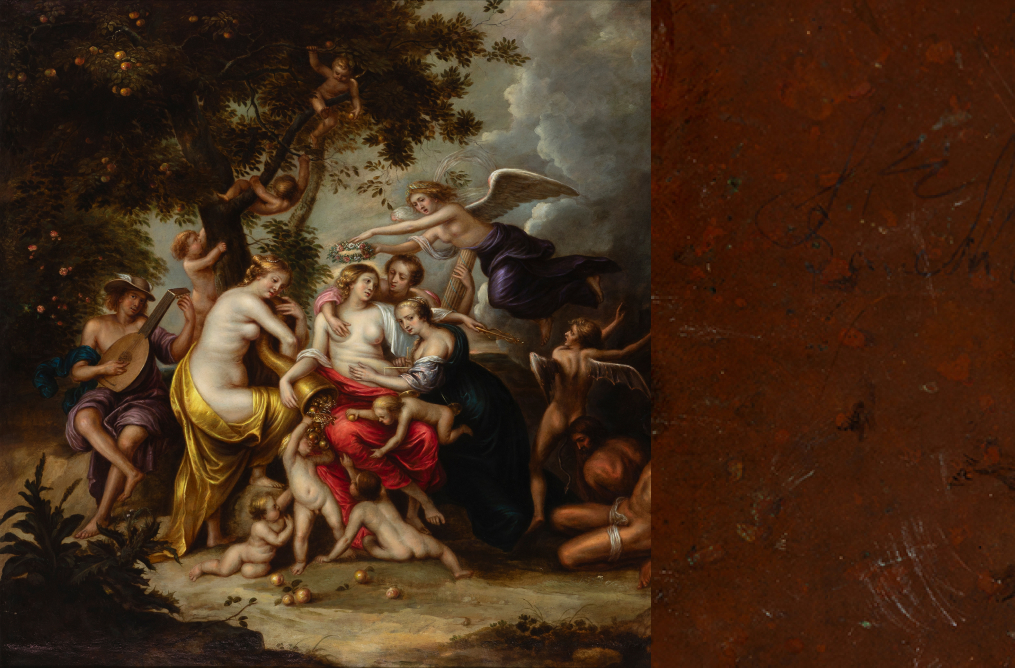
In today’s art market, we often evaluate a work based on the significance of its authorship, the complexity of its iconography, or its state of preservation. However, there is a silent yet fundamental element that completely determines the final outcome of a piece: the pictorial support. Far from being a mere functional surface on which to apply oil paint, each pictorial support offers a unique range of expressive possibilities.
Throughout history, the great masters understood the physical nature of each material and harnessed it in the service of their creative genius, making the pictorial support an inseparable part of the artistic message. A journey through the works featured in our upcoming auctions allows us to explore this fascinating dialogue between support, technique, and material.
The copper pictorial support: precision and luminosity
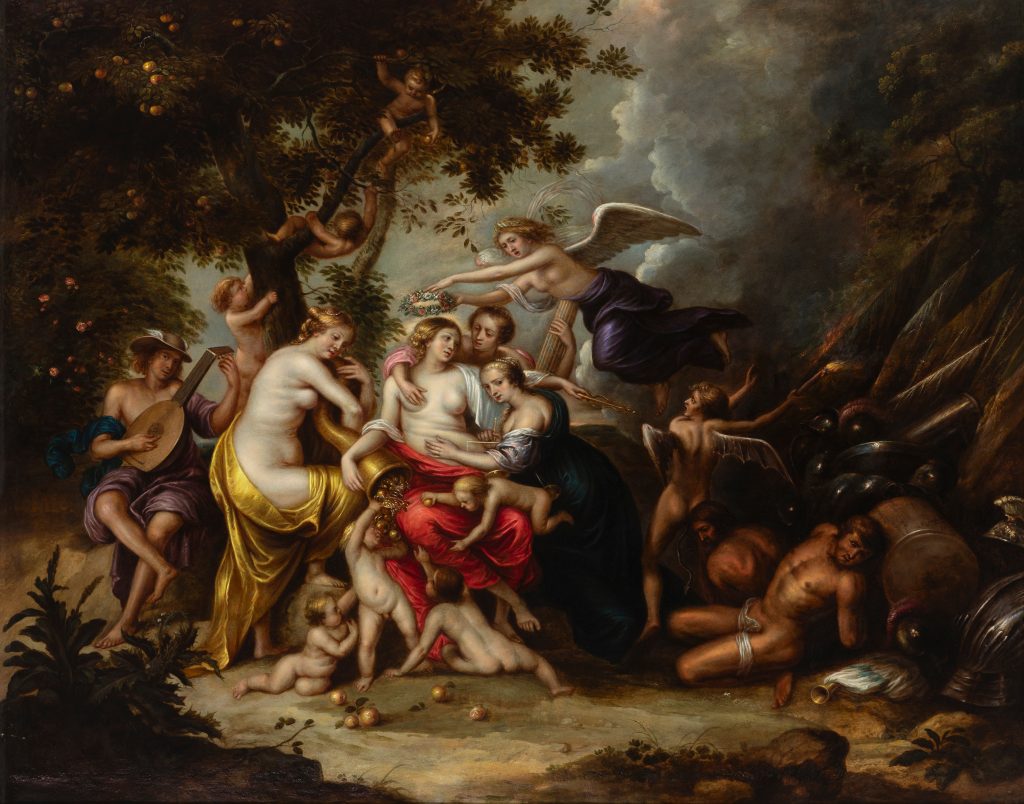
If we begin by examining metal, copper plates offered numerous advantages to Baroque painters, as they were remarkably durable, stable under changing climatic conditions, and easier to transport than heavy wooden panels. However, their greatest virtue lay in the extraordinary luminous effect that could be achieved on this pictorial support.
As a polished, non-porous surface, copper endowed colors with a brilliance and clarity that were almost impossible to replicate on other materials. Its completely smooth texture allowed for the execution of the finest details with extraordinary precision, which is why many Flemish and Italian paintings on copper were regarded as true works of jewelry.
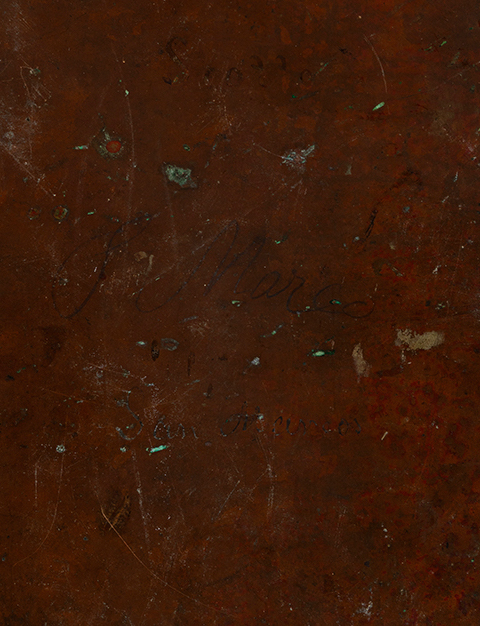
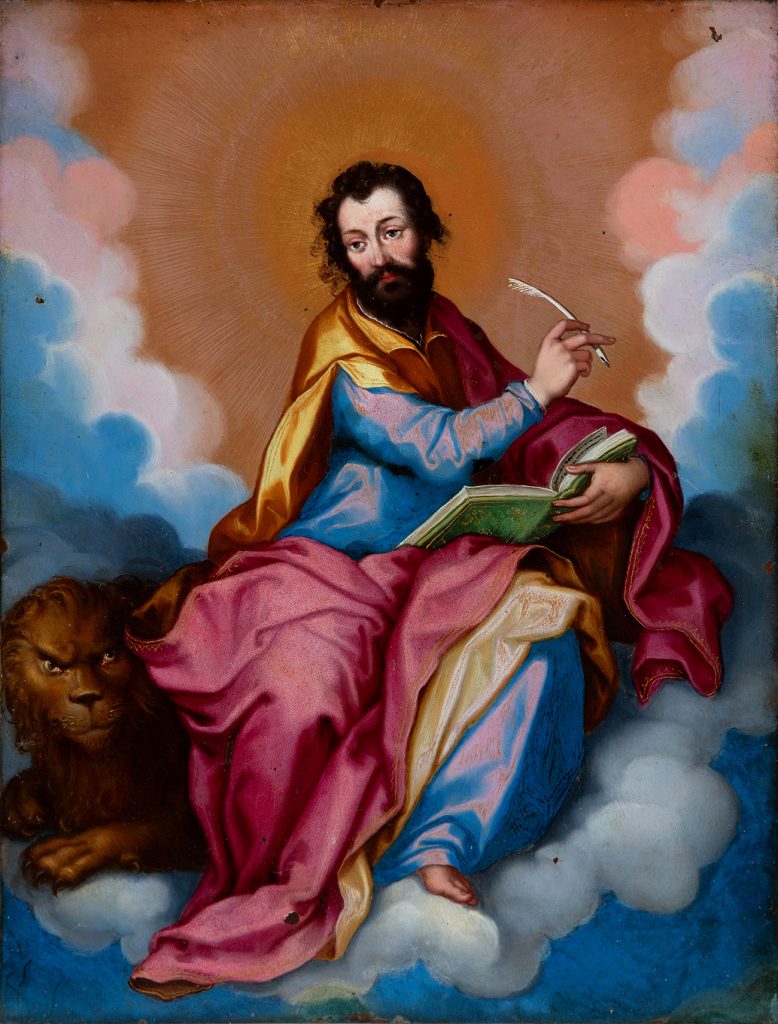
Indeed, small-format works were often incorporated into exquisite goldsmithing creations, becoming the centerpiece of sophisticated reliquaries, pendants, or devotional medals. One of the most highly regarded artists in this field around 1600 was Segismundo Laire, a Munich-born painter active in Rome, who achieved great renown for the refinement of his paintings on copper. An outstanding example of his mastery belongs to the group documented by the art historian Germán Ramallo Asensio and can be seen in “Saint Matthew and Saint Mark,” featured in our upcoming auction.
Stone as a pictorial support: when the material becomes part of the artwork
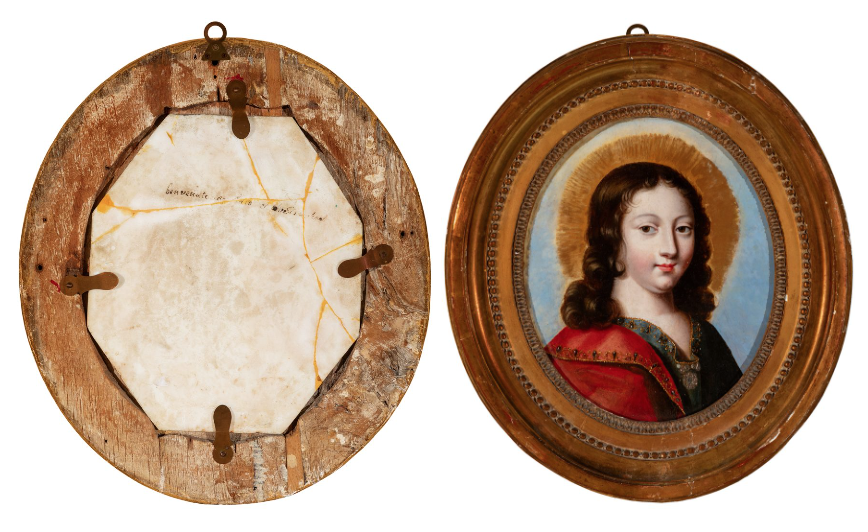
Painting on stone shares a similar level of sophistication. This pictorial support inherits from copper its smooth, lustrous surface, which enhances the vibrancy of pigments, while offering two additional advantages that are particularly appealing to collectors.
On the one hand, painters did not seek to conceal the material but rather embraced its natural veining and organic textures, incorporating them into the composition itself. The sinuous patterns of agate or marble could evoke natural landscapes, while the translucency of alabaster blended with delicate glazes to give flesh tones an almost mystical realism.
On the other hand, the exceptional structural hardness of semi-precious stones such as lapis lazuli made it possible to attach raised elements—silver, metal threads, or glass beads—creating a unique dialogue between painting and the decorative arts. In this way, stone became an active pictorial support, with its natural surface playing an integral role in the construction of the image. This multidisciplinary approach is beautifully exemplified in Claude Déruet’s “Virgin and Child.”
Wood: the quintessential pictorial support for centuries
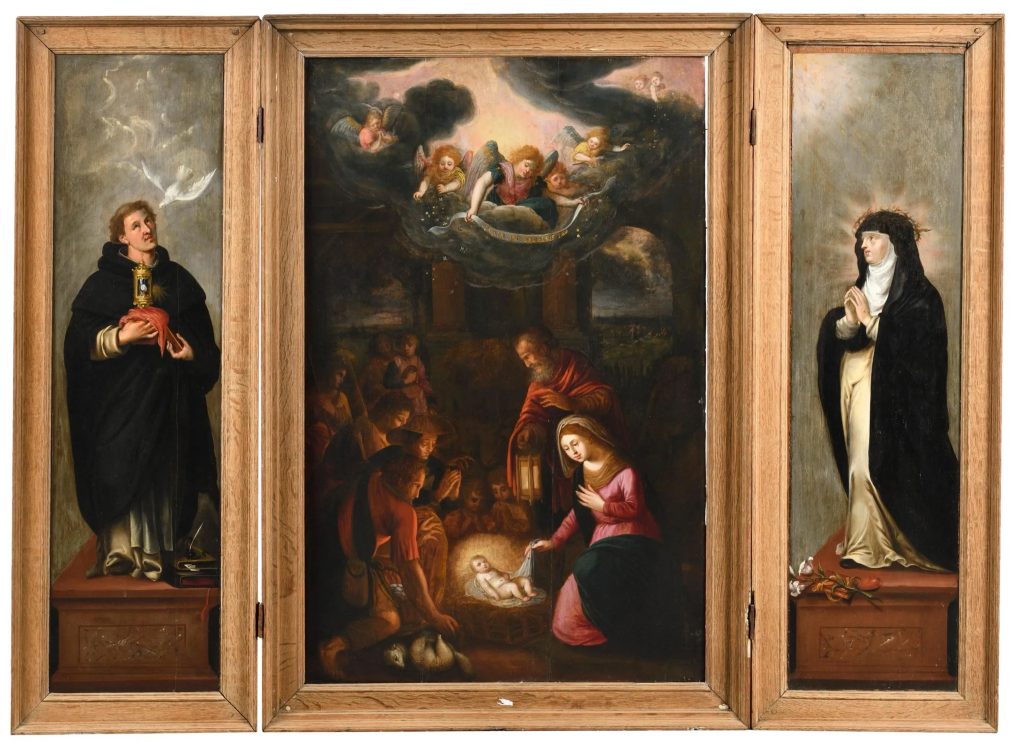
Despite the sophistication of metal and stone, wood is the pictorial support that has enjoyed the greatest continuity throughout the history of European art. Already favored in Roman times, the wooden panel endured through the tradition of Byzantine and medieval icons, maintaining its prominence during the Renaissance thanks to its accessibility and the warmth it imparted to the painted surface.
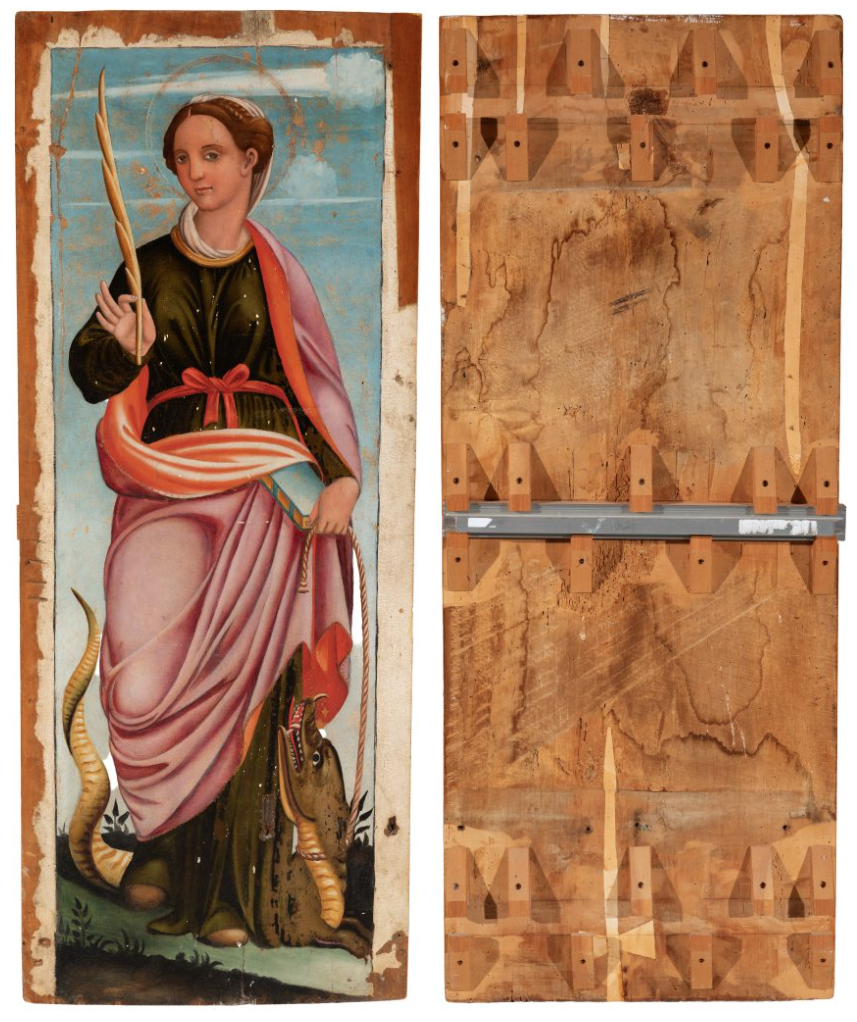
For art historians and collectors, this support also offers an exceptional advantage: it often preserves traces of the workshop’s creative process. In the Italian School painting dated to around 1500 that we present, “Saint Margaret,” the reverse still reveals the roughly planed wood, the white gesso ground, and a simple border marking the visible painted area from the sections originally concealed beneath the frame or the altarpiece structure.
Canvas: the pictorial support that transformed European painting
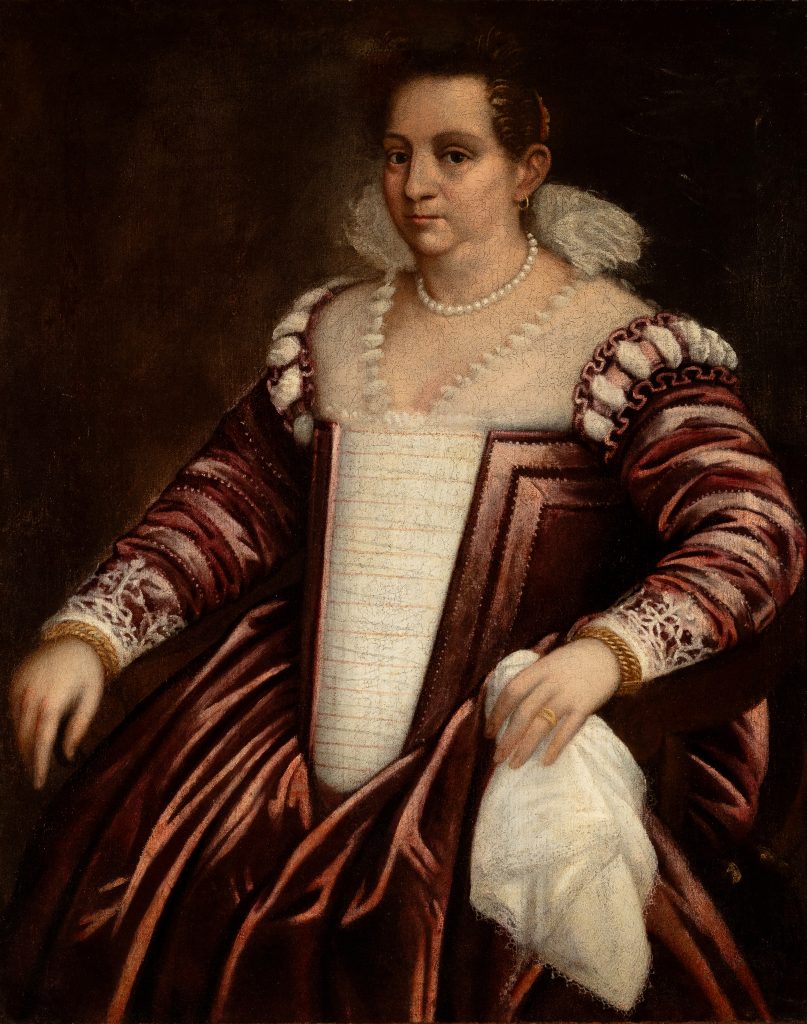
Finally, it is essential to consider canvas, the pictorial support that ultimately became dominant from the 17th century onward.
Although its initial success was driven by practical considerations—its light weight, lower cost, and ease of rolling and transporting—its true potential lay in the careful selection of the type of fabric according to the commission, the artistic school, and the desired result.
The weave, weight, and texture of the fabric had a profound impact on the final appearance of the painting. The Venetian School, characterized by its loose brushwork and rich impasto, required strong, coarse-weave canvases that enhanced the physical adhesion of the oil paint. This expressive use of the pictorial support is particularly evident in the work attributed to Francesco Montemezzano.
By contrast, painters who sought the highest level of detail and optically precise representation preferred fine canvases with a high thread count and meticulously prepared surfaces. These uniform supports allowed for exceptionally clean draftsmanship, a quality that can be appreciated in the magnificent work by the Lombard Master of the first half of the 17th century.
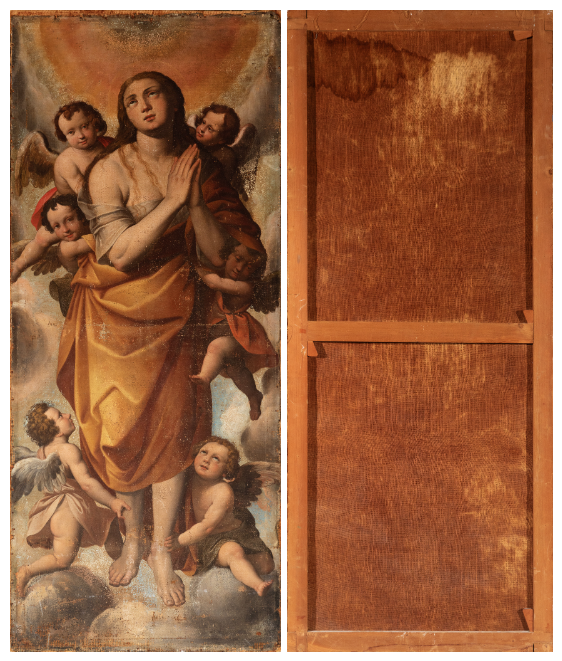
Ultimately, understanding the pictorial support means gaining a deeper understanding of painting itself. Every material, every surface, and every technical decision shaped the visual language of the Old Masters and forms an inseparable part of the historical and artistic value of their works. Viewing a painting from this perspective reveals a dimension that often remains invisible to the viewer, yet is essential to appreciating the mastery of artists who transformed the pictorial support into a true protagonist of artistic creation.
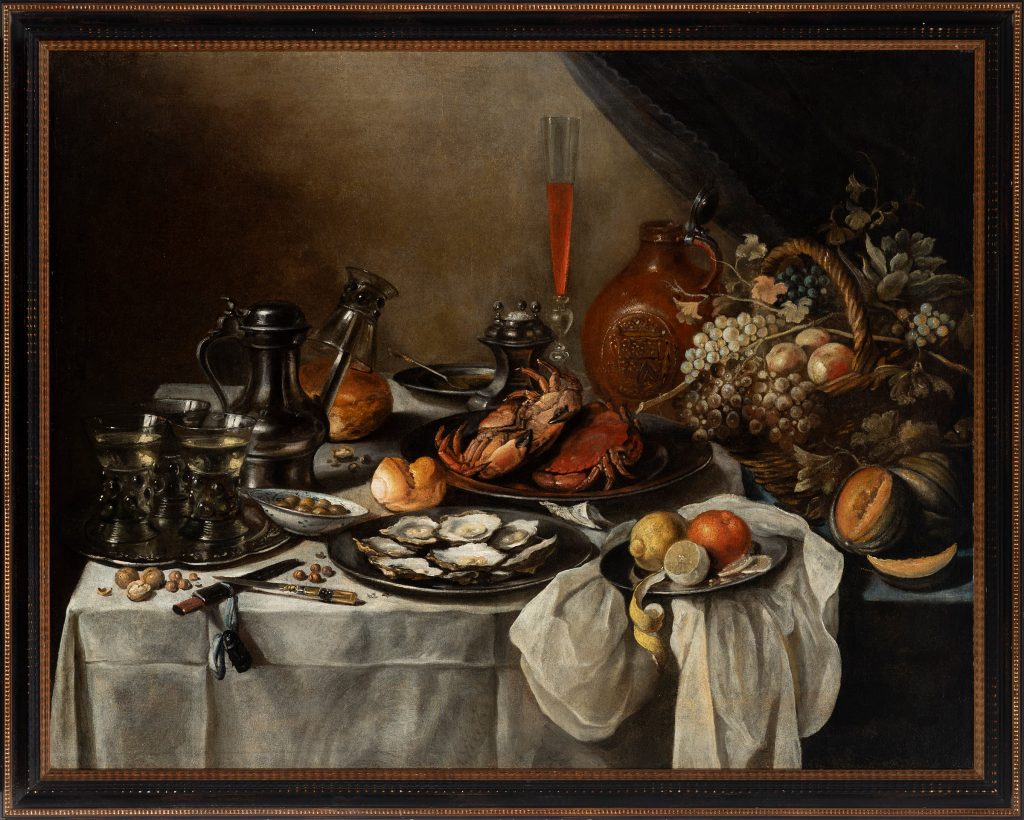
We invite you to discover our upcoming Old Masters auction, a carefully curated selection of works from the leading European schools of the 17th and 18th centuries. This journey through the excellence of great painters offers the opportunity to appreciate both the richness of their artistic languages and the extraordinary diversity of pictorial supports on which they created their works.
If you liked this article, you may also be interested in: