Manolo Valdés’s career is part of one of the most consistent efforts to reexamine the tradition of painting within European contemporary art. Following the dissolution of Equipo Crónica, his solo work has focused on an increasingly refined exploration of the image, understood not as a descriptive representation but as a structure of visual thought.
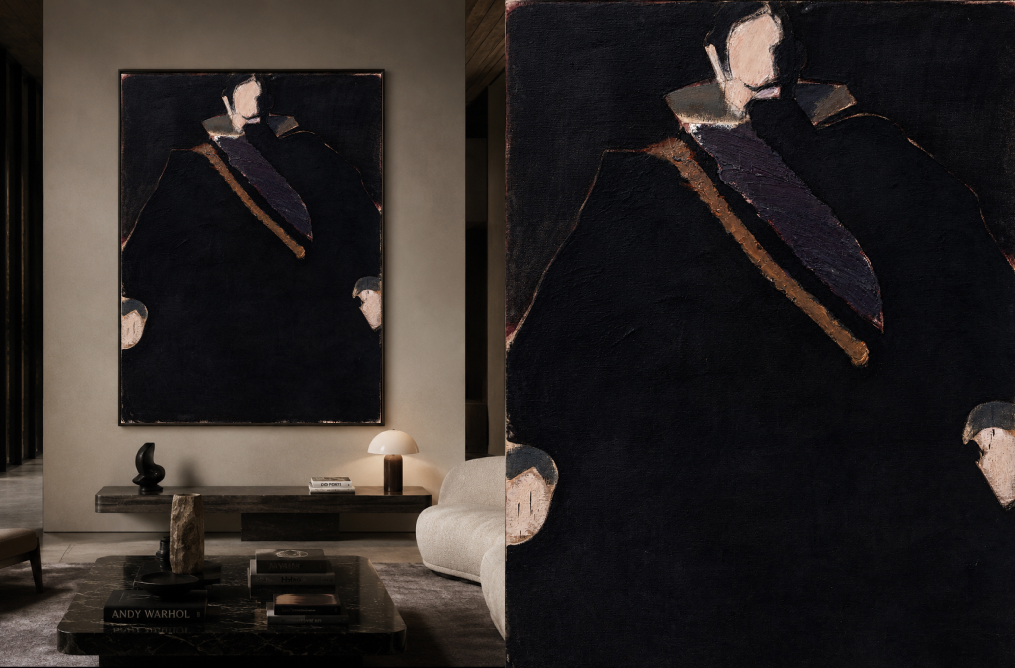
In this context, the motif of the Count-Duke of Olivares—drawn from the imagery of Diego Velázquez—takes on a unique significance within Valdés’s body of work. Works such as *The Count-Duke of Olivares* allow us to understand the consolidation of a visual language in which the history of painting becomes an active subject of reinterpretation.
1. Art History as the Operating System of Manolo Valdés’s Work
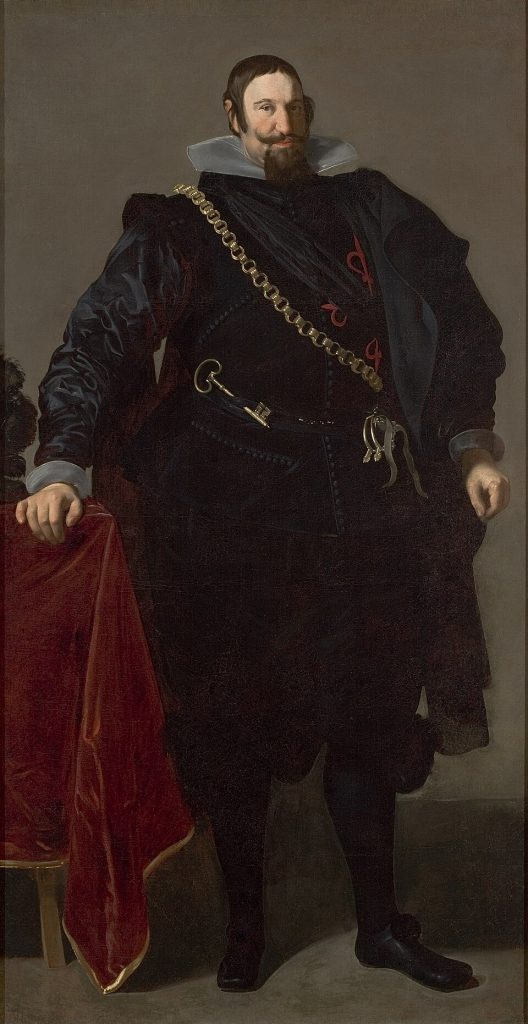
In Valdés’s work, the Western pictorial tradition does not function as an iconographic repertoire, but rather as a structural system from which to conceive of the contemporary image. Velázquez, Rembrandt, Matisse, and Picasso do not appear as references, but as nodes in a visual genealogy that the artist critically reactivates. In the case of the Count-Duke of Olivares, this process is intensified because he is a figure historically codified by Baroque court painting, where image and power are closely linked.
2. The Deconstruction of the Portrait as a Symbol of Authority
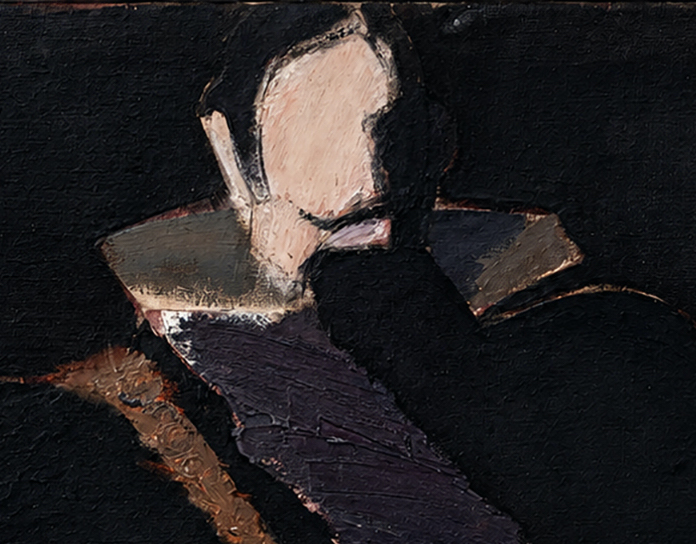
The portrait of the royal favorite, originally conceived as a means of representing political power, undergoes a process of reduction in this work that alters its original function. The figure’s identity ceases to be narrative and becomes a presence. This shift does not imply a loss of meaning, but rather its reconfiguration: power is no longer represented; it imposes itself as an autonomous visual form.
3. Formal reduction as a strategy for perceptual intensification
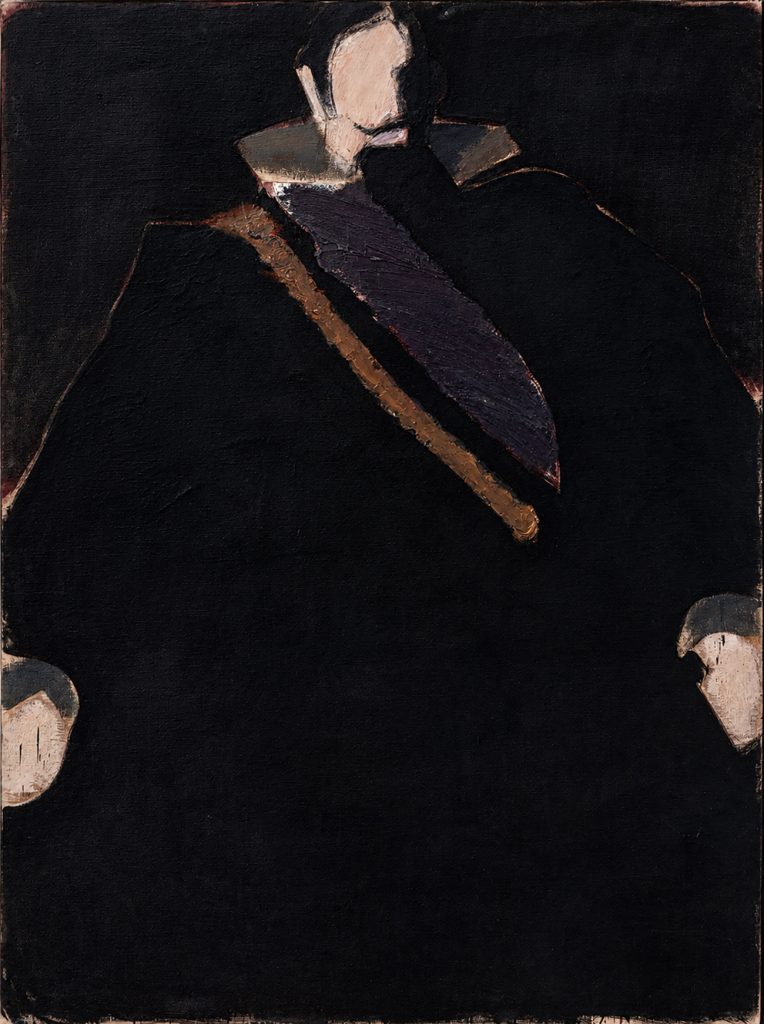
The economy of means—the omission of detail, the synthesis of the face, the frontal composition—follows a logic of visual concentration. Far from being a merely aesthetic simplification, this refinement functions as a mechanism of symbolic intensification. Stripped of incidental elements, the image acquires an almost archetypal density that reinforces its immediate impact on the viewer.
In Manolo Valdés’s work, this capacity for synthesis is one of the key factors behind his significance in the international contemporary art scene.
4. Materiality, Medium, and the Construction of Meaning
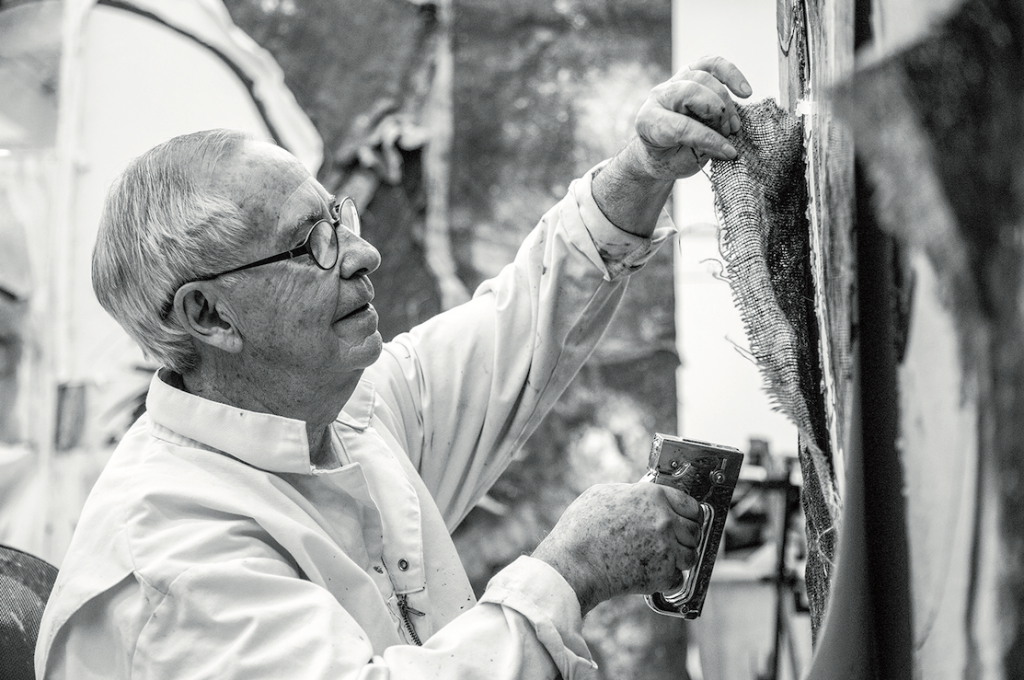
The use of burlap and the density of the black are not isolated formal decisions, but rather an essential part of the artistic discourse. The materiality introduces a tension between the pictorial and the physical, accentuating the tactile and almost sculptural nature of the work. In this sense, the support is not neutral: it actively participates in the construction of an image that oscillates between the historical and the contemporary, between the pictorial and the object-like.
This focus on the material is one of the characteristics that have established Manolo Valdés as one of the most renowned figures in Spanish contemporary art.

5. Repetition, Variation, and Persistence of the Motif of the Count-Duke of Olivares
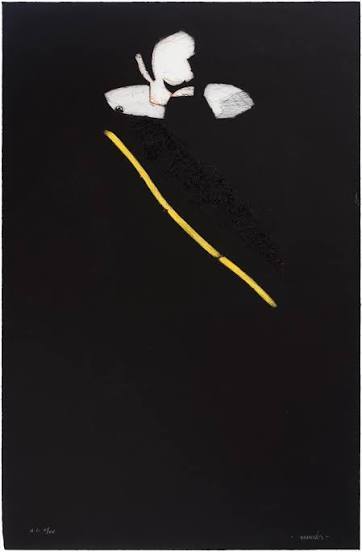
The recurring presence of the Count-Duke of Olivares at different stages of Manolo Valdés’s body of work—as also demonstrated by *Count-Duke of Olivares II* (1987), at the Bilbao Museum of Fine Arts—should be understood as a method of inquiry. This repetition is not iconographic redundancy, but rather a method of visual analysis that allows for the exploration of variations in meaning within a single motif. Each version does not replace the previous one, but rather expands upon it, reinterprets it, and situates it within a new perceptual context.
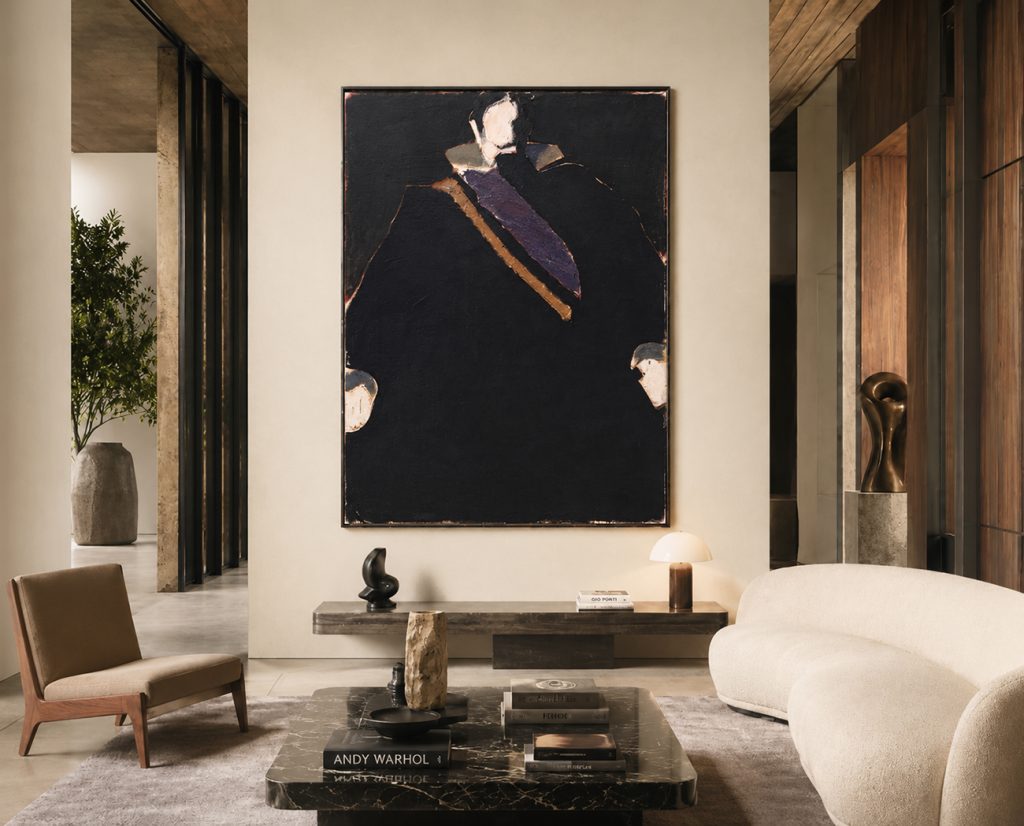
Taken together, these key elements allow us to situate this work not only within Manolo Valdés’s individual body of work, but also as a structural turning point in his artistic thinking: a practice in which painting does not illustrate history, but rather reconfigures it as an active, persistent, and constantly redefining visual system.
We invite you to discover Setdart’s upcoming Contemporary Art and Latest Trends auction, where works by Manolo Valdés engage in a dialogue with key figures in contemporary art such as Fernando Botero, Miquel Barceló, Miguel Ángel Campano, Joan Miró, Antoni Clavé, Juan Genovés, and many more.
If you liked this article, you may also be interested in: