In art, skulls have been, since ancient times, one of the most powerful symbols to reflect on the human condition. Their presence in ancient painting not only responds to a disturbing aesthetic, but to a deep philosophical and spiritual charge that crosses centuries of history.
Triumphal parades in ancient Rome occurred on rare occasions, usually after a major military conquest. The procession of legionaries, captives of the defeated people, treasures and exotic animals culminated with the entrance of the victorious general, acclaimed by the crowd. However, next to him, another man held the laurel wreath and whispered a warning: “you are only a man”.
This gesture summarizes the conceptual origin of memento mori, a reminder of the ephemeral nature of life. Death acted as a constant presence that evidenced how vanity, pride or ambition succumbed to an inevitable destiny. This thought survived for centuries and found in skulls one of its most eloquent expressions.
At the upcoming Old Masters auction on Tuesday, March 24, we will be able to appreciate how skulls in art accompany different characters and embody diverse meanings linked to death, from moral reflection to spiritual hope.
Memento mori and skulls in ancient painting
During the sixteenth and seventeenth centuries, in the midst of baroque painting, Christian thought gave death a renewed meaning. Far from being only a tragic end, it became the necessary transition to eternal life. As St. Teresa summarized, “I die because I do not die,” reflecting the spiritual aspiration to transcend earthly existence.
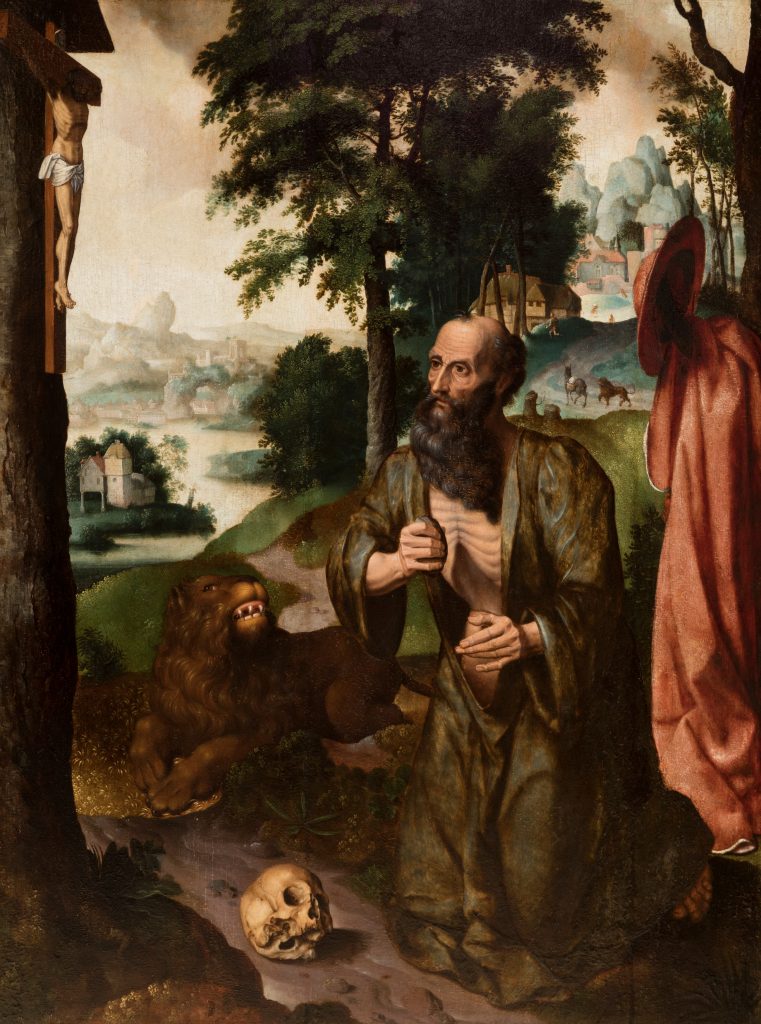
In this context, skulls in ancient painting acquire a new meaning: they are no longer just warnings, but also symbols of hope, redemption and immutability. They represent the last vestige of human appearance, stripped of social identity, wealth or power. Before a skull, all differences disappear, underlining the egalitarian nature of death and the implacable force of time.
Meanings of skulls in baroque art
When we observe skulls in art, especially in baroque painting, we can identify diverse meanings that respond to very precise symbolic contexts:
Vanitas: the warning against vanity
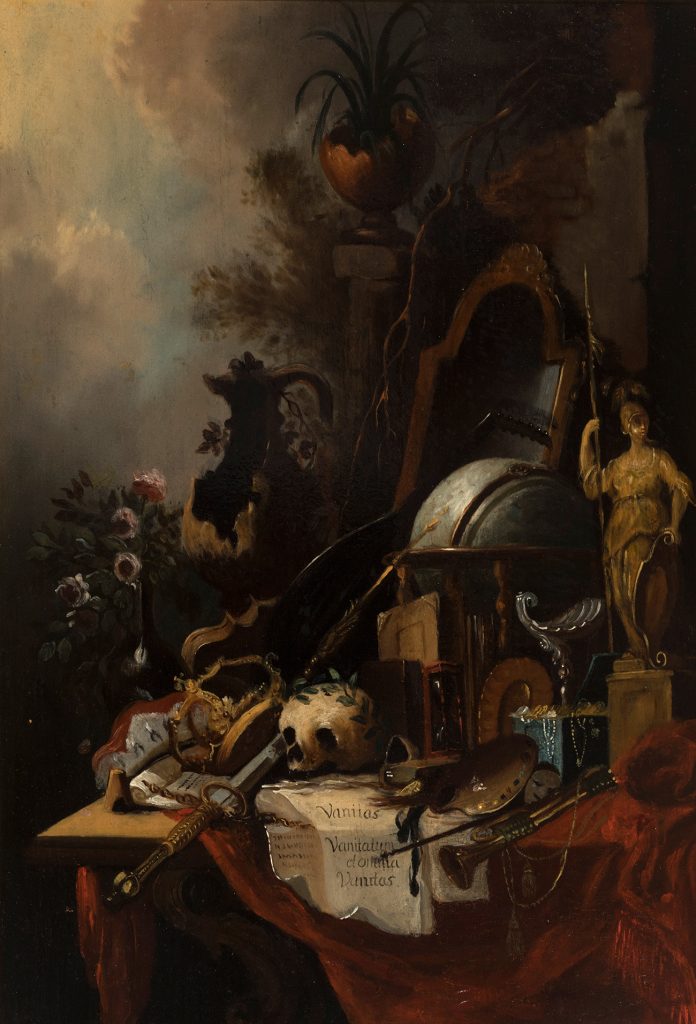
Vanitas are one of the most representative genres where skulls appear in ancient painting. In these still lifes, tables full of food, jewelry, books or musical instruments symbolize wealth and knowledge.
In the midst of this abundance, the skull acts as a silent reminder of the transience of everything material. Like the slave that accompanied the Roman general, its presence introduces an inevitable reflection: all forms of success or pleasure are destined to disappear.
Memento mori: accepting the human condition
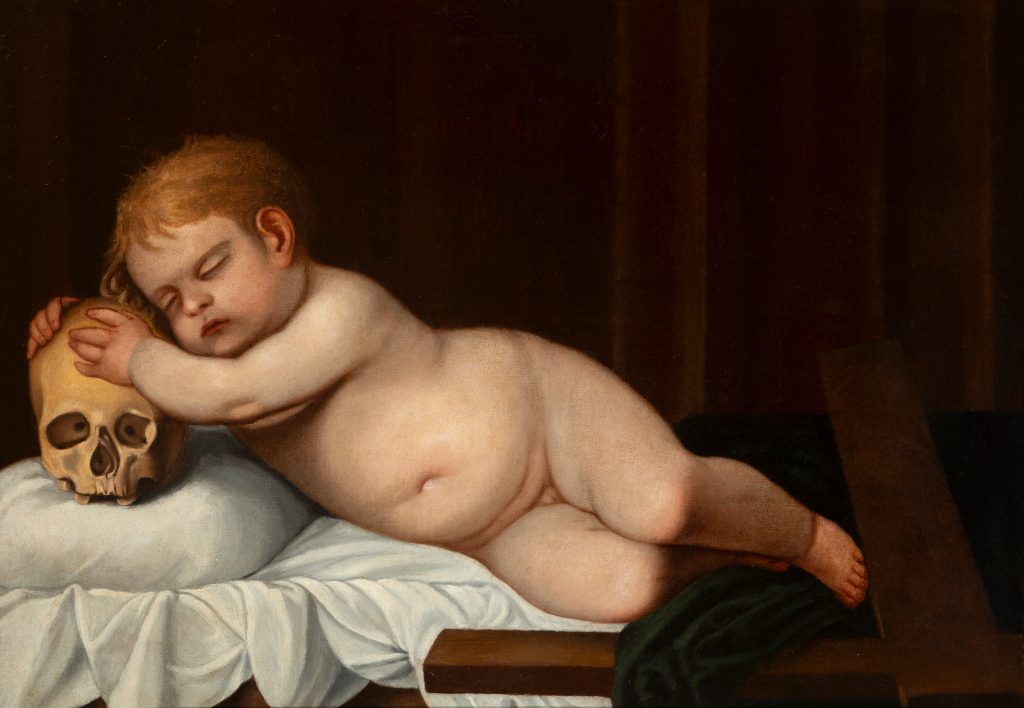
In other compositions, the memento mori motif is presented in a more intimate and symbolic way. A particularly significant example is the representation of the Infant Jesus lying on a skull.
At first glance, the scene may seem disconcerting, but it contains a profound message: the acceptance of human destiny. These skulls in art invite us to contemplate life with serenity, recognizing the inevitability of death as an essential part of existence.
Penance and redemption
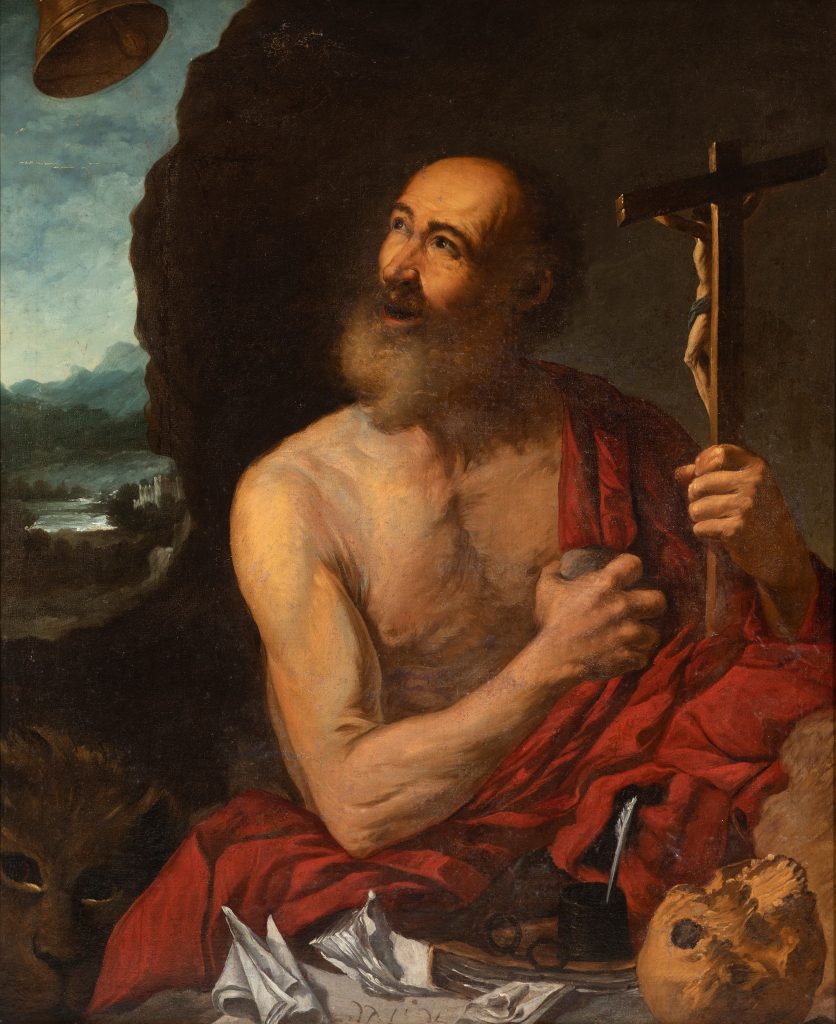
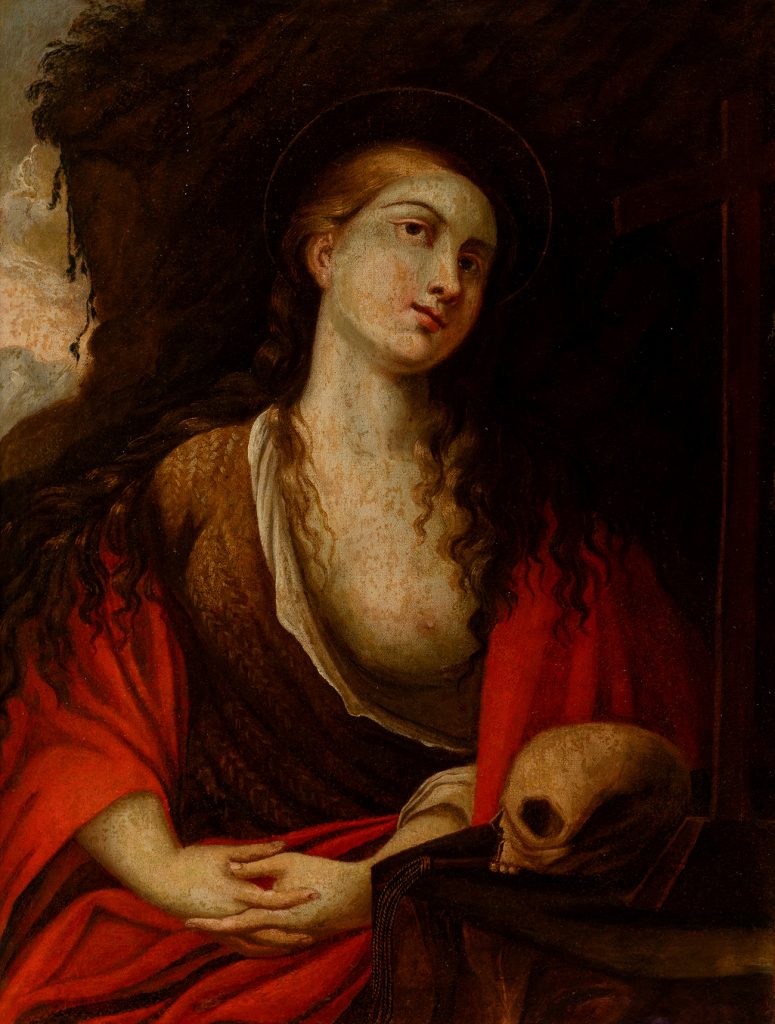
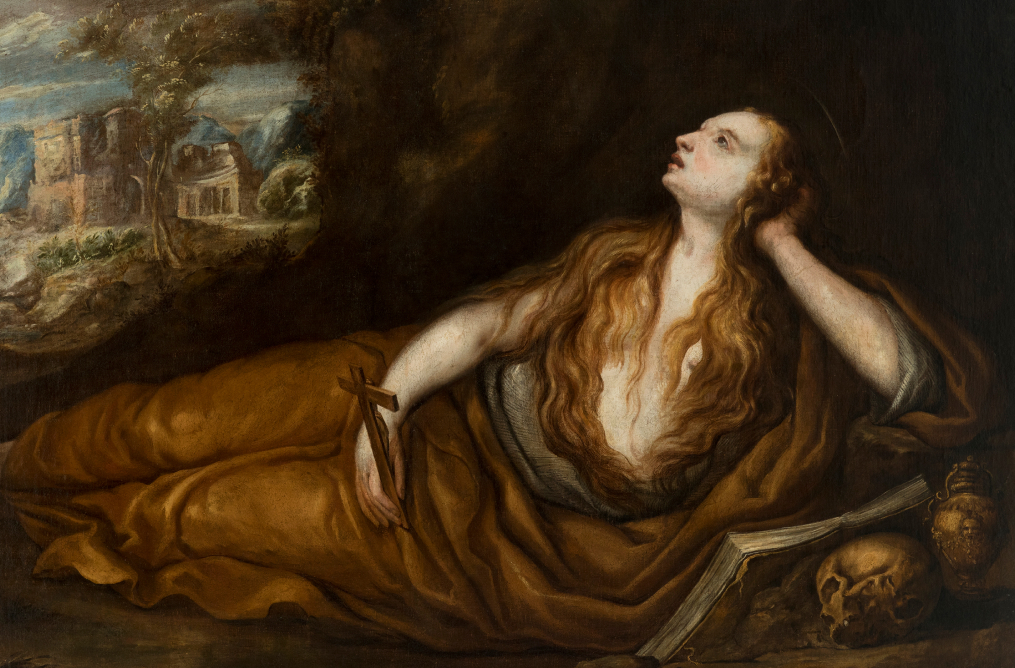
Spanish or Italian school of the XVIII century. “Mary Magdalene penitent”.
Another of the contexts where we find skulls in ancient painting is in the representations of penitent saints. Figures such as St. Peter or Mary Magdalene appear accompanied by a skull as a symbol of reflection, repentance and spiritual transformation.
In these images, the skull is not only a reminder of death, but an emblem of forgiveness and conversion. It reflects the passage from a life marked by error to a new existence guided by faith.
Skulls in art: between the theatrical and the spiritual
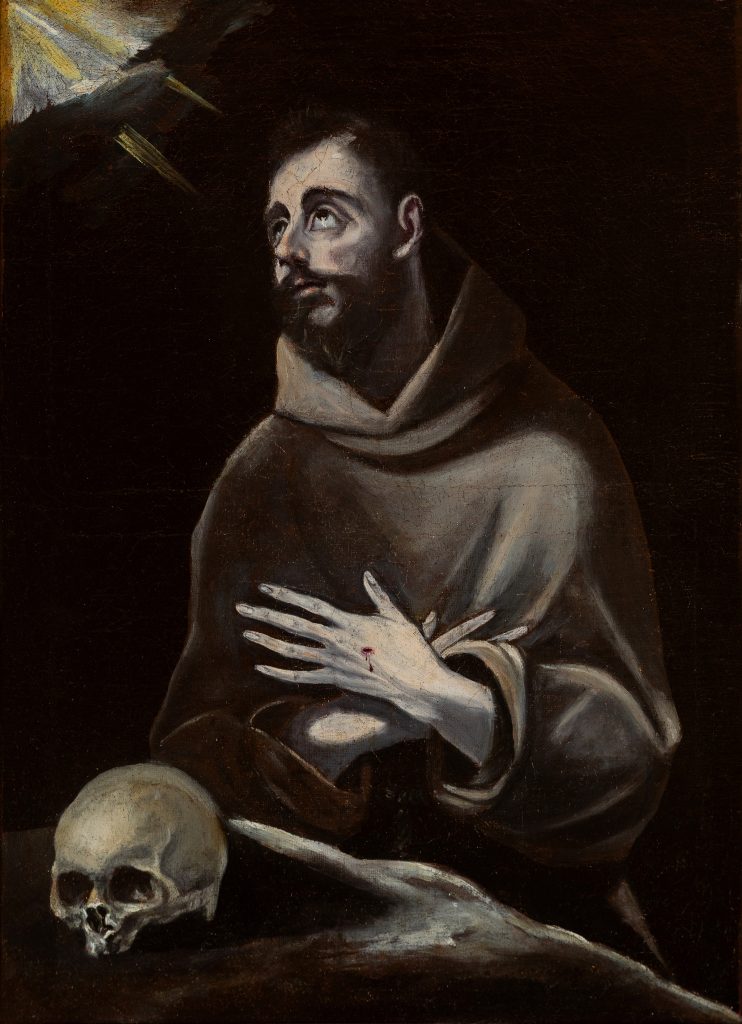
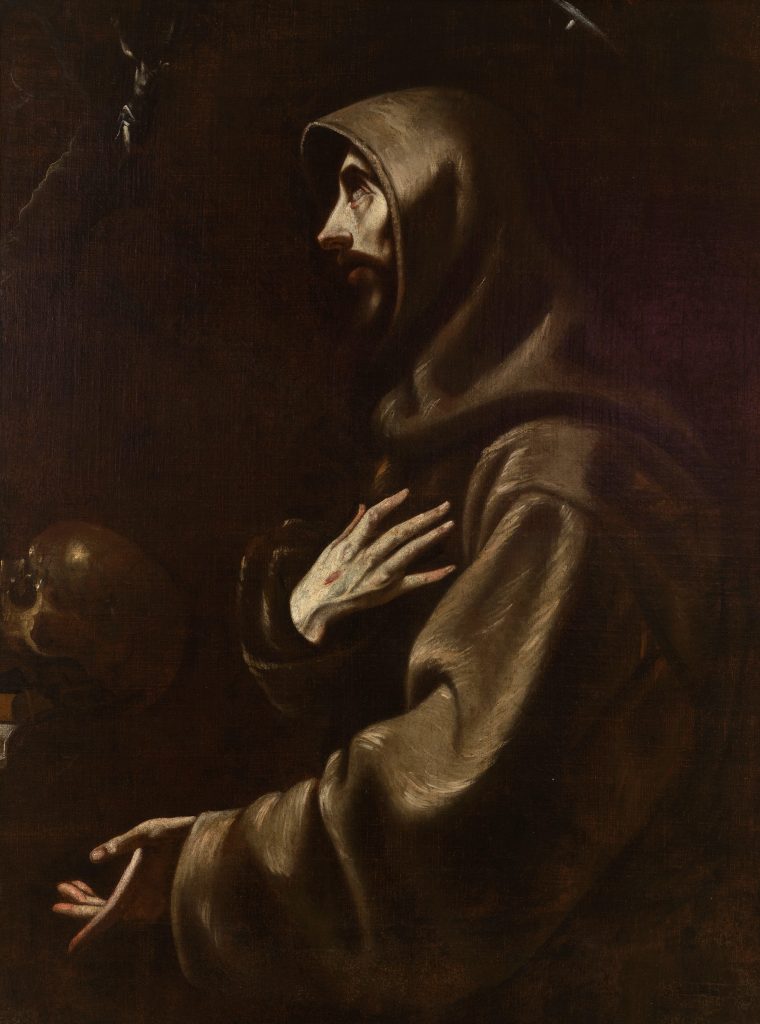
Skulls in baroque art are integrated into a deeply theatrical and dramatic visual language. The religious doctrines, philosophy and thought of the time sought to move and raise awareness in the viewer, and art became the most effective means to achieve this.
In this context, the skull is not an isolated element, but a symbol loaded with meaning that invites a complex reading. Each work demands to stop, observe and decipher its message in relation to the historical moment in which it was created.
An invitation to look beyond
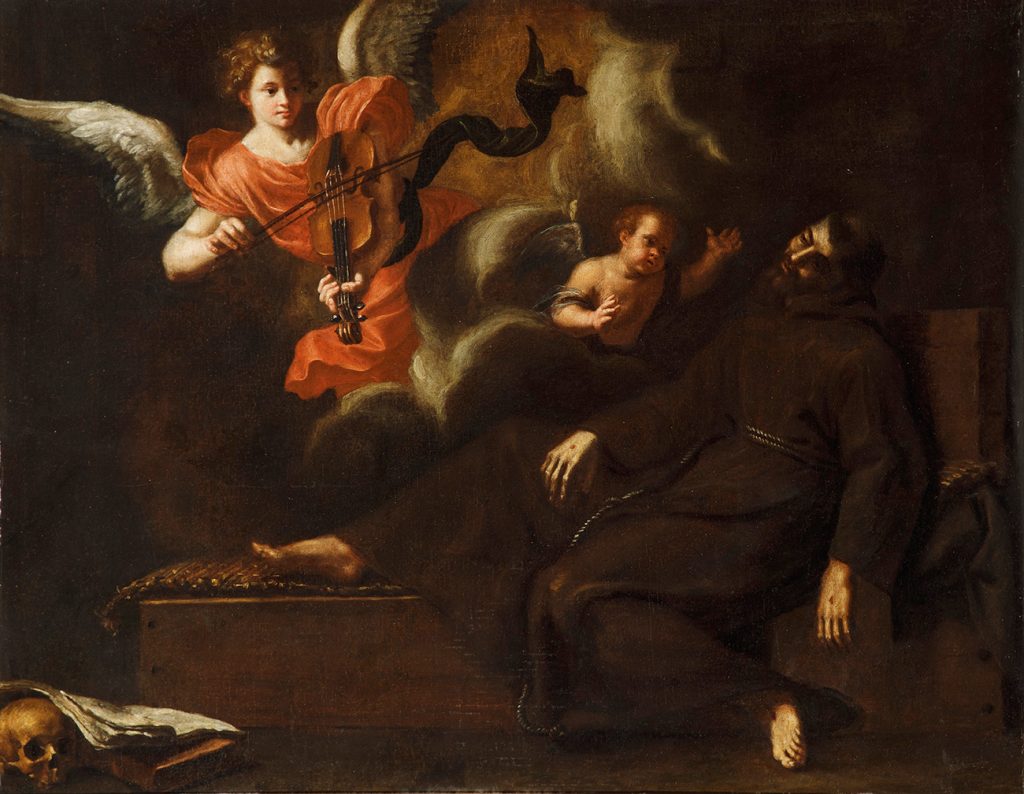
Skulls in art confront us with a fascinating paradox: that which represents the end of life becomes, at the same time, a door to reflection, spirituality and hope.
Understanding skulls in ancient painting involves going beyond their appearance to discover the message they contain. They are symbols that appeal to us directly, reminding us of our human condition and the need to look at art with a deeper sensibility.
We invite you to discover works from this period in the upcoming Old Masters auction and to explore how skulls in art reveal meanings that remain as current as they were at the time of their creation.
If you have an antique or baroque painting collection and you are thinking of selling it, our specialists can advise you and develop a free and confidential appraisal.
If you liked this article you may also like: