Between the 16th and 17th centuries, European painting broadened its scope and redefined its expressive possibilities. Court portraiture perfected the depiction of rank and authority; naturalism introduced a new immediacy to the human figure; and in the former Low Countries, still life and architectural painting established themselves as genres in their own right. These transformations were complemented by other forms of pictorial innovation, in which the fantastic, the grotesque, and the everyday coexisted with religious subjects. Behind this diversity lay distinct political, social, and economic realities, which shaped both the preferences of patrons and the production and circulation of the works. Setdart’s upcoming Old Masters auction offers a journey through some of these traditions via works that highlight the uniqueness of their artists and the different conceptions of the image that coexisted in Europe at the time.
From Court Portraiture to the Intensity of Naturalism
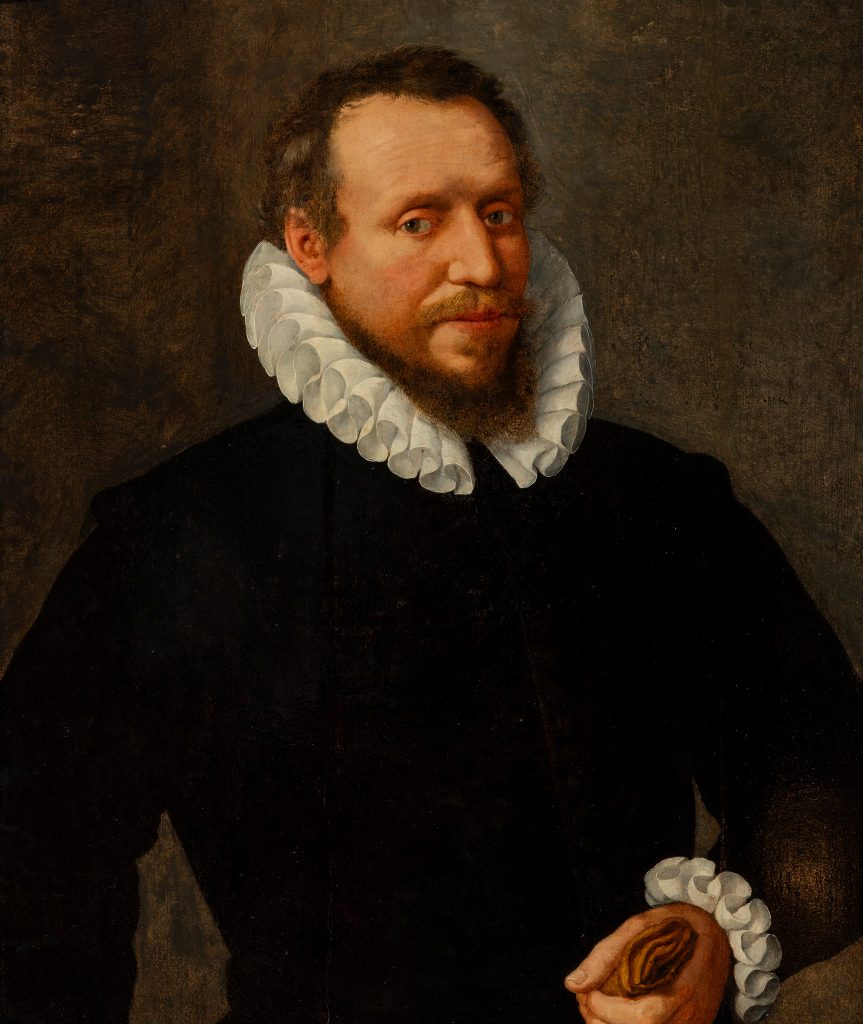
By the end of the 16th century, portraiture had become one of the most elaborate forms of expression in European court culture. Physical likeness was essential, but it was not enough on its own: the painter had to convey in an image the subject’s dignity, rank, and place in the social hierarchy. The choice of clothing, the positioning of the hands, the facial expression, and the simplicity of the background all contributed to a carefully crafted public identity.
The work associated with the circle of Frans Pourbus II featured in this auction is part of this tradition. Working in an environment where portraiture was an essential tool for dynastic and aristocratic representation, Pourbus developed a style characterized by precise drawing, attention to the texture of fabrics, and restrained expression in keeping with courtly conventions. The works associated with his circle illustrate how compositional models and workshop practices helped to disseminate a recognizable image of power.
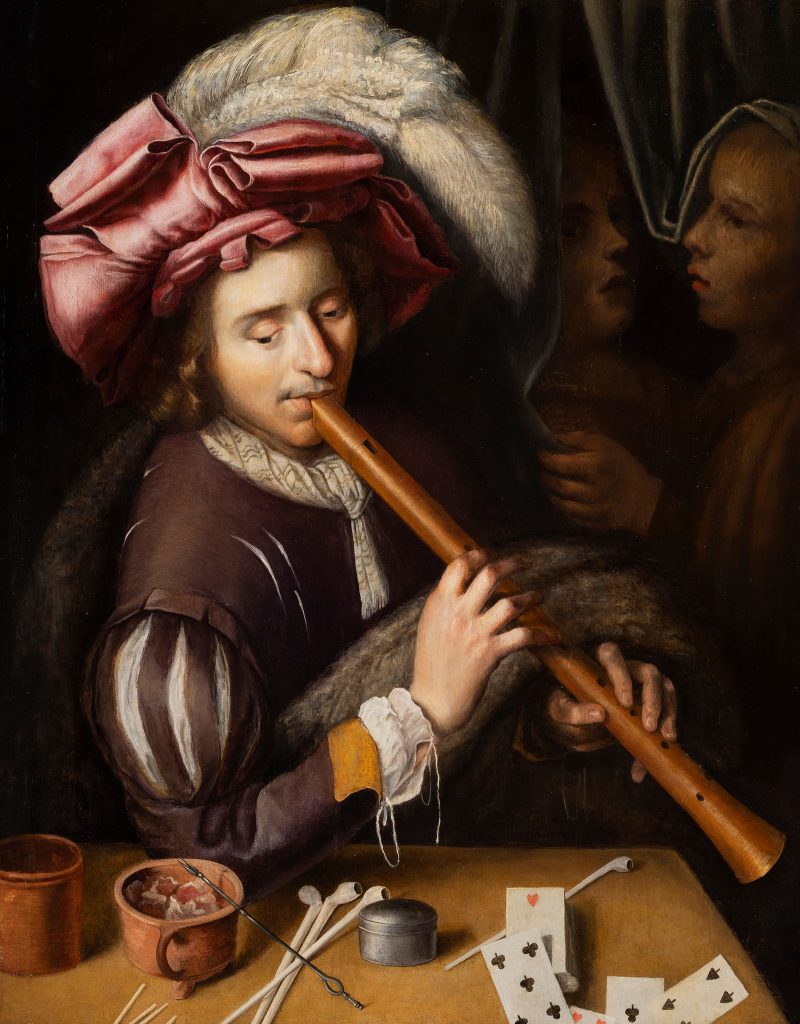
The early decades of the 17th century brought with them new ways of understanding pictorial representation. Caravaggio’s influence was decisive in the renewal of figurative language, as it shifted the focus toward the physical presence of the figures and the expressive power of light. Bodies took on weight and volume; faces acquired an immediacy that often dispensed with idealization; and scenes found in the contrast of light a decisive means of articulating space and directing the viewer’s gaze.
The painting “Young Man Playing a Tenor Recorder,” included in the auction, offers insight into the success of this movement. Far from constituting a uniform style, Caravaggism gave rise to diverse interpretations, adapted to the pictorial traditions of each region. Some artists emphasized the drama of their compositions; others focused particularly on the modeling of the figures or the intensity of the details. Its influence was particularly profound in religious and history painting, although its techniques were also incorporated into other genres.
The Old Netherlands: Pictorial Specialization and Narrative Imagination
The artistic output of the former Netherlands during the 17th century constitutes one of the most diverse chapters in European painting. In the United Provinces, the expansion of a market aimed largely at private buyers fostered specialization among artists and the presence of small- and medium-sized works in domestic interiors. Landscape, still life, genre scenes, and architectural views developed their own conventions and techniques, eventually becoming fields of experimentation in their own right.
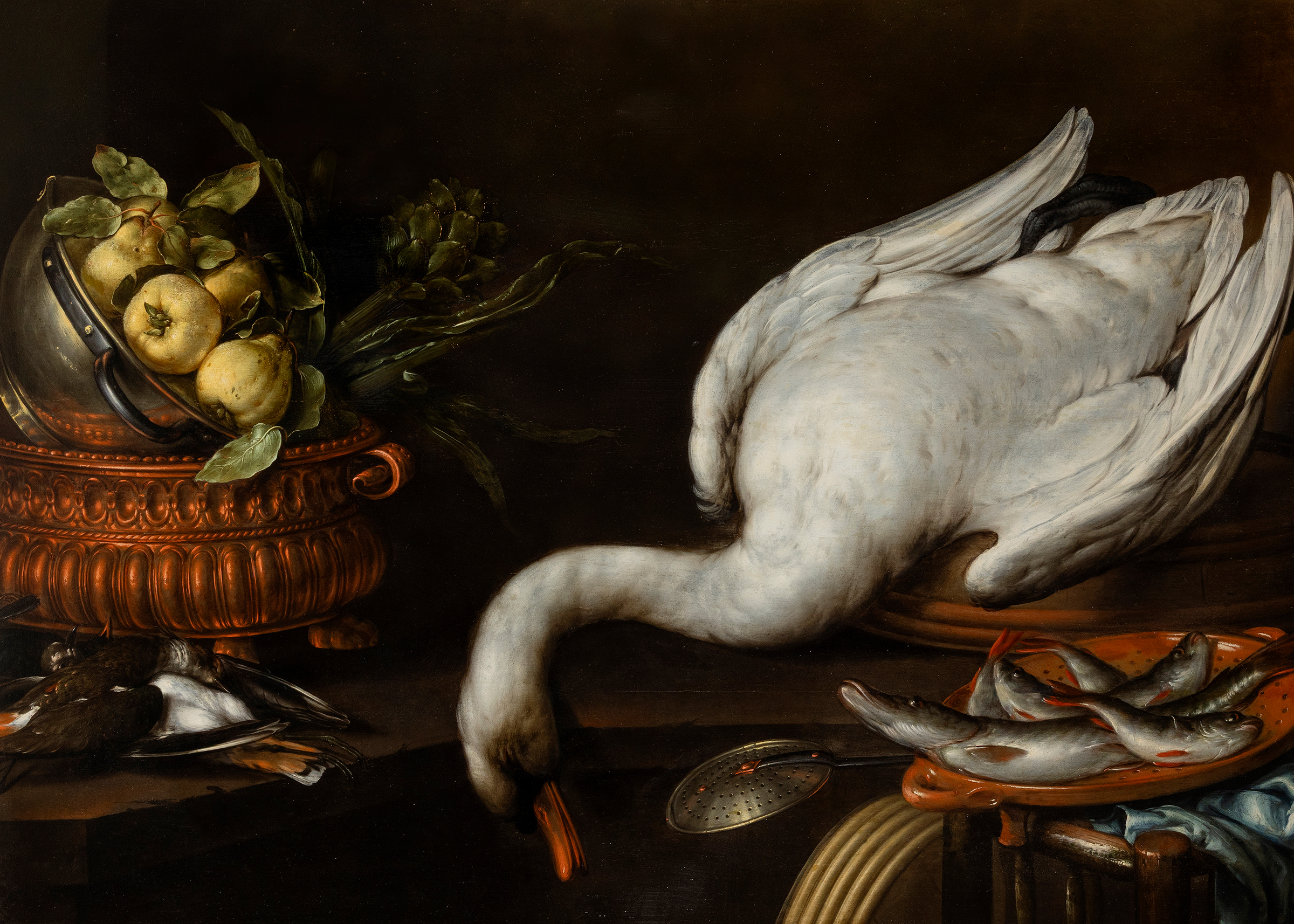
This focus on everyday subjects should not be confused with a neutral reproduction of reality. In still life, for example, the choice of objects and their arrangement on a table were the result of carefully considered compositional decisions. Light, texture, and color made it possible to distinguish materials, establish hierarchies, and create relationships between seemingly disparate elements. The work of Cornelis Jacobsz. Delff offers an insight into this tradition, in which food, containers, and household utensils become the focal points of a pictorial exploration of the qualities of matter.
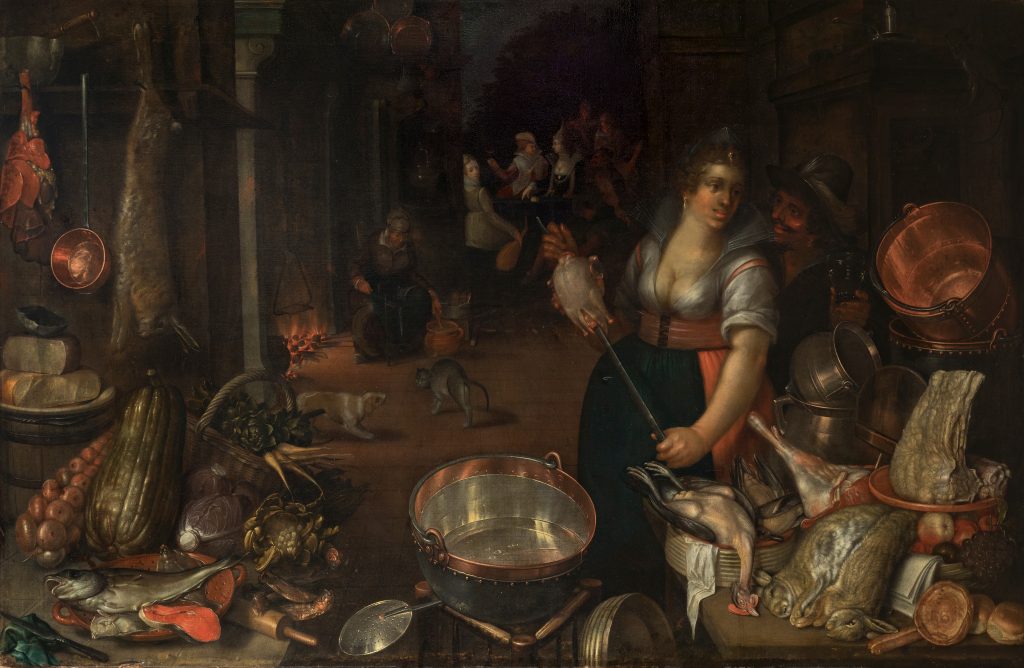
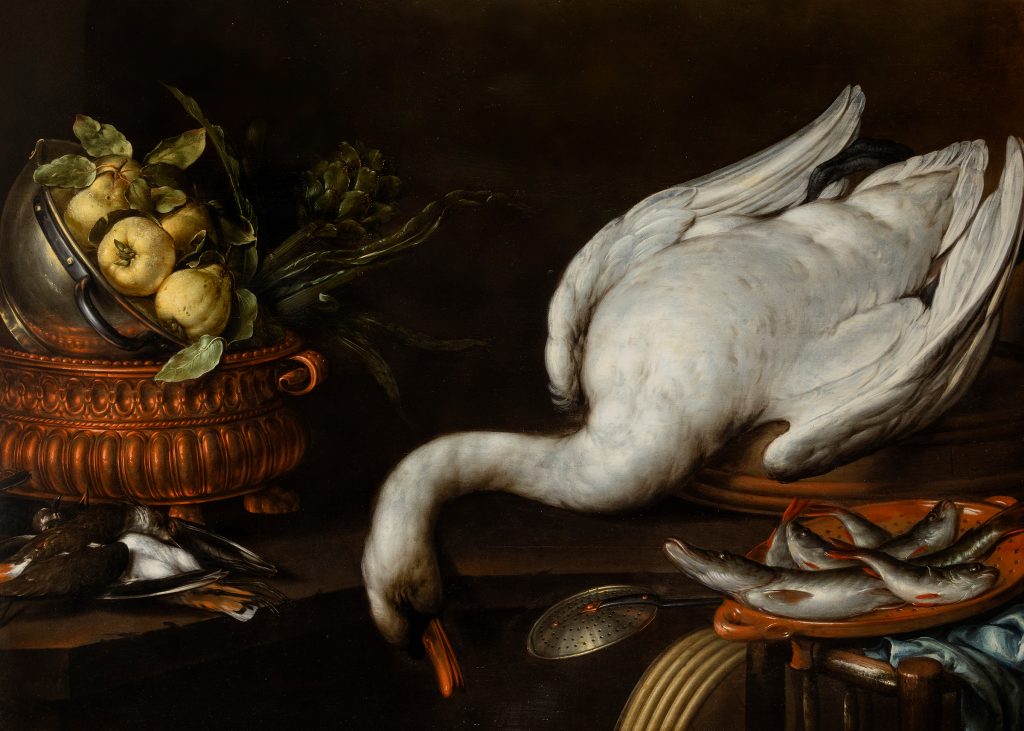
The appeal of these compositions also lies in the tension between abundance and order. The accumulation of objects does not preclude a carefully calculated structure; on the contrary, the balance of volumes, the interplay of light and shadow, and the relationship between the various surfaces determine the coherence of the whole.
The technical virtuosity of these master craftsmen of yesteryear is evident in their ability to distinguish between the rough and the smooth, the opaque and the translucent, or the density of a food item and the fragility of a container.
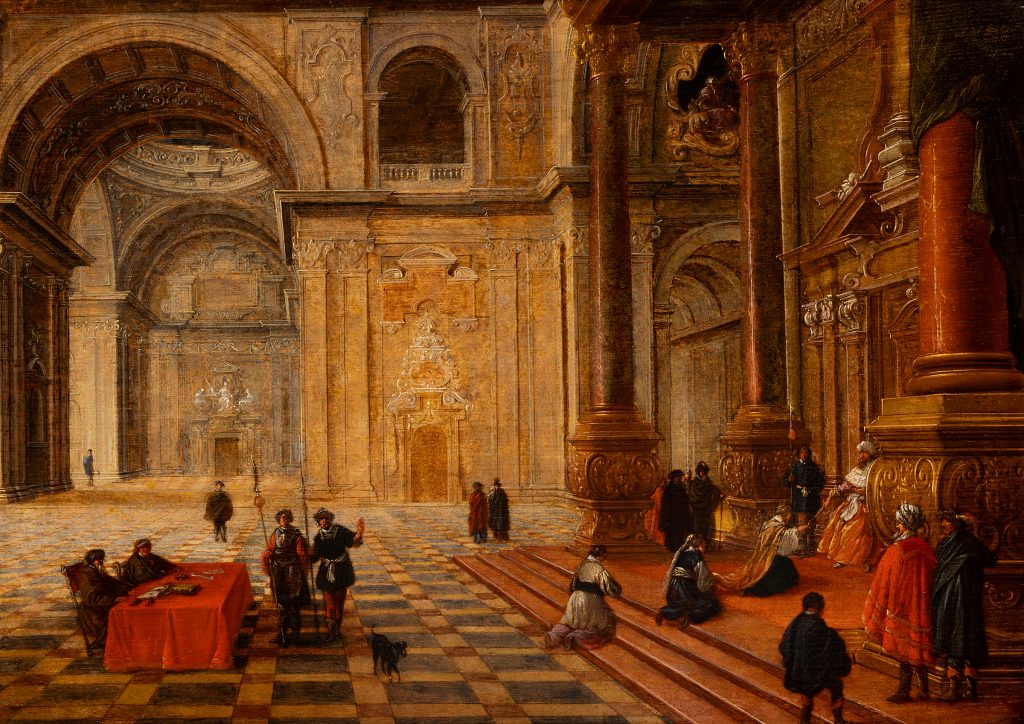
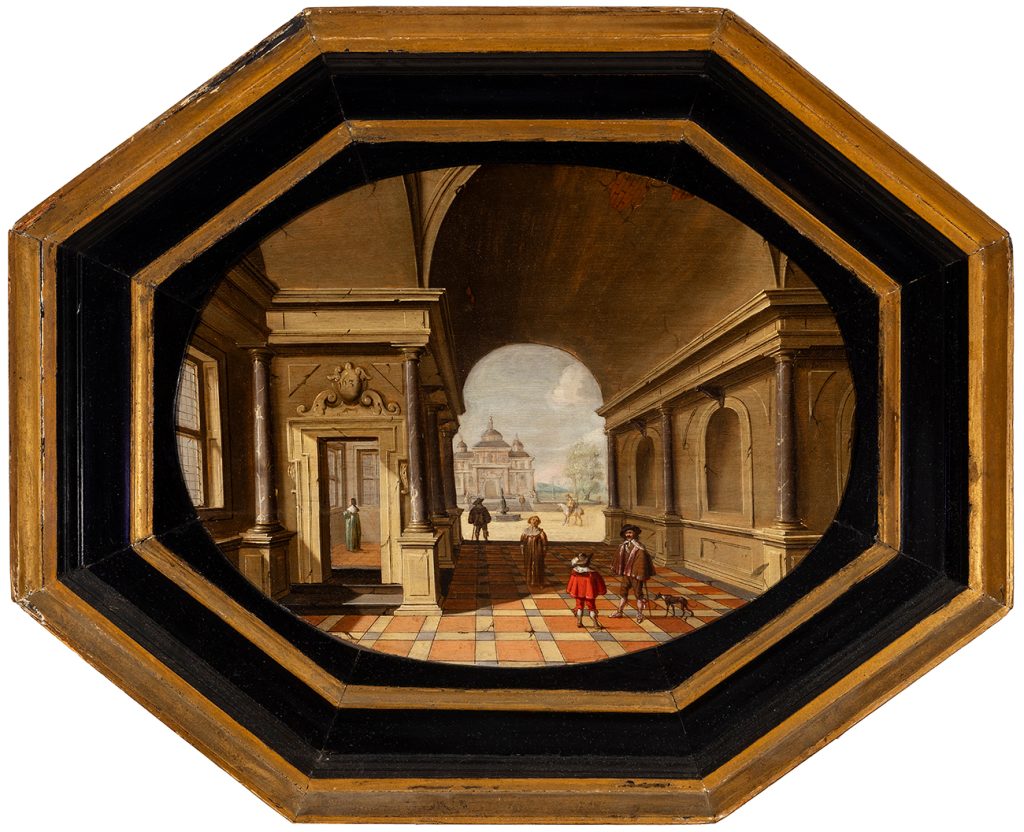
A different approach—though equally rigorous in its conception of space—can be found in architectural painting. Bartholomeus van Bassen was one of the artists associated with the development of this genre, in which monumental interiors took center stage as an independent subject. Columns, arcades, floors, and sequences of rooms are organized through a calculated perspective that draws the eye toward the background and establishes a precise relationship between the different parts of the space. Architecture here is not merely a backdrop for human activity: its structure determines the rhythm of the composition and constitutes the primary focus of interest.
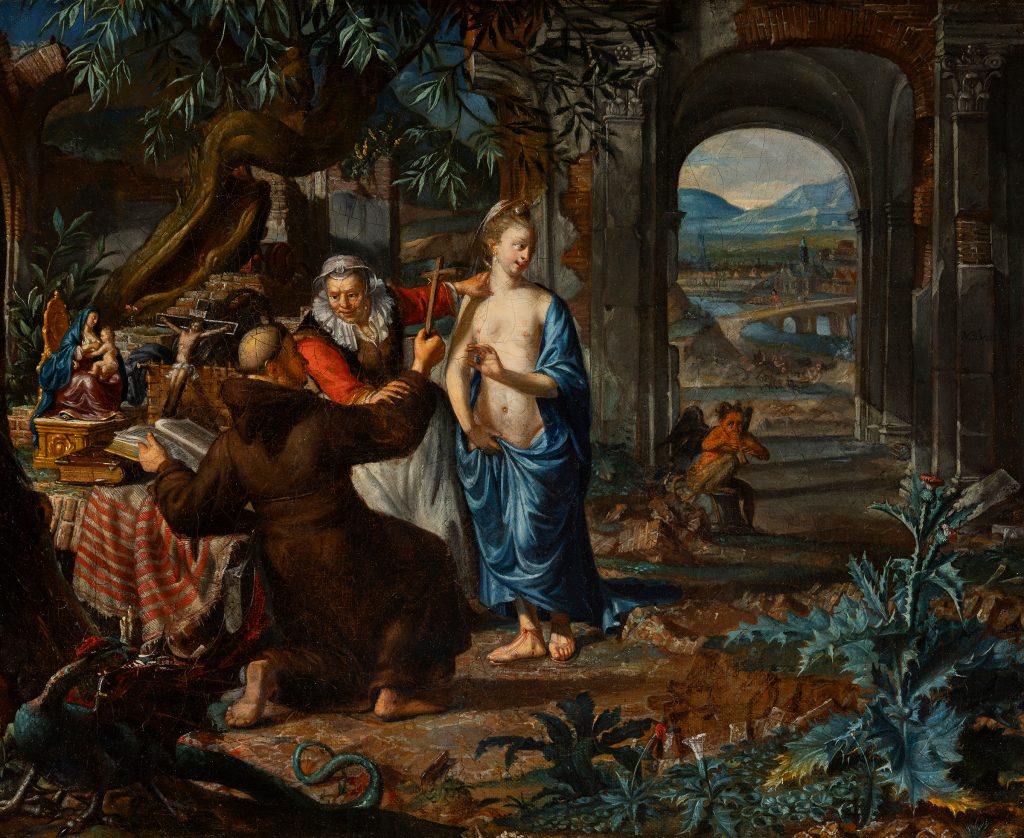
Dutch painting, however, was not limited to the meticulous observation of objects or the exploration of perspective. Alongside these genres, a tradition of fantastical imagery persisted, in which religious subjects provided fertile ground for the invention of hybrid creatures, grotesque scenes, and episodes of unsettling ambiguity. Matthijs Naiveu’s work offers a glimpse into this aspect of painting, which is less tied to the orderly depiction of the visible world than to painting’s capacity to represent the extraordinary.
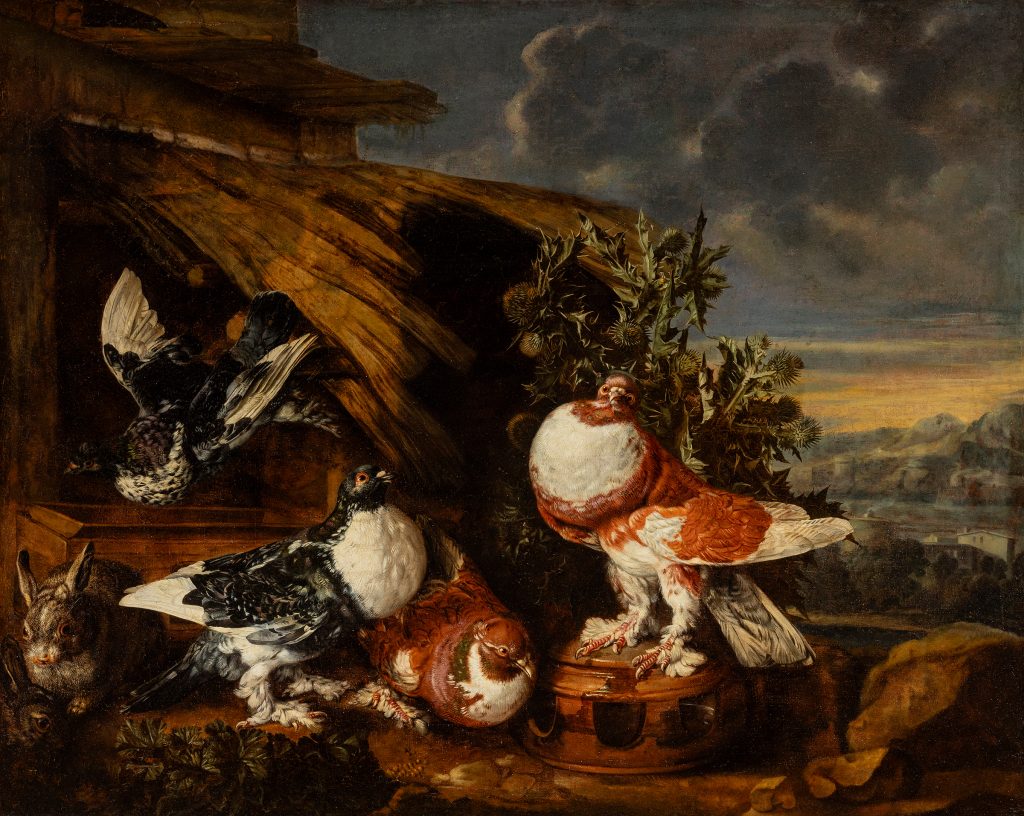
The works of Hans Jurriaensz van Baden and Carstiaen Luyckx broaden this perspective and allow us to appreciate the variety of interests that characterized the Northern painters. Their careers point to an artistic culture in which specialization coexisted with the circulation of models and the exchange of techniques among workshops. The diversity of subjects did not prevent them from sharing certain technical concerns: the construction of the scene, the treatment of light, the definition of volumes, or the arrangement of elements within the pictorial surface. Each artist approached these issues from his own unique perspective, shaped by his training and the type of work to which he devoted his efforts.
It is important to distinguish, however, between the painting of the United Provinces and that produced in the Flemish territories under Habsburg rule. Geographical proximity and exchanges between the two traditions should not obscure the differences in their respective contexts. While the private market took on particular importance in the Dutch Republic, ecclesiastical and court commissions retained considerable significance in Flanders, alongside an active production aimed at other buyers. These circumstances helped shape distinct thematic repertoires and formats, although the boundaries between the two spheres were never completely impermeable. Recognizing their specific characteristics allows us to contextualize the works with greater precision and appreciate the richness of an artistic landscape that is far from homogeneous.
Old Masters: Different Perspectives on European Painting
The diversity brought together in this auction allows us to understand 16th- and 17th-century painting as a realm of parallel explorations, in which the representation of power, the observation of reality, and the invention of imaginary worlds respond to distinct interests. Each work reflects not only the personality of its artist but also the expectations of society and the conditions under which art was produced, acquired, and viewed. Engaging with these Old Masters, therefore, means recognizing the plurality of an era in which there was no single pictorial ideal, but rather multiple ways of interpreting the world through images. The Old Masters auction invites you to discover these differences and to appreciate in them an essential part of the history of European art.