Although they belonged to different generations, Antoni Clavé and Antoni Tàpies developed their careers within the context of postwar artistic renewal in Spain. At different times, both contributed to the expansion of painting into new languages, during a period when numerous artists began to question inherited models of representation and seek new forms of expression. In their respective works, this process resulted in a gradual departure from traditional representation and a growing focus on the possibilities of material, surface, gesture, and color.
Their paths toward abstraction, however, were fundamentally different. In Clavé’s work, the image arises from the fragmentation, superimposition, and accumulation of elements, which gradually alter its figurative character; in Tàpies’s work, representation is progressively reduced until it gives way to a painting in which material and the sign take center stage.
Antoni Clavé: From Image to Abstract Construction
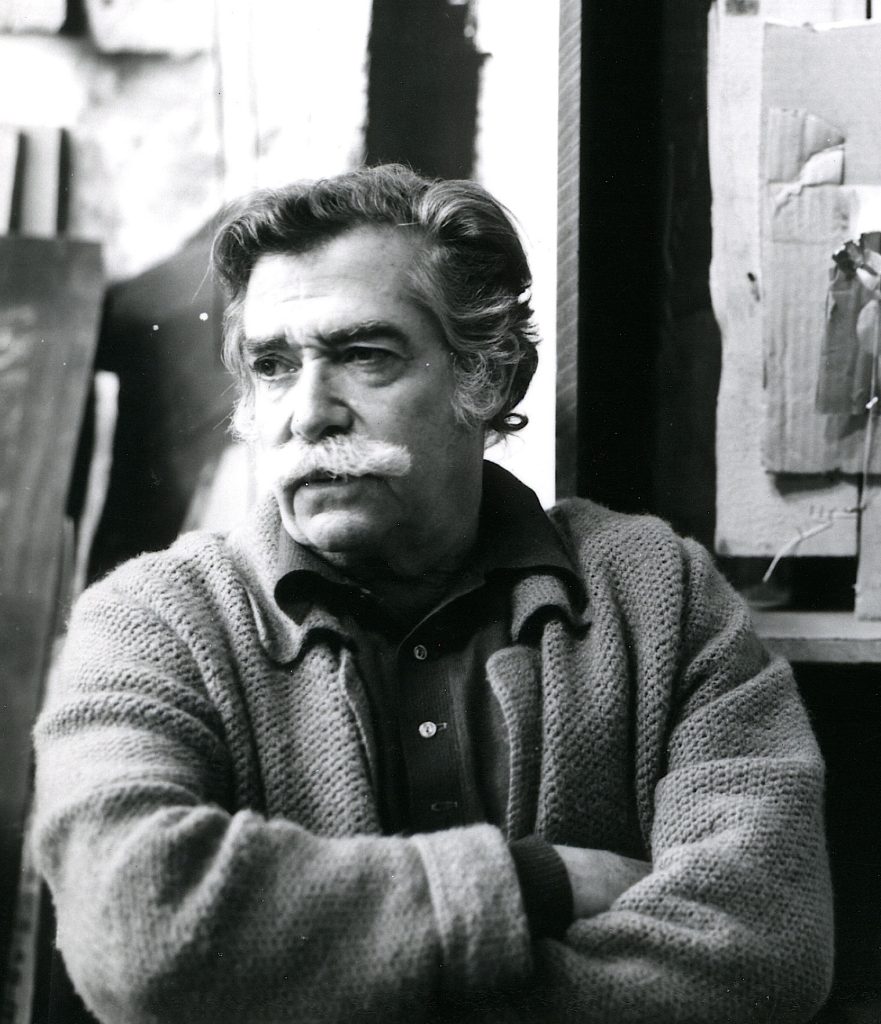
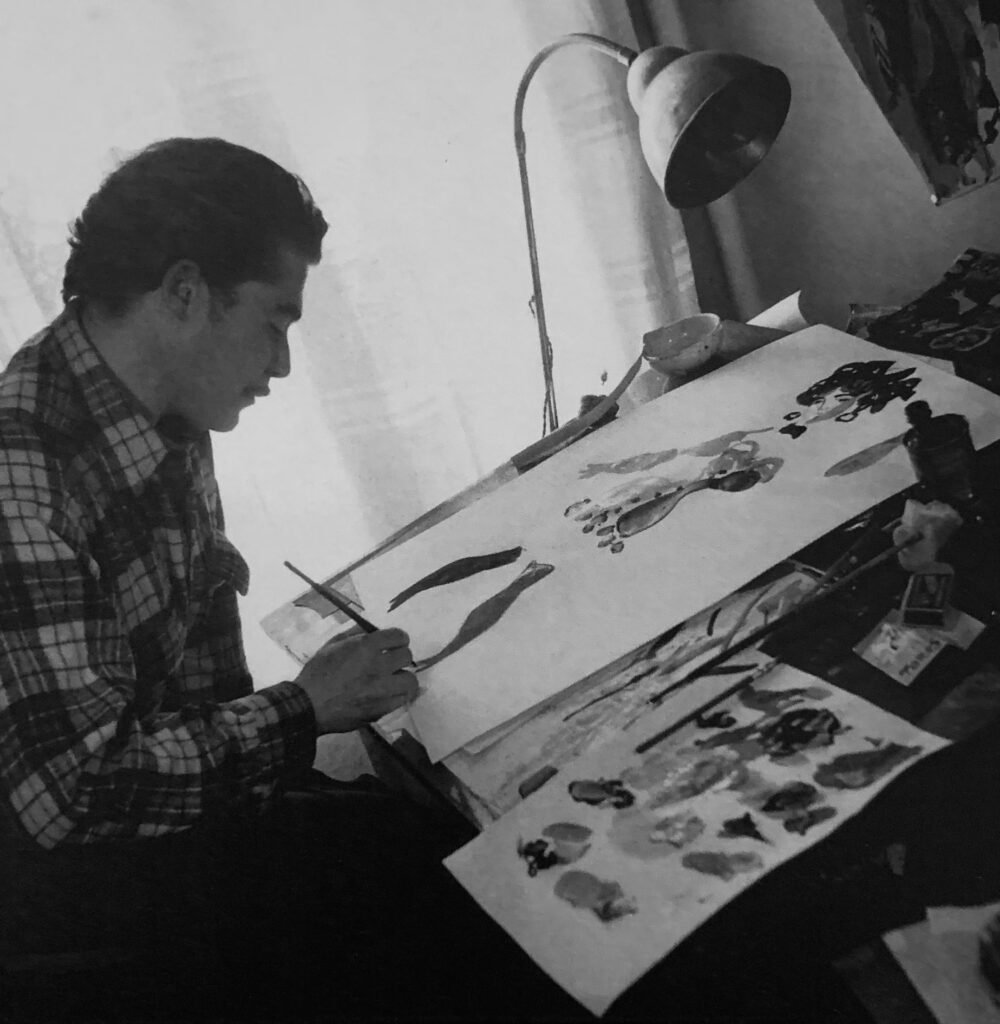
Antoni Clavé’s evolution toward abstraction was a gradual process. His early works are rooted in figurative art and an interest in characters and objects that, over time, begin to lose their definition. The image fragments, overlaps, and gradually becomes an autonomous structure.
This process is closely linked to his interest in collage and the incorporation of diverse materials. Paper, fabric, crumpled surfaces, textures, and layers of paint allow Clavé to construct the painting as an object, not merely as a representation.
The surface thus takes on fundamental importance. Rather than functioning as a transparent space onto which an image is projected, it becomes a territory composed of different layers. The viewer discovers fragments, overlays, and areas of varying density that maintain a certain tension between the recognizable and the abstract.
This concept also explains the recurring presence of certain motifs throughout his career—warriors, armor, figures, or elements linked to tradition—even when his work has moved far beyond figuration. Clavé does not necessarily eliminate the image; rather, he transforms it until it becomes matter and structure.
Color as a Structural Element in Clavé
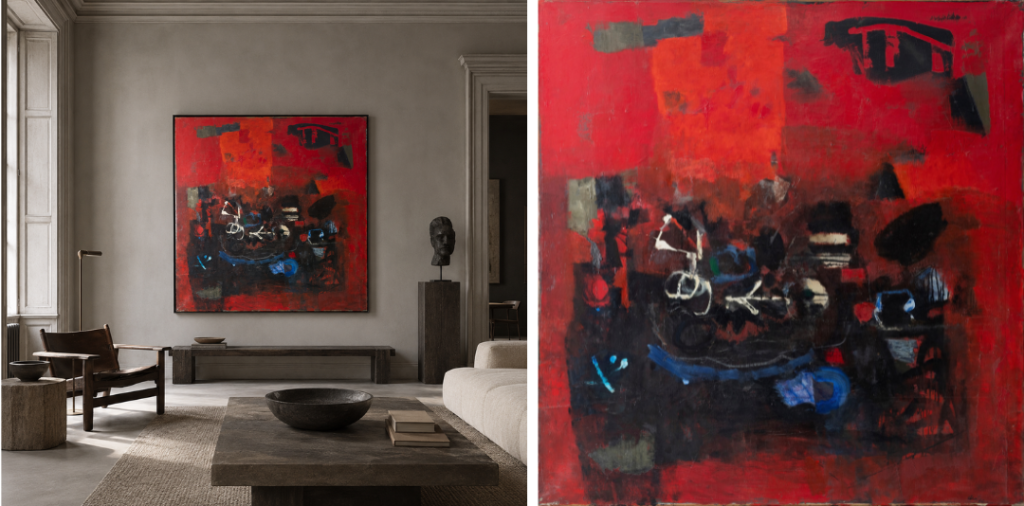
As his career progresses, color takes on an ever-greater degree of autonomy. Reds, blacks, blues, whites, and earth tones are no longer subordinate to a particular representation but become elements capable of organizing the pictorial space on their own.
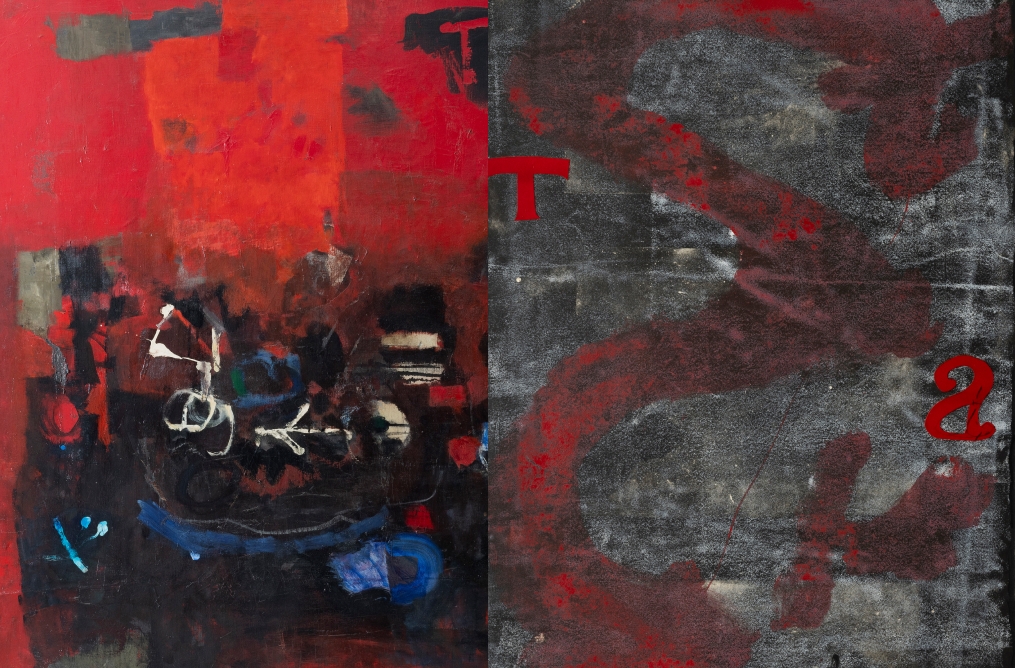
In *Rouge, noir, bleu*, for example, red has a dominant presence. A broad field of carmine envelops and articulates a composition built from blacks, earthy tones, whites, blues, and ochres. The overlapping patches and strokes break the continuity of the surface and create a sense of movement. Red does not function solely as an expressive color: it structures the composition. It expands the space and creates a sense of tension with the dark areas and the various chromatic fields.
This constructive dimension is essential to understanding Clavé’s abstraction. His painting is not based solely on the elimination of the figure, but on the creation of a new space through the interplay of color, material, texture, and layering.
Antoni Tàpies: Matter as Language
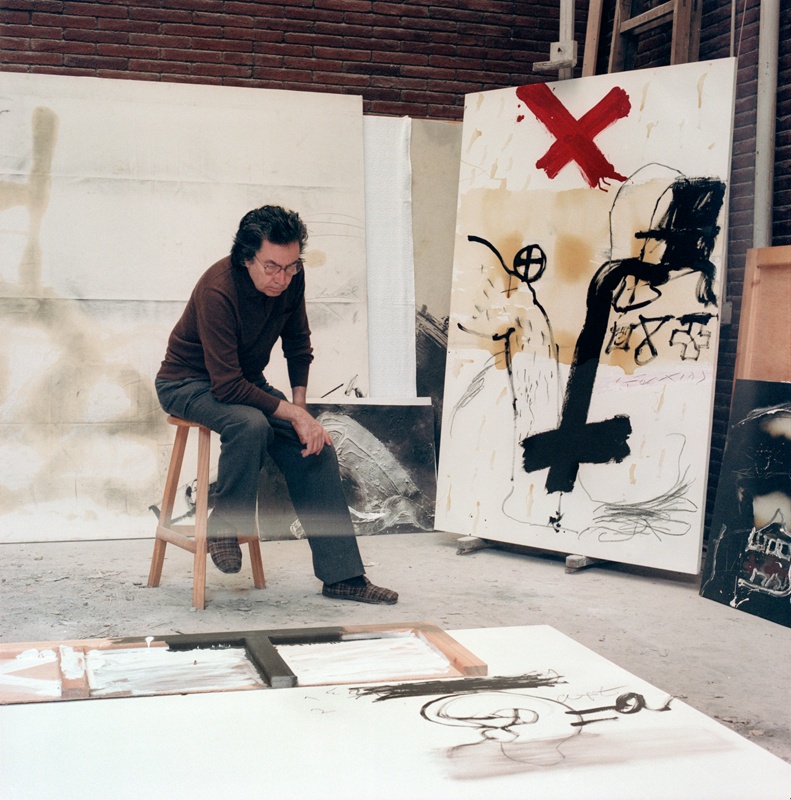
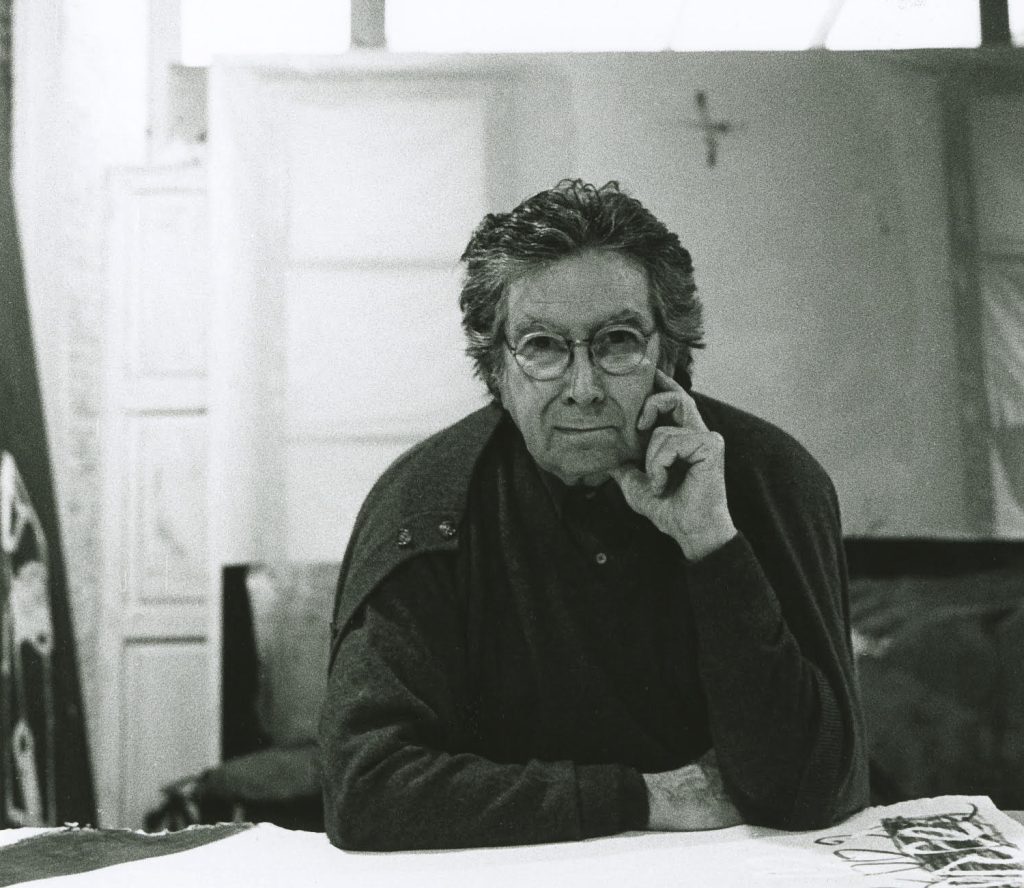
Antoni Tàpies’s journey toward abstraction stems from a different concern. Beginning in the late 1940s, his work underwent a gradual transformation that led him to abandon most of his figurative references and focus on the expressive possibilities of the material.
Beginning in the 1950s, so-called “material paintings” became one of the main cornerstones of his artistic language. Tàpies incorporated materials such as sand, earth, marble dust, paper, and fabric into his paintings, creating dense, rough, and eroded surfaces. The painting then begins to take on an almost physical dimension. It is no longer simply a matter of contemplating an image, but of confronting a surface that appears to have been constructed, eroded, and transformed by time.
Herein lies one of the fundamental differences with Clavé. While in Clavé’s work the material contributes to the construction of a composition, in Tàpies’ work the material becomes the very language of the artwork itself.
Tàpies: From the Wall to the Sign
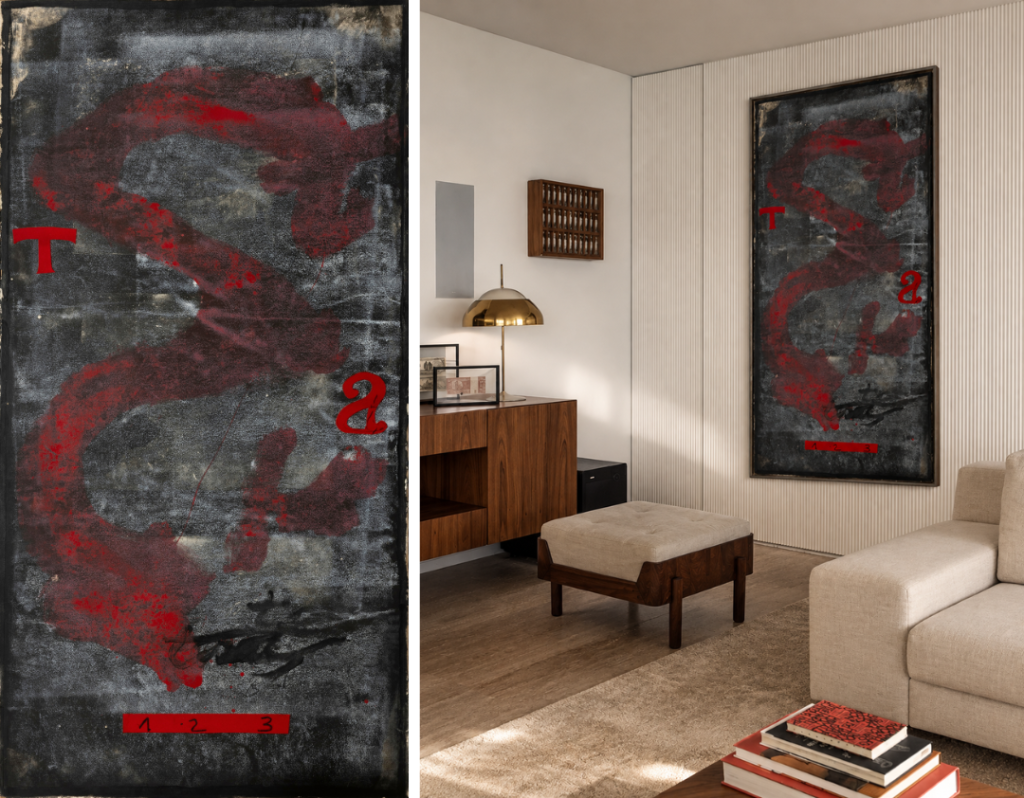
Tàpies’s surface is closely linked to the image of the wall. An aging wall bears stains, cracks, inscriptions, and anonymous marks. The artist transforms this everyday appearance into a pictorial space rich in meaning.
Crosses, letters, numbers, symbols, and lines appear on these surfaces. These are not elements that we must necessarily interpret as symbols with a single meaning. Rather, they function as open signs, capable of suggesting associations and introducing a human, spiritual, or existential dimension into the work.
For this reason, Tàpies’ abstraction is never purely formal. Even when conventional representation disappears, the trace, the mark, and the gesture remain. The painting thus retains a direct connection to human experience.
In *Sinuós amb vermells*, red appears integrated into a dark, eroded surface. The red strokes do not organize the space in the same way as in *Clavé*: they seem to emerge from the material itself, like gestures that traverse and activate the surface.
Clavé and Tàpies: Two Perspectives, One Movement
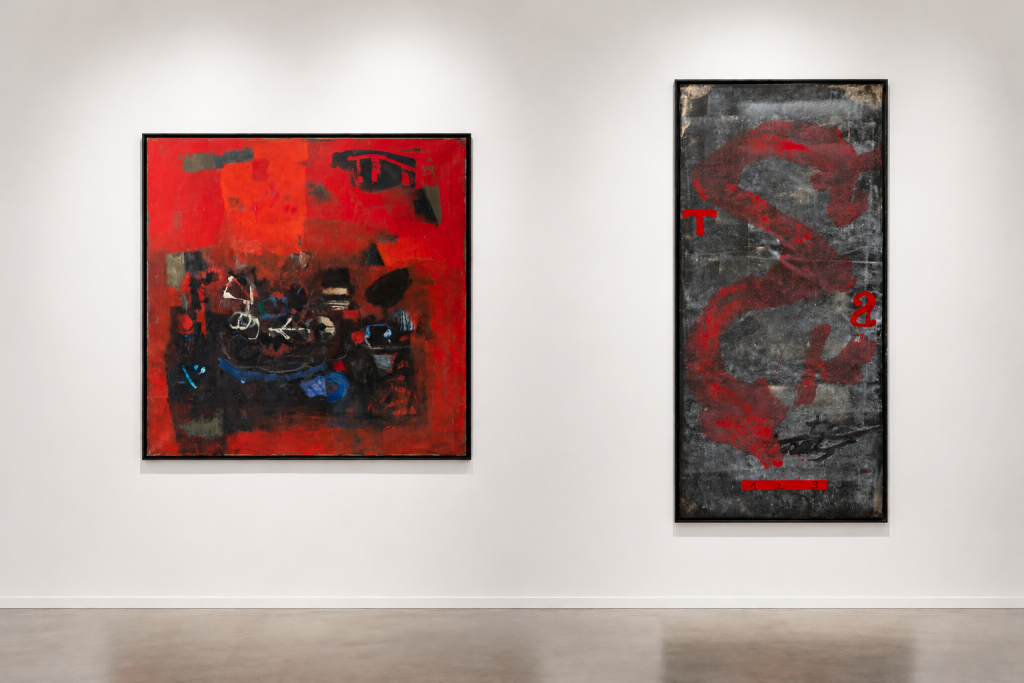
The differences between Clavé and Tàpies demonstrate the richness of Spanish abstraction in the second half of the 20th century: the same context could give rise to deeply personal artistic languages.
In Clavé’s work, painting maintains a tension between image and abstraction, between composition and material; in Tàpies’s work, that tension shifts to the surface, where gesture, mark, and sign take on new meaning.
Rather than representing two opposing ways of understanding painting, their works embody two ways of pushing its boundaries. And it is precisely in that freedom to experiment that one of the most significant aspects of their respective careers lies.
The work of Antoni Clavé and Antoni Tàpies offers us a glimpse into two of the artistic languages that shaped the renewal of Spanish art during the second half of the 20th century. Their different approaches to abstraction, material, and gesture converge at Setdart’s upcoming Contemporary Art and Latest Trends Auction, to be held on October 27—an opportunity to explore the diverse sensibilities and forms of expression that have shaped the contemporary art scene.