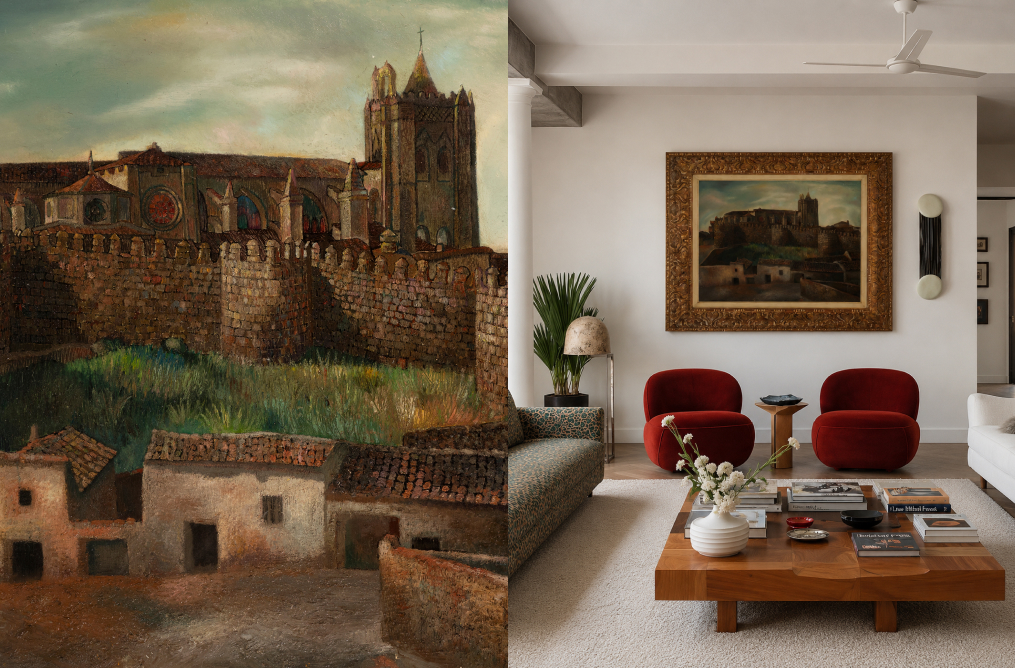
The appearance on the market of an early work by Wifredo Lam is always a relevant event. Even more so when it is a painting like Ávila, created during the artist’s formative years in Spain. The work, which represents the walled profile of the city of Avila under a dense and evocative atmosphere, places us before a Wifredo Lam still immersed in the study of the European pictorial tradition. However, far from being a simple landscape painting, it constitutes an exceptional testimony of the learning and transformation processes that would end up defining one of the most singular trajectories of 20th century art.
Wifredo Lam: an artist between cultures
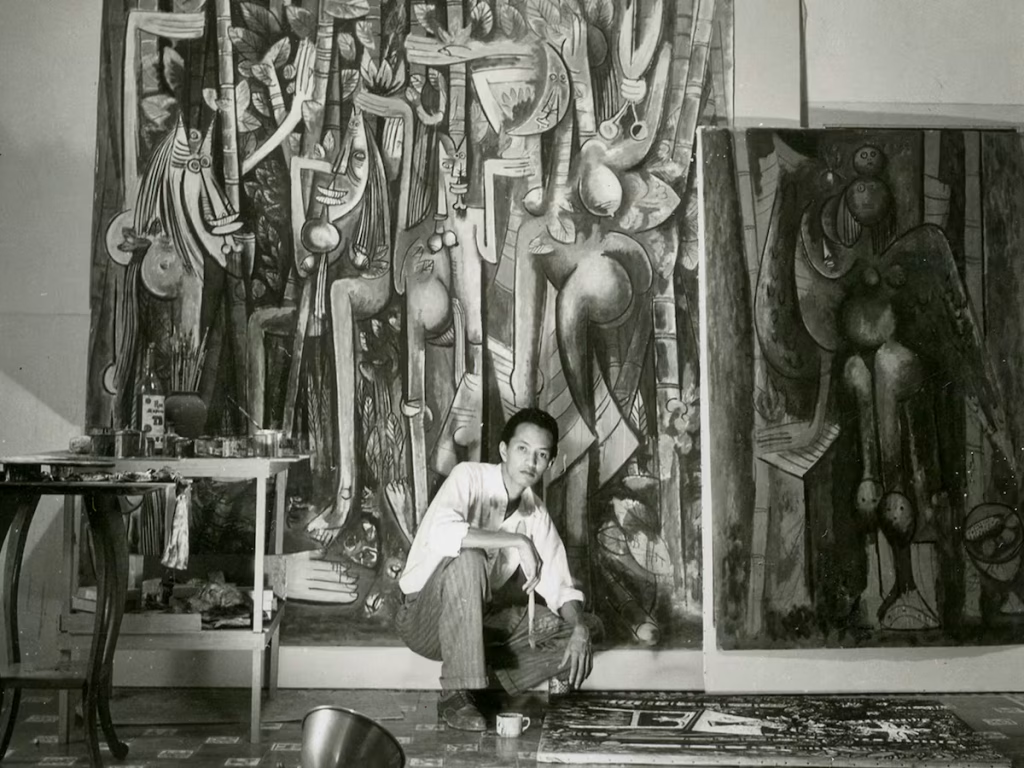
Born in Cuba in 1902, Wifredo Lam embodied the cultural complexity of modernity like few other artists. Of Chinese, African and European descent, his work developed in a constant crossroads of identities, geographies and influences. After his training in Havana, he moved to Spain in 1923, where he studied in Madrid and came into contact with the great Spanish pictorial traditions, from Velázquez to Goya.
It was precisely during these years that Wifredo Lam produced works such as Ávila, characterized by a solid spatial construction, an attentive observation of architecture and a chromatic sensibility that is still within figurative parameters. These paintings allow us to understand the extraordinary technical mastery that would later sustain his avant-garde experimentations.
Avila: tradition and modernity in the work of Wifredo Lam
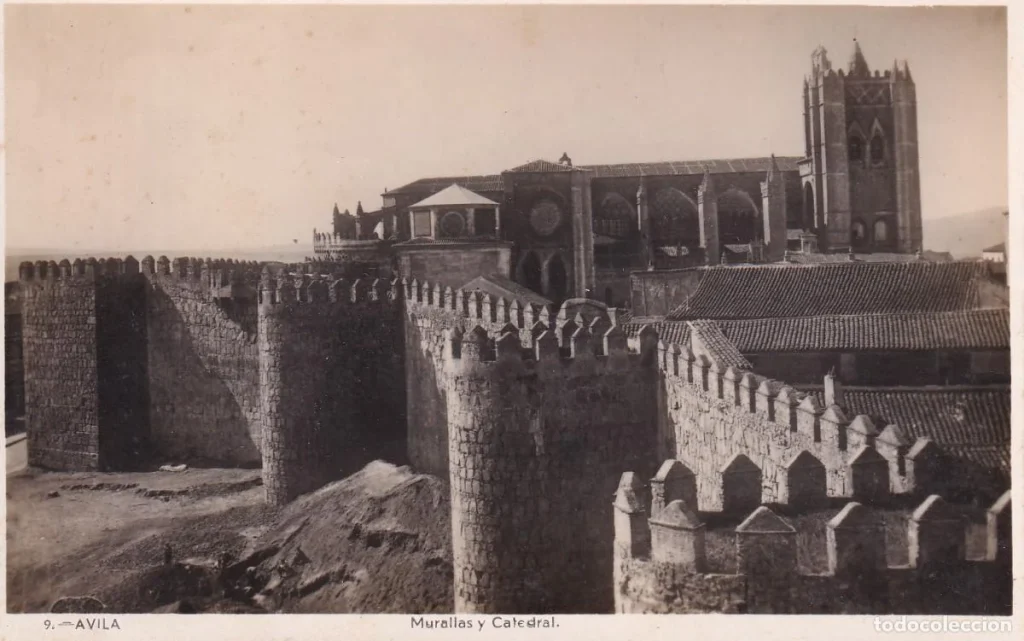
The city of Avila was a powerful attraction for many artists and intellectuals at the beginning of the 20th century. Its monumental walled enclosure, one of the best preserved medieval complexes in Europe, offered an image loaded with history and symbolism.
In this painting, Lam does not limit himself to recording an urban landscape. The composition conveys a sense of almost metaphysical monumentality. The walls emerge as a dominant architectural presence, while the diffuse light and haunting sky generate an atmosphere of introspection that transcends mere topographical description.
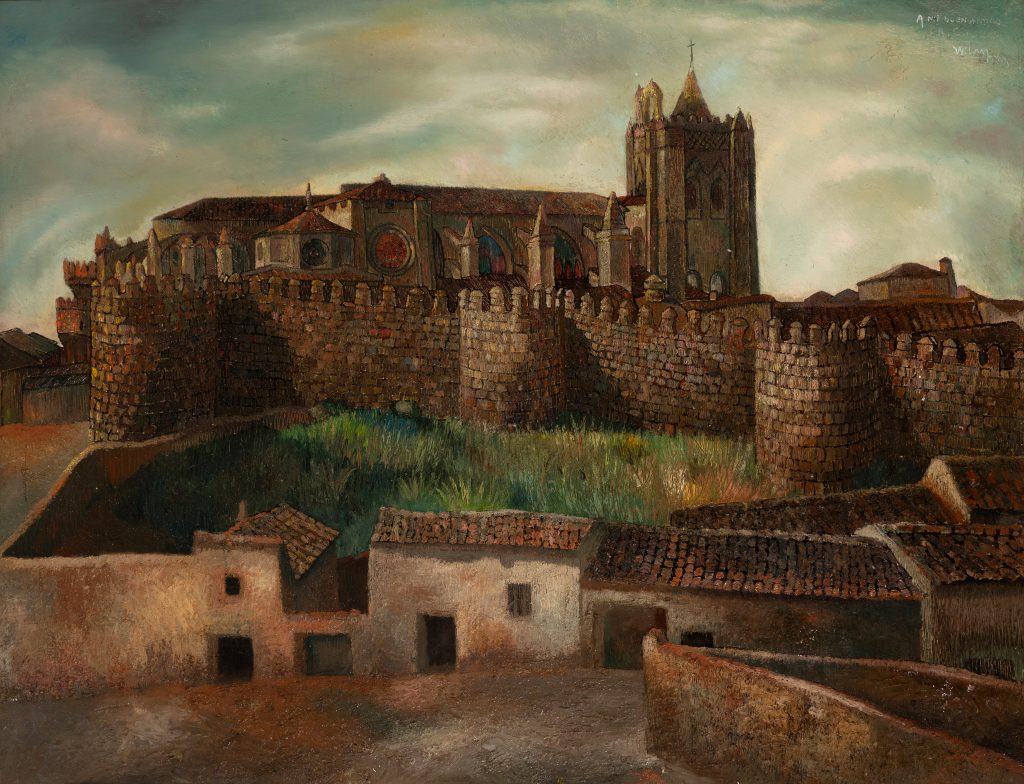
The work already reveals a modern sensibility in the way he interprets space and the emotion of the landscape. Rather than reproducing reality, Wifredo Lam seems to seek a psychological and spiritual dimension of the place, a concern that will remain present throughout his career.
The importance of the early works of Wifredo Lam
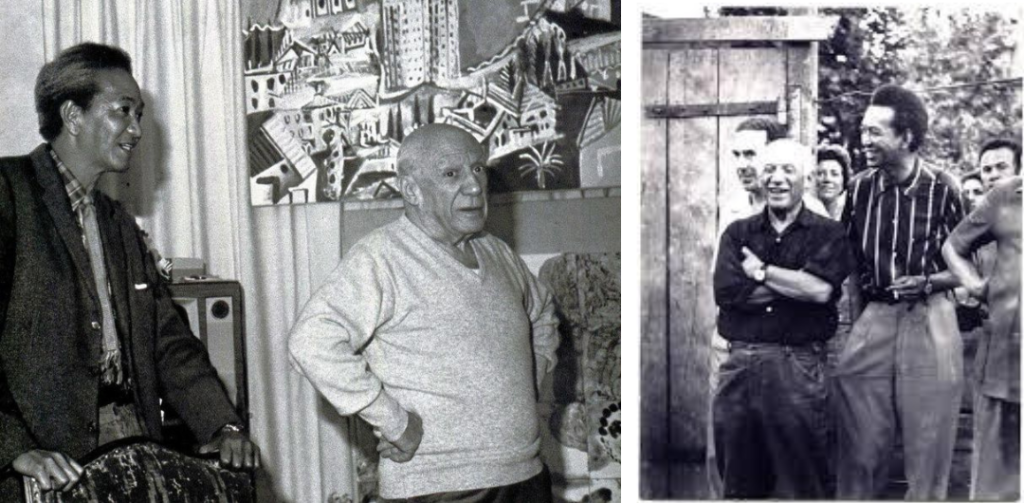
The market and historiography have tended to concentrate on the works produced by Wifredo Lam from the 1940s onwards, especially after his meeting with Pablo Picasso in Paris and his integration into surrealist circles. It was then that he developed the hybrid visual vocabulary that would culminate in masterpieces such as La Jungla ( 1943).
However, the paintings from his Spanish period are of extraordinary historical value. They not only document the artist’s academic training, but also allow us to observe the process by which a young painter absorbed European traditions and then transformed them into a completely new language.
In this sense, Ávila represents much more than an urban scene. It is a key piece to understand Wifredo Lam’s evolution from tradition to modernity, from the observation of the visible world to the creation of a universe of his own.
Wifredo Lam and the redefinition of modernity
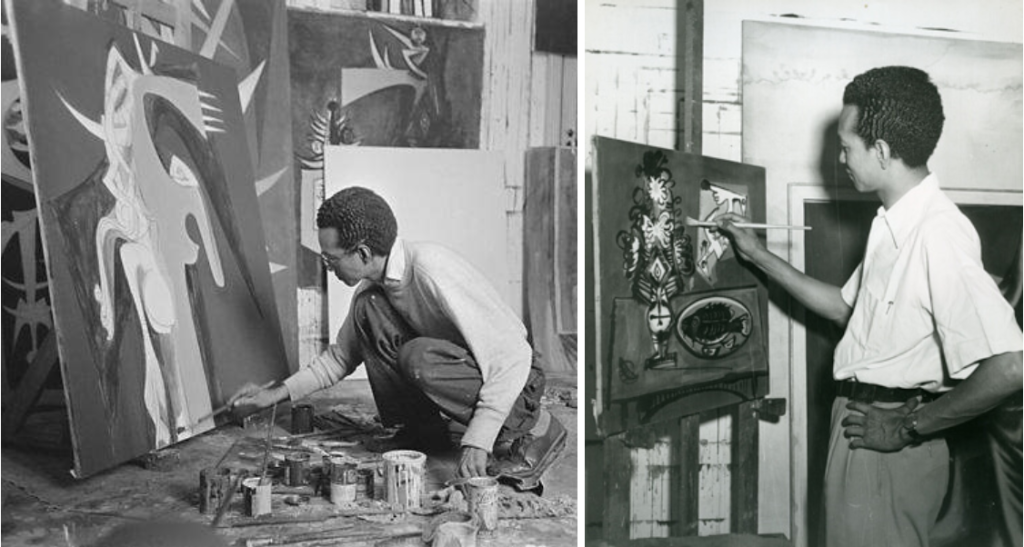
Wifredo Lam’s historical relevance lies in his ability to expand the limits of Western modernity. While most of the European avant-garde movements were searching for new forms of representation, Lam incorporated elements from Afro-Cuban, Caribbean and transatlantic cultures into this debate, questioning the Eurocentric vision of modern art.
His contribution was decisive because it demonstrated that modernity was not an exclusively European phenomenon, but a space of global cultural exchange. Through a unique synthesis of cubism, surrealism and Afro-Cuban spirituality, he created one of the most original and influential proposals of the 20th century.
For this reason, the appearance at auction of a work like Avila is particularly significant. It allows us to return to the moment when this language was still in the making and to observe how one of the great protagonists of international modernity was building the foundations of a work destined to transform the history of art.
More than a painting of his youth, this work constitutes an exceptional document on the origins of an artist who would end up redefining the very concept of modernity from a profoundly intercultural perspective. In it we can already perceive the concerns of a creator who, years later, would succeed in integrating apparently distant visual traditions into an artistic proposal of universal scope.
Avila ‘s auction offers a unique opportunity for collectors and institutions. Not only because of the scarcity of works from this period on the market, but also because of the historiographic value of a piece that allows us to follow the formative process of one of the most influential artists of the 20th century. Through this painting, the viewer can approach the precise moment when Wifredo Lam began to build the foundations of a language that would forever transform the relationship between identity, culture and modernity.
Few works allow us to contemplate so clearly the starting point of an artistic trajectory destined to occupy a fundamental place in the history of contemporary art.
We invite you to discover the 19th and 20th Century Classics auction to discover the work of Wifredo Lam alongside artists such as Ramon Casas, Pere Pruna, Francesc Gimeno, Casimiro Martínez Tarrassó, Eliseu Meifrèn and many more.
If you liked this article, you may also be interested in: