Do you have a collectible fountain pen or ballpoint pen that you’re thinking of selling? Have you inherited a collection and aren’t sure what pieces it contains or what it might be worth? Or are you reorganizing your collection to make room for new additions?
In any of these cases, you don’t need to know the exact brand, model, or edition of each piece beforehand: identification and cataloging are part of the specialist’s job.
A seemingly simple pen may be part of a rare edition, represent a particularly sought-after variant, or retain original features that increase its appeal to collectors. Similarly, a prestigious brand name alone does not guarantee a high value: numerous factors come into play in the secondary market.
Setdart’s Fountain Pen Department has prepared this guide to explain what makes a piece valuable, what information is useful for appraising it, and how it is sold at auction.
If you have an item or a collection and aren’t sure exactly what it contains, you can send us photos. Our specialists will conduct an initial appraisal and advise you on its market potential.
Why sell fountain pens at auction?
The market for collecting writing instruments is highly specialized on an international level. Certain models, limited editions, and discontinued items are sought after by collectors who are familiar with the product lines and actively keep track of new releases.
The auction makes it possible to bring that demand together around a specific item.
The market plays a role in price formation
Unlike a fixed-price sale, in an auction, several collectors can compete for the same item. When there is sufficient interest, successive bids allow demand itself to determine the final price.
Not all fountain pens generate the same level of interest, which is why it is important to identify them correctly, establish a reasonable estimate of their value, and present them to the right audience.
Access to an international community of collectors
Fountain pen collecting is distinctly international. A piece that may be difficult to sell locally may find buyers in other markets.
Setdart’s international focus allows it to showcase these pieces to a community of collectors and buyers from numerous countries and, when appropriate, to feature them in auctions specializing in writing instruments.
The importance of specialized knowledge
Identifying a model, recognizing a rare variant, determining the period of manufacture, or placing a limited edition in context can substantially alter the value of a fountain pen.
This work is even more important when it comes to a collection.
A collection built up over decades may include items from very different periods, by different artists, and of varying value. An expert can analyze the collection as a whole and determine which items should be sold individually, which can be grouped together, and what strategy is best for presenting each one to the market.
Which fountain pens are of interest to collectors?
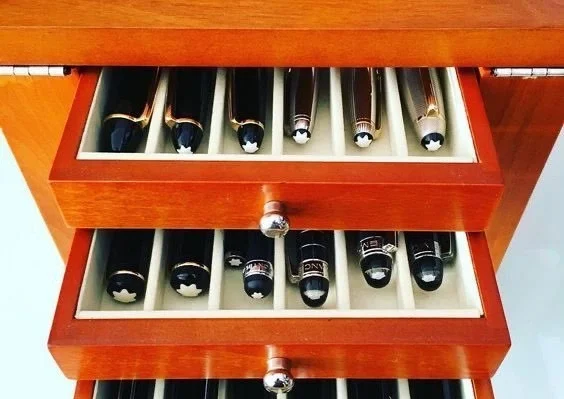
Not all items have the same resale value on the secondary market. At Setdart, we select writing instruments based on their quality, origin, rarity, and collectible value.
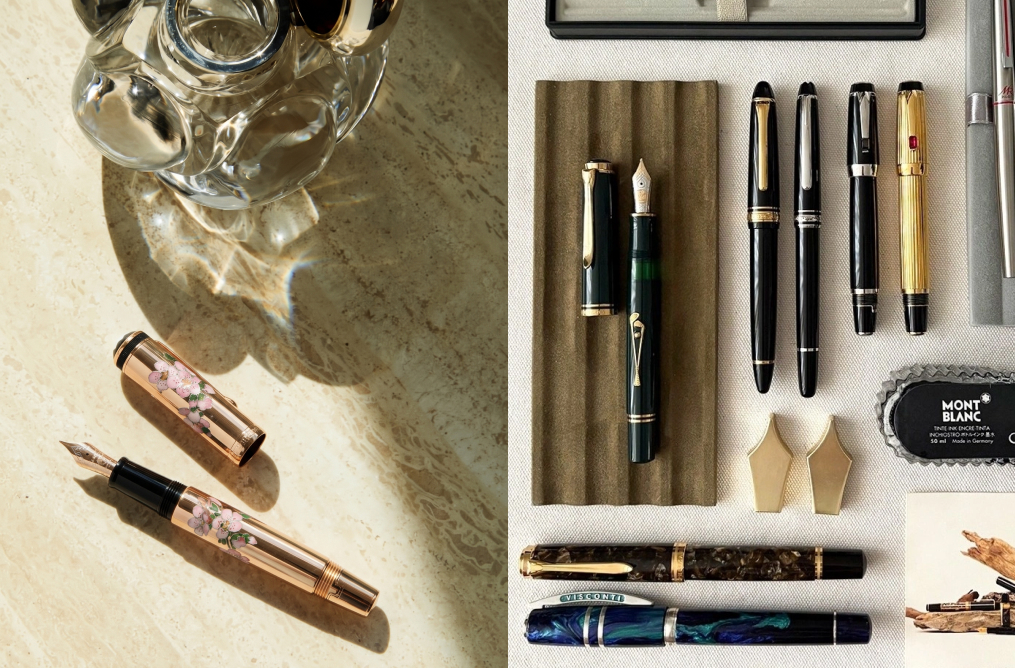
Among the brands with an established market presence are Montblanc, S.T. Dupont, Montegrappa, Cartier, Visconti, Aurora, Delta, Parker, Waterman, and OMAS, among others.
However, the brand is just the beginning.
The specific model, age, materials, production run, condition, and, above all, demand among collectors are decisive factors.
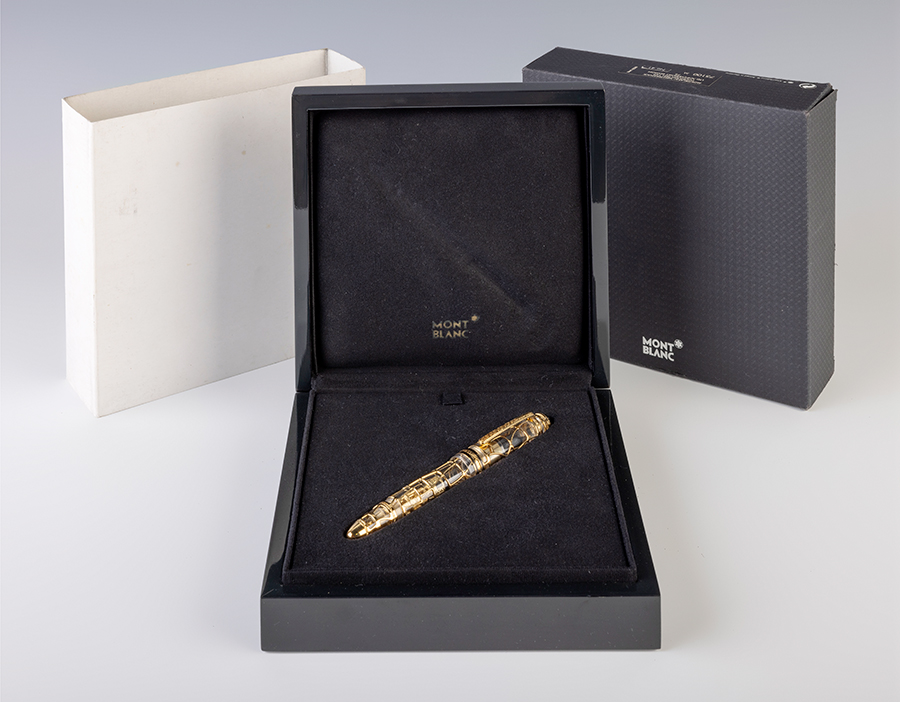
Limited editions take center stage. A limited production run introduces an element of scarcity that is particularly prized when the item also retains its original case, certificate, and accessories.
Early series, discontinued models, certain vintage pens, special collaborations, numbered editions, and pieces designed or signed by artists may also be of particular interest.
In some cases, the world of writing instruments also intersects with fine jewelry and goldsmithing. Pens crafted from gold, silver, gemstones, or other precious materials—as well as creations by brands such as Cartier, Van Cleef & Arpels, BVLGARI, and Tiffany & Co.—can take on a significance that goes beyond the mere collecting of fountain pens.
Montblanc and the limited-edition market
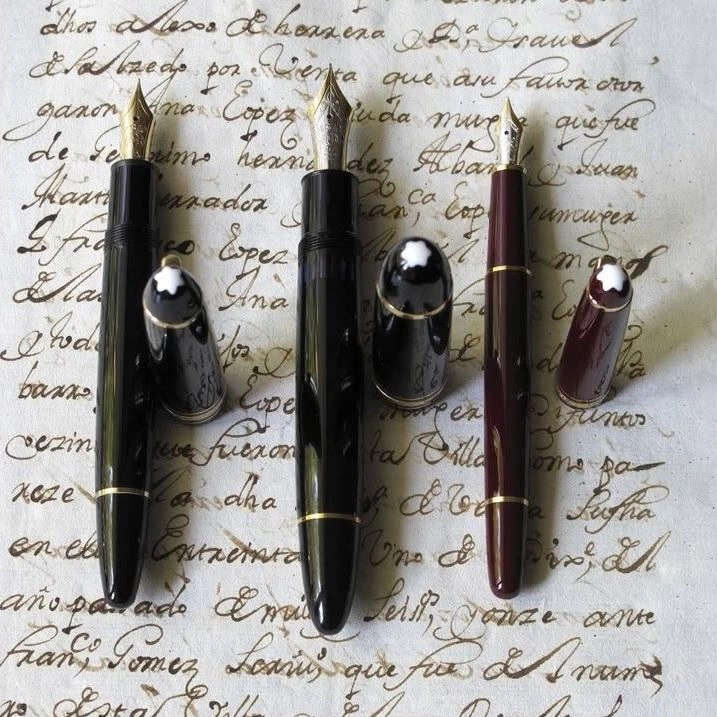
Montblanc is one of the best examples of how a single brand can produce watches that perform very differently on the secondary market.
In addition to its regular production models, the German company has, over the decades, developed numerous numbered series, commemorative editions, and creations made using complex goldsmithing and craftsmanship techniques.
Some of the results obtained at Setdart help illustrate the interest these pieces can generate.
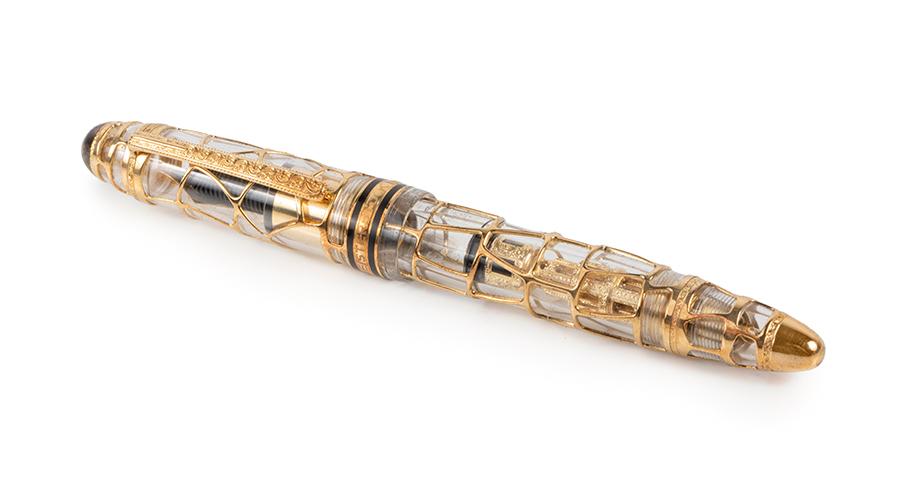
A Montblanc Meisterstück 149 Limited Edition Artisan, produced in a limited run of just 75 pieces to commemorate the brand’s 75th anniversary, was sold at Setdart for 35,120 euros.
The Asia Editions series offers another good example. The 2002 Sakura model combines 18-karat rose gold with enameled cherry blossoms and was produced in a limited edition of just 88 pieces. One of them sold for 8,000 euros on Setdart.
Series dedicated to historical and cultural figures have also sparked considerable interest among collectors. As part of the Great Characters collection, Montblanc dedicated an edition in 2012 to Albert Einstein, whose design incorporates references to his scientific legacy. A pen numbered 0414/3000 and featuring an 18-karat gold nib sold at Setdart for 4,800 euros.
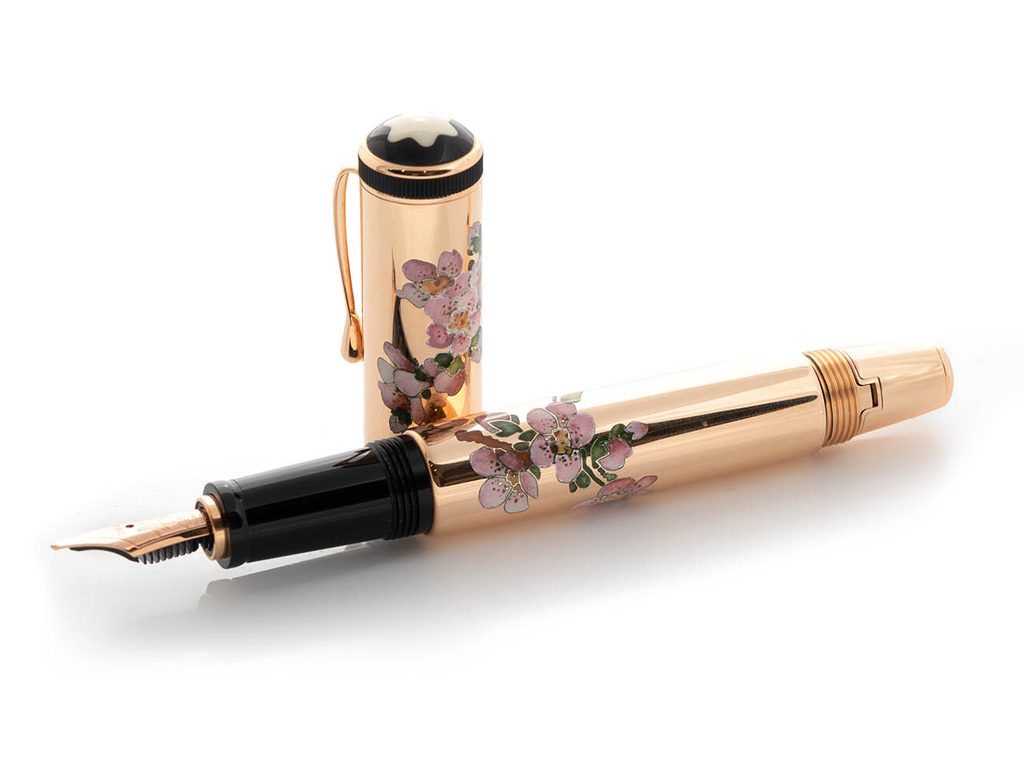
MONTBLANC fountain pen, 2002. Sakura model, Limited Edition from the “Montblanc Asia Editions” series — Sold for €10,000
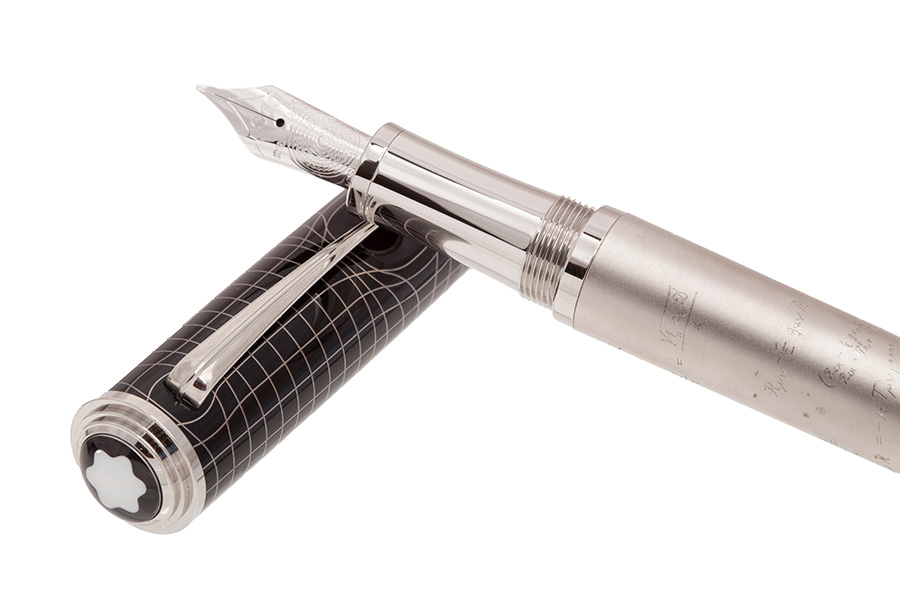
Sold for €4,800
Collections such as Great Characters, Writers Edition, and Patron of Art demonstrate why correctly identifying an edition is essential. Two fountain pens from the same manufacturer can perform very differently at auction depending on their model number, production run, condition, and demand.
And this isn’t limited to Montblanc: other watchmakers also have models and editions within their collections that are particularly sought after.
What determines the value of a fountain pen?
The value of a fountain pen rarely depends on a single factor. To determine its value accurately, it is necessary to analyze various factors together.
It is not essential for the owner to know all of this information. If the collection was inherited or if the documentation for certain pieces has been lost, our specialists can help identify them based on photographs and a close examination of the items.
When available, the following information is particularly useful:
- Brand and model. They serve as the starting point for correctly identifying the part within the manufacturer’s production line.
- Edition and Rarity. Limited editions, first runs, discontinued items, collaborations, and rare variants may be of particular interest.
- Numbering. For certain editions, this information identifies the specific copy and the total number of units produced.
- Date or period of manufacture. This can be particularly important for vintage pieces and for distinguishing between different series of the same model.
- Materials. Gold, silver, platinum, lacquers, resins, enamels, decorative stones, and other materials can significantly affect the appraisal value.
- Condition. Scratches, dents, lost items, restorations, repairs, or replacements must be evaluated on a case-by-case basis.
- Pen nib. The analysis takes into account the material, dimensions, engravings, condition, and how closely it matches the original model.
- Box, documentation, and accessories. Preserving the original condition often increases a piece’s appeal among collectors.
- Signatures and inscriptions. Certain inscriptions, dedications, or markings can help document the uniqueness of the copy.
- Origin. A relevant and properly documented ownership history can add value.
- Lawsuit. Ultimately, the market is the deciding factor. Two seemingly similar items can yield different results depending on the number of collectors interested at that time.
I’ve inherited a collection of fountain pens: where do I start?
An inherited collection can be difficult to appraise for someone unfamiliar with this market.
It is not necessary to identify every item one by one or to research their prices online beforehand. Items with seemingly similar descriptions may correspond to different editions, and listed prices do not always reflect actual transactions.
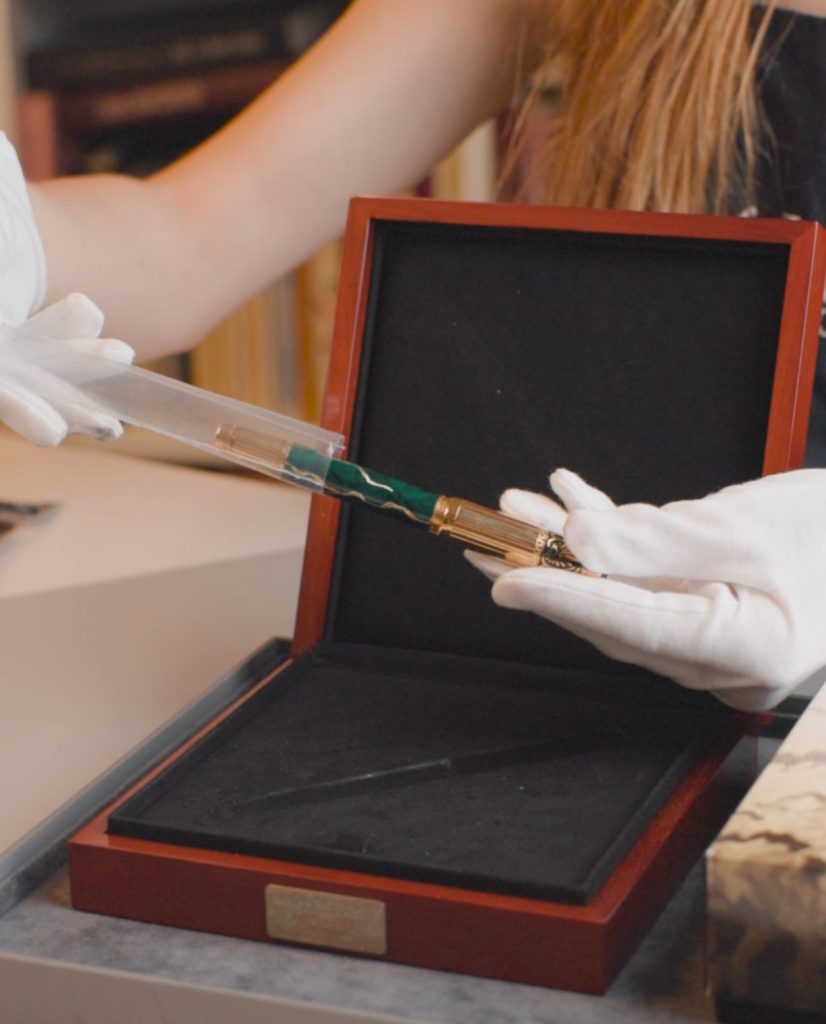
As a first step, it is sufficient to lay out the items where they can be seen and take general photographs of the collection, as well as more detailed photographs of those items that seem particularly relevant. If any boxes, certificates, invoices, or other documentation are still available, it is a good idea to photograph them as well.
Based on this information, an expert can determine which pieces are worth examining in greater detail and advise the owner on the collection’s potential.
Is it better to sell a complete collection or piece by piece?
There is no single answer.
In some collections, it is advisable to highlight the most important pieces and group together other fountain pens of lesser significance. On other occasions, certain series take on greater coherence when presented together.
The decision depends both on the content of the collection and on the profile of potential buyers.
For this reason, before dividing up a collection or selling individual pieces separately, it may be advisable to conduct a comprehensive appraisal. Once the collection has been dispersed, information about its provenance, its formation, or the relationships between certain items may be lost.
How to Sell Fountain Pens and Ballpoint Pens on Setdart

The process begins with an assessment conducted by our specialized department.
01. Send us photos and information
You can send us photos of a single feather or an entire collection, along with any information you have. It is not necessary to provide the exact reference number for each specimen.
Our specialists will conduct an initial assessment and evaluate whether your item is suitable for auction.
02. Valuation and Sales Strategy
If the items are suitable for the Setdart market, our team will provide you with a valuation and advise you on the best way to structure the sale.
In the case of a collection, this may involve selecting individual pieces, creating different lots, or preserving specific sets.
03. Cataloging and Presentation
Once the agreement is finalized, Setdart handles the documentation, cataloging, and professional photography of the items before adding them to its platform.
Proper cataloging allows collectors to understand what they are purchasing and to have the necessary information before placing their bids.
04. Auction and Award
The items are offered for sale, and interested parties can place bids. The seller can track the progress of the auction and find out the final winning bid.
Once the sale process is complete, Setdart processes the payment to the owner.
Are you thinking about selling a pen or a collection?
Sometimes, the first sign that a collection might be interesting is precisely the fact that you don’t know much about it.
An inherited box of fountain pens, a collection built up over decades, or a special edition purchased years ago may contain items worth examining before making a decision.
Setdart’s Fountain Pen Department is preparing new selections for upcoming auctions.
If you’re thinking about selling a single piece, a series, or an entire collection, you can send us photos to get an initial expert appraisal.
If you liked this article you may also be interested in:
Selling Designer Furniture: How to Maximize Its Value at Auction
Investing in Jewelry: Wealth and Unique Auction Opportunities