Flemish painting is one of Europe’s artistic treasures, developed mainly between the 15th and 18th centuries in a region that today corresponds to Belgium. Characterized by its realism, attention to detail and technical mastery, it ranges from portraits and religious scenes to landscapes, still lifes and scenes of everyday life. Its historical and aesthetic richness has made collecting it a goal of enthusiasts of this era for centuries.
In this guide, prepared by our Old Masters specialists, we offer practical tips to get you started in collecting Flemish painting. In addition, we give you a preview of what you can find at the Old Masters auction on January 28, with works by artists such as Peter Van de Velde, David Teniers the Younger, Abraham Teniers and other outstanding pieces from the Flemish School.
Recognizing the hand of the master

The great Flemish masters such as Rubens, van Dyck or the Brueghels did not work alone. Their workshops included assistants and apprentices who executed parts of the works, and their most popular models were replicated by later disciples or imitators.
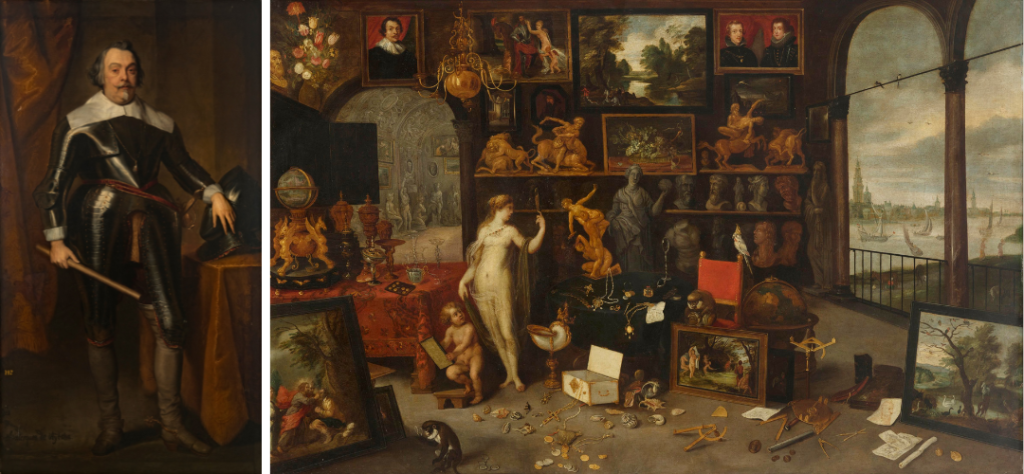
When collecting Flemish painting, it is essential to learn to distinguish the hand of the master from that of his followers.
- The quality of the brushwork: details, textures and fine finishes usually indicate the direct intervention of the master.
- Period and technique: comparing with signed or documented works helps to verify authenticity.
- Repeated models and compositions: many pieces are based on engravings or popular series of the time, which makes them easy to identify.
With this critical eye, one can better understand the hierarchy of production and correctly evaluate each work.
Understanding support and technique
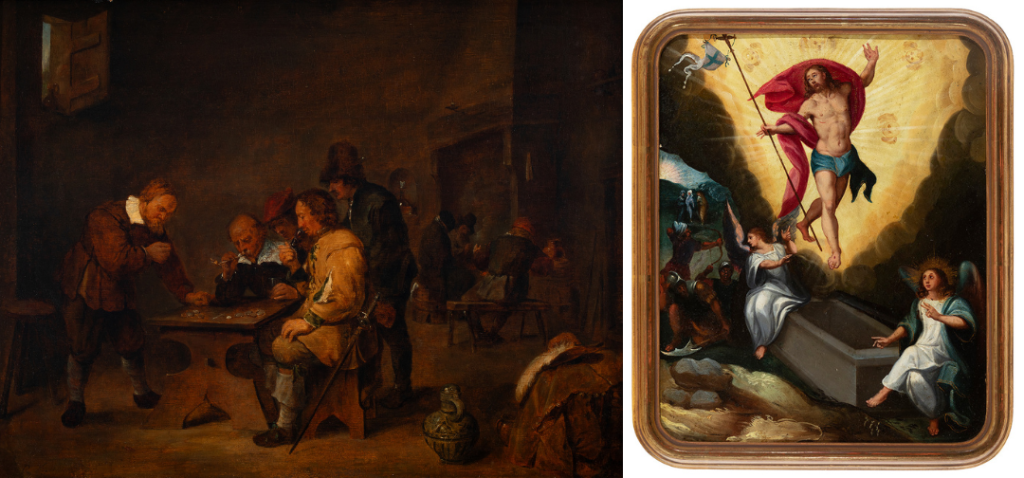
“The Resurrection of Christ”. Oil on copper.
The material on which the work was painted provides valuable information. Flemish artists worked on:
- Oak or linden wood boards: resistant and stable, ideal for fine details.
- Copper plate: smooth surface for brilliant colors and near-photographic precision.
Look also at the back of the work: some stamps or guild marks indicate the city of origin and the period of production. For example, the lion claws on many panels indicate Antwerp works.
In addition, the repetition of formats and measurements in the series made it easier for collectors to expand their collections with thematically related works. Artists such as Peter Sion or Frans Francken II applied these precise measurements in multiple pieces.
Identify models and references
During the Flemish Baroque, many painters were inspired by engravings and prints that circulated widely. Series by Goltzius, Sadeler, Pontius or Bolswert were used as a reference to create new works, helping to spread the style and fame of the masters.
When studying a Flemish painting:
- Check if its composition corresponds to a known engraving.
- Research databases such as RKD Research, where photographs, catalogs and old prints are collected.
This analysis makes it possible to recognize the model, the period and, in many cases, the hand of the author or his workshop.
Flemish painting at the Old Masters auction
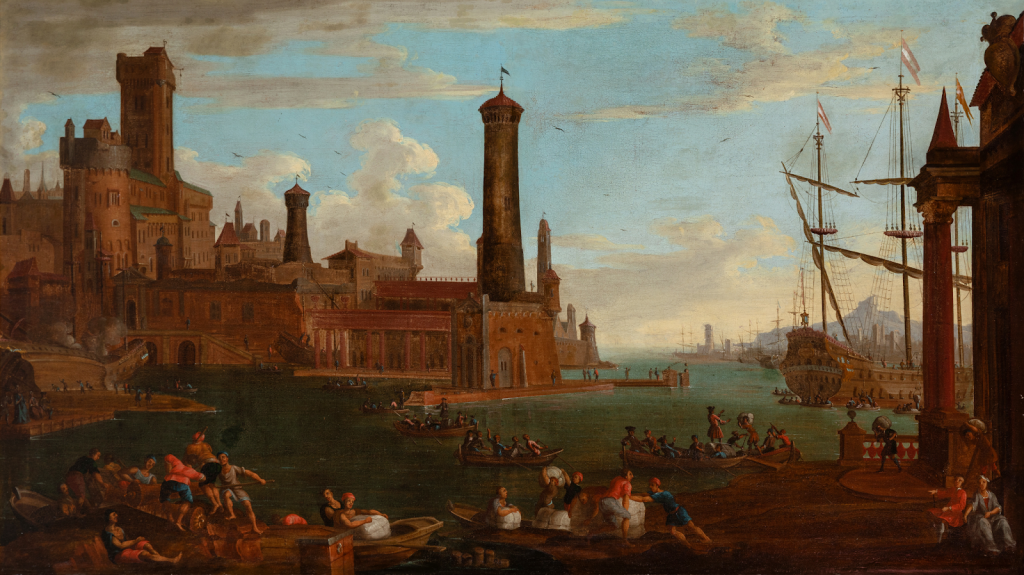
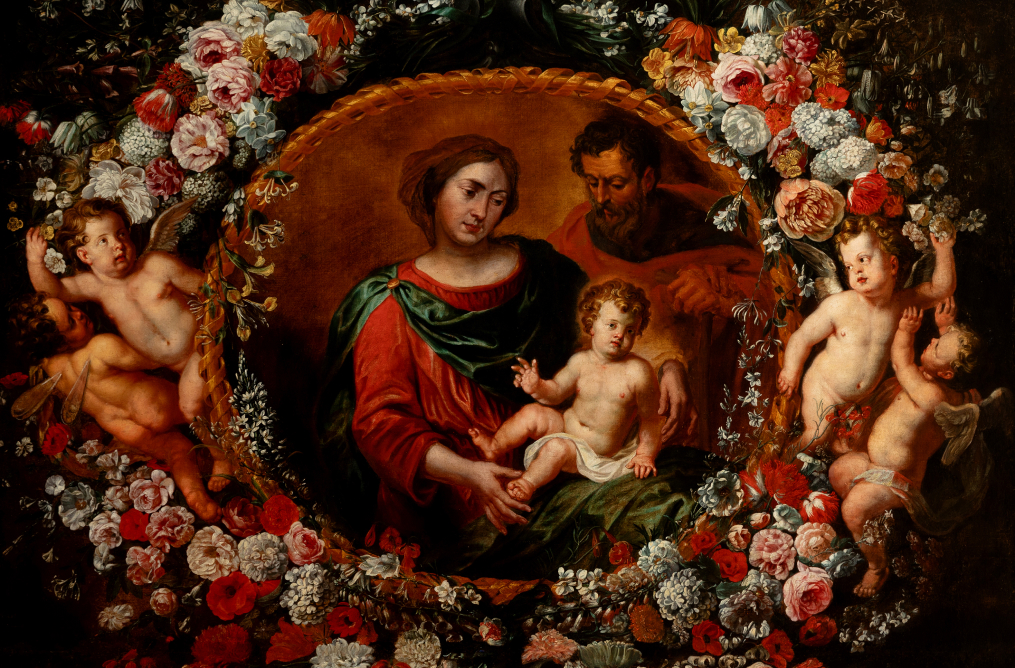
The upcoming Old Masters auction on January 28 will feature an outstanding selection from the Flemish School, reflecting the technical and narrative mastery of the Baroque. Of particular note is a canvas with a floral garland framing a religious scene, where every petal and flower is worked with meticulous detail that balances the prominence between the still life and the Holy Family, showing the excellence of the Flemish workshops and evoking the tradition of Peter Paul Rubens.
Also among the auctioned works are a harbor landscape by Peter Van de Velde, with architecture, sea and figures that generate depth and rhythm, and “Drinkers” by David Teniers the Younger, a tavern scene that combines naturalism, freshness and narrative, depicting daily life with great subtlety.

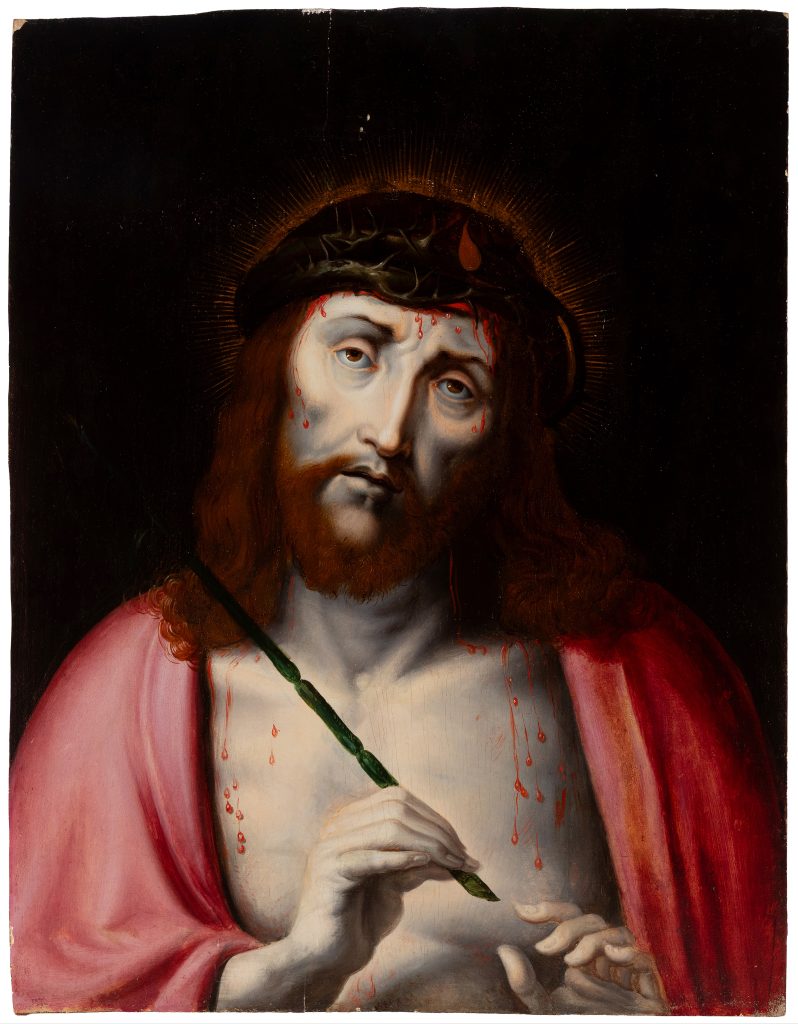
Oil on wood. Lot 40018878
These pieces, along with other works of the Flemish School, offer a complete vision of the talent of the great masters.