Fashion and art have always spoken the same language. Both stem from a very similar human need: to transform an idea into something visible, to evoke emotions, and to tell stories without the need for words.
Throughout history, numerous fashion designers have looked to the great masters of art to find new ways of understanding color, the body, beauty, and creativity. From Surrealism to Pop Art, through Impressionism, the Baroque, and contemporary art, these creators have shown that artistic inspiration knows no bounds. Because a garment isn’t always made solely to be worn: sometimes it’s designed to surprise, challenge, and move us.
Fashion isn’t just something you wear. It’s also something to be admired.
Fashion and Art: Ten Unforgettable Conversations Between Designers and Artists
1. Yves Saint Laurent & Piet Mondrian: When a Painting Became a Dress
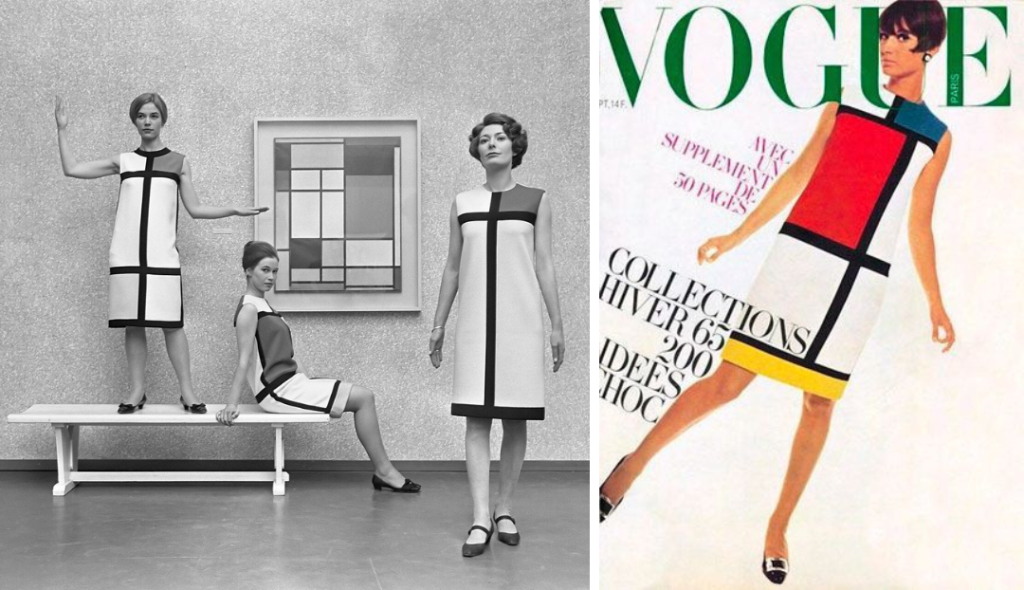
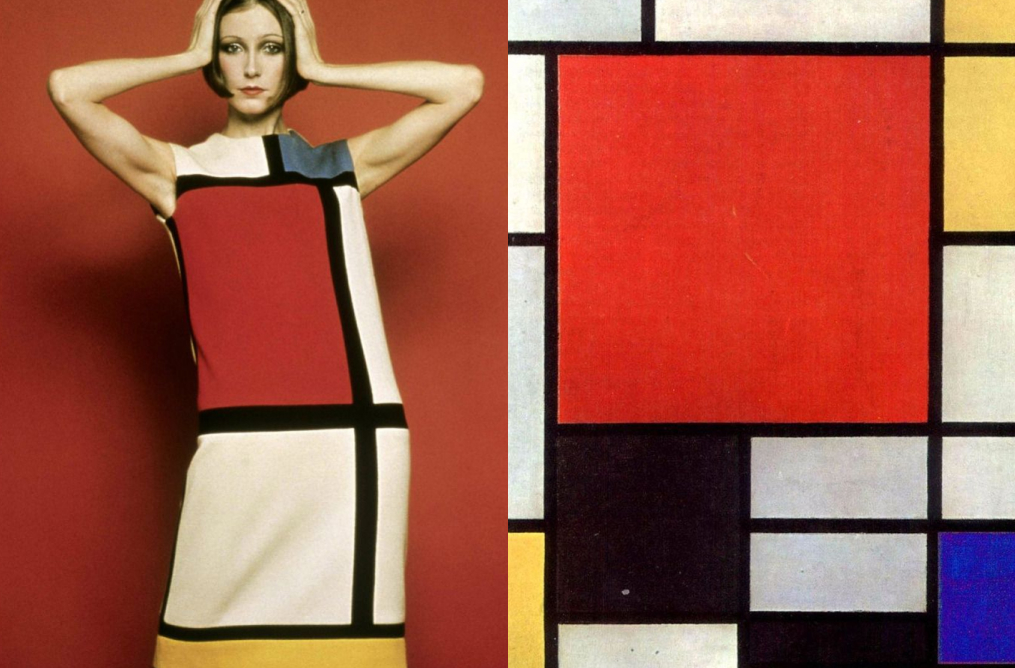
In 1965, Yves Saint Laurent did something revolutionary: he brought a work of art directly onto the human body. His famous Mondrian dress was created as a tribute to the geometric compositions of Dutch artist Piet Mondrian, one of the leading figures of Neoplasticism.
The designer transformed Mondrian’s abstract canvases—with their black lines, rectangular shapes, and primary colors—into an elegant and perfectly balanced garment. The result looked like a painting that had come off the wall to become a fashion piece.
More than just a dress, it was a statement: haute couture could also engage with modern art.
2. Elsa Schiaparelli & Salvador Dalí: Surrealist Imagination Transformed into Clothing
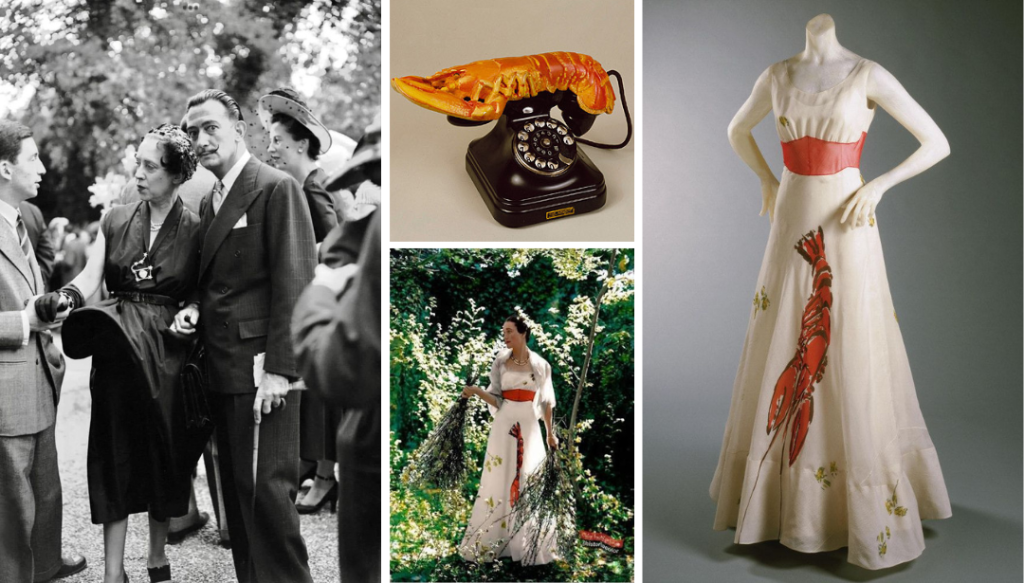
If there was one designer who understood that fashion and art could become a dream, it was Elsa Schiaparelli. Her friendship and collaboration with Salvador Dalí gave rise to some of the most astonishing pieces of the 20th century.
Together, they brought surrealism to fashion with creations such as the famous lobster dress—inspired by the artist’s provocative images—or the celebrated shoe hat. In their hands, a garment ceased to be something practical and became an absurd, playful, and deeply artistic idea.
Schiaparelli showed that fashion could also play with humor, surprise, and the unexpected.
3. Alexander McQueen & Francisco de Goya: Beauty, Drama, and Darkness
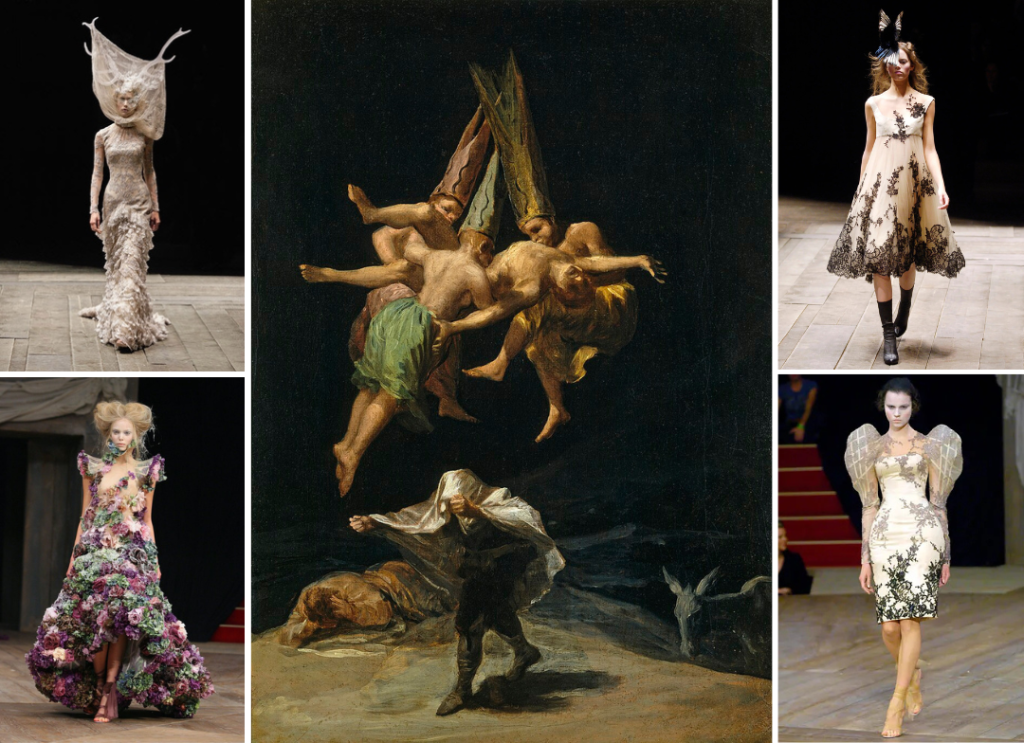
Alexander McQueen always viewed fashion as a form of visual storytelling. His fashion shows were true theatrical performances in which each garment told a story.
The British designer drew inspiration from historical painting, Romanticism, and the dramatic aesthetic of artists such as Francisco de Goya. Like the Spanish painter, McQueen explored beauty intertwined with darkness, and elegance juxtaposed with the unsettling.
Their sculptural silhouettes, their historical references, and the way they portray human fragility and strength are reminiscent of the intense worlds that Goya captured in his paintings.
4. Christian Dior & Claude Monet: Gardens, Light, and Impressionist Color
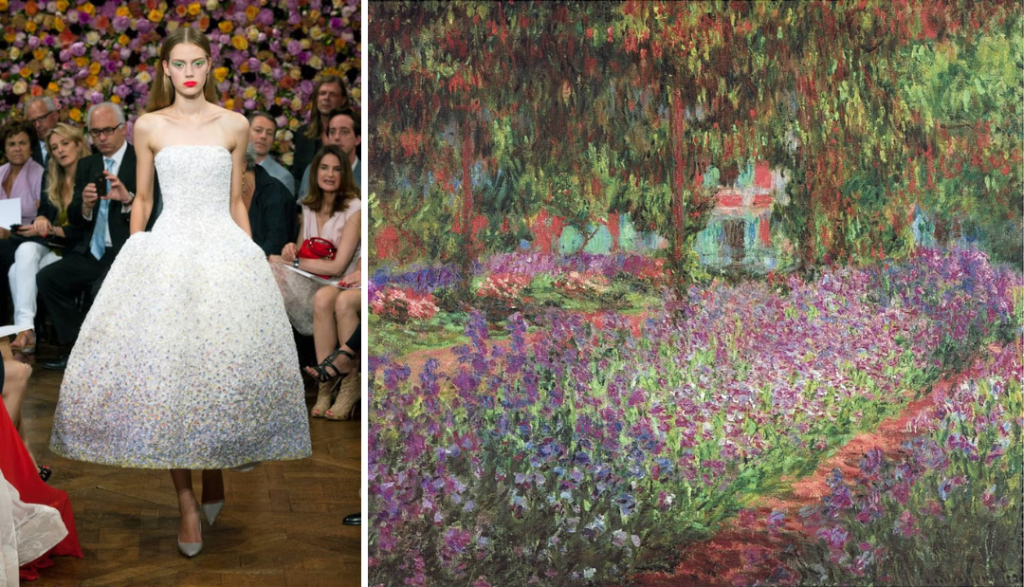
Christian Dior always had a special connection with nature. His dresses looked like gardens in motion: flowers, light fabrics, and colors that conveyed an almost painterly sense of delicacy.
The world of Impressionism—and particularly Claude Monet’s sensibility—influenced this approach to color. Just as Monet captured light in a landscape, Dior sought to capture emotions through fabrics and hues.
The Impressionist influence is evident in the floral prints, the romantic atmospheres, and the sense that each dress seems to be bathed in its own light.
5. Gianni Versace & Andy Warhol: Pop Art Hits the Runway
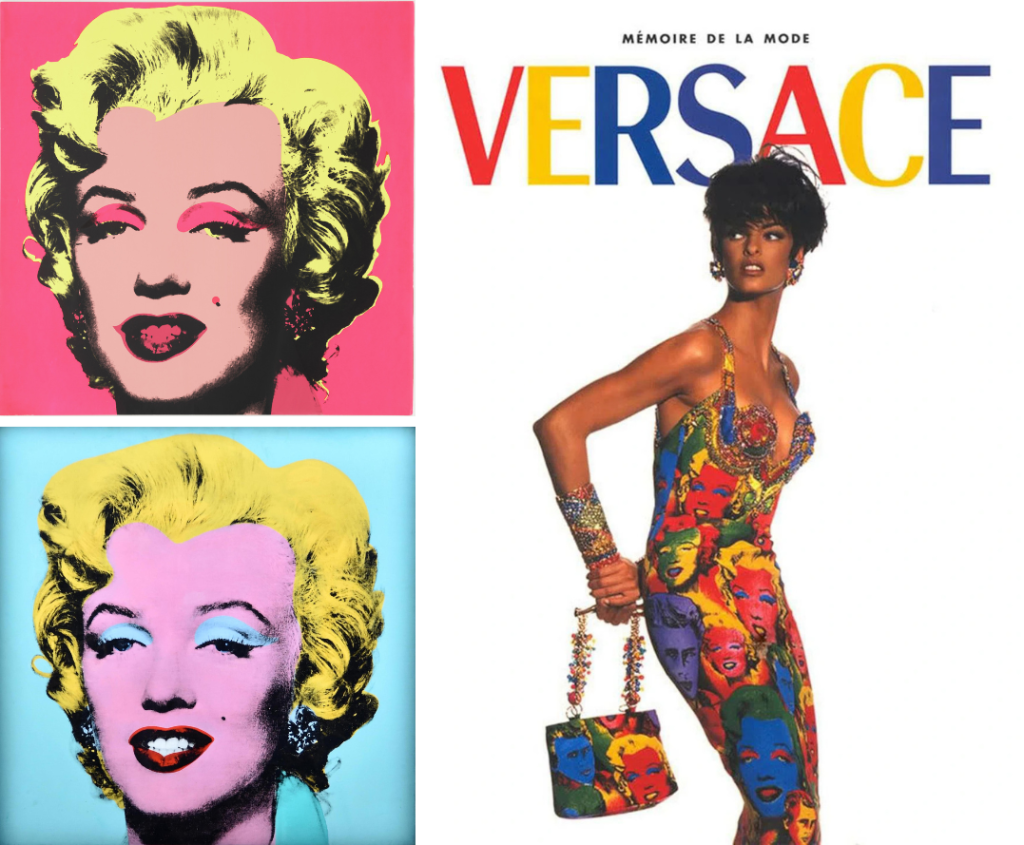
Gianni Versace shared with Andy Warhol a fascination with popular culture, excess, and recognizable symbols.
The Italian designer infused his collections with the spirit of pop art through eye-catching prints, vibrant colors, and images that became icons. Just as Warhol transformed everyday objects into works of art, Versace turned elements of popular culture into luxury pieces.
Her fashion celebrated spectacle, glamour, and the idea that beauty could also be fun and provocative.
6. Rei Kawakubo & Marcel Duchamp: Breaking the Rules as a Form of Creation
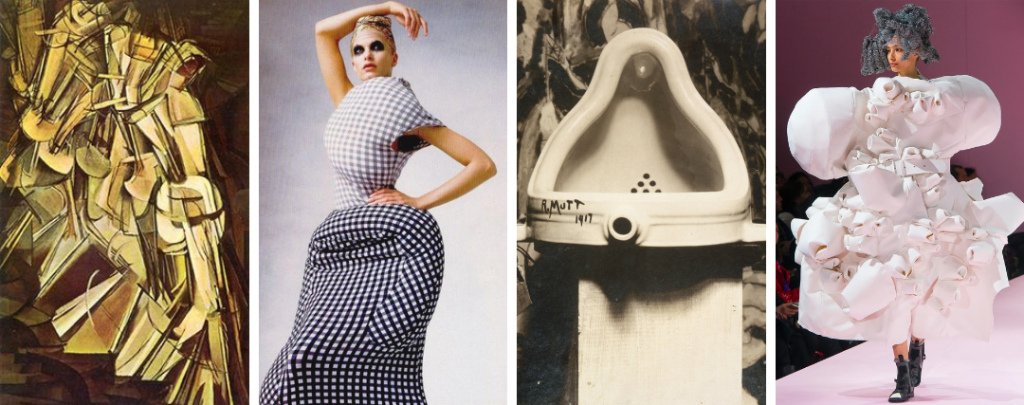
Rei Kawakubo, founder of Comme des Garçons, shares a fundamental idea with Marcel Duchamp: art does not have to follow established rules.
Duchamp revolutionized the art world by questioning what could be considered a work of art. Kawakubo did something similar with fashion: she challenged the traditional idea of how a clothed body should look.
Her asymmetrical garments, unexpected volumes, and conceptual designs transform clothing into a space for reflection. For her, dressing is not simply about adorning the body, but about raising questions.
7. Prada & Louise Bourgeois: Fashion and Art, Identity and Hidden Emotions
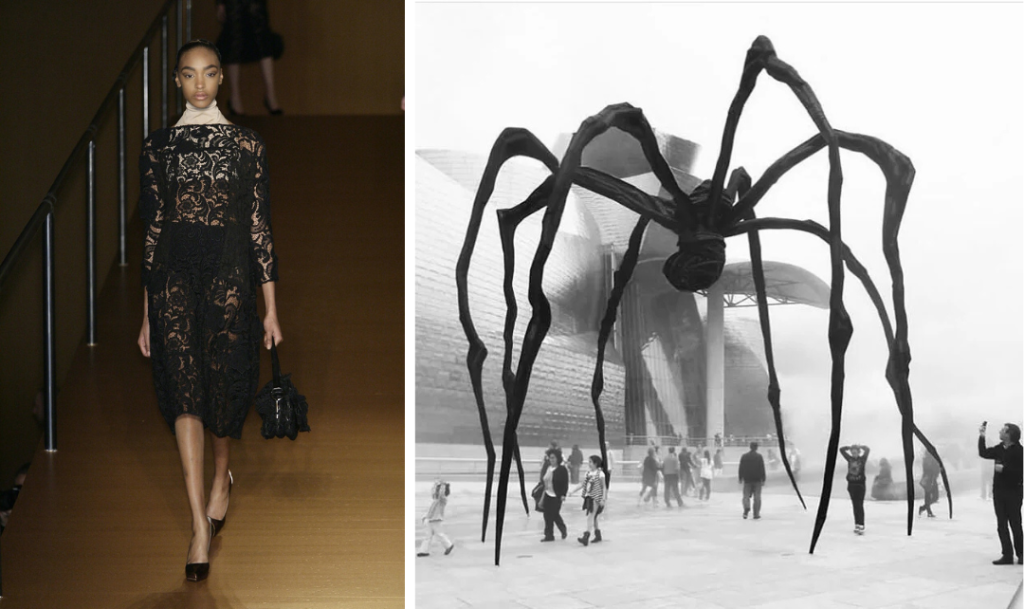
Prada’s connection to contemporary art has always been very deep. The Italian fashion house has forged collaborations with artists who explore identity, memory, and the human condition, such as Louise Bourgeois.
Bourgeois’s work, known for its sculptures steeped in symbolism and personal emotions, resonates with a vision of fashion in which materials, shapes, and textures can express emotional states.
At Prada, a garment is never just a garment: it can be a reflection on who we are and how we present ourselves to the world.
8. Dolce & Gabbana & Italian Baroque: Fashion as a Visual Spectacle
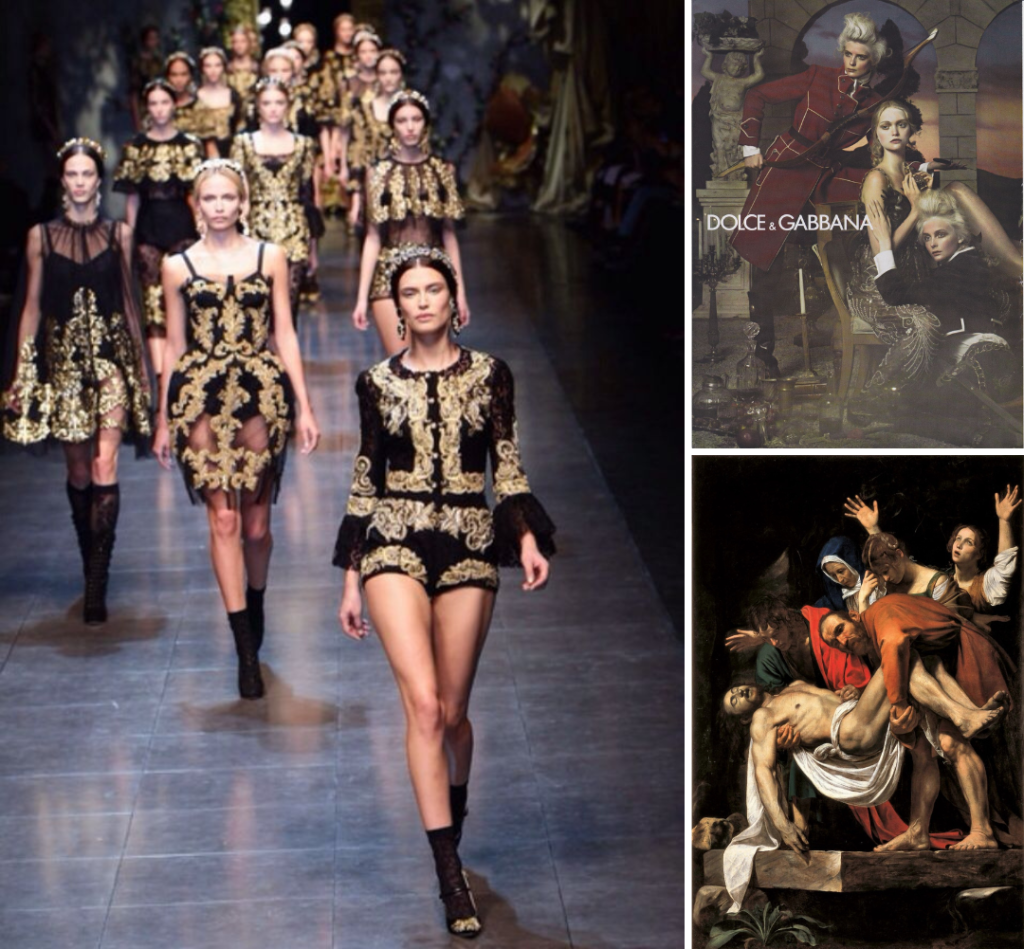
Dolce & Gabbana has made the history of Italian art a constant source of inspiration. Its collections draw on the Baroque, historic architecture, and Italian religious painting.
The connection to artists such as Caravaggio—known for his dramatic contrasts between light and shadow—is particularly evident. Fashion designers translate that visual language into gold embroidery, rich fabrics, theatrical silhouettes, and compositions full of drama.
His fashion shows resemble grand stages where Italian tradition comes to life anew.
9. Cristóbal Balenciaga & Spanish Painting: Elegance with a Historical Soul
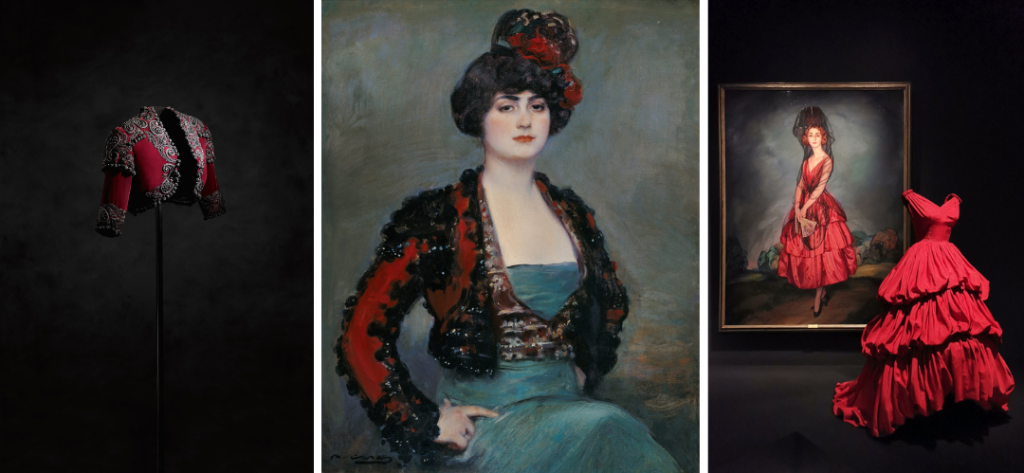
Cristóbal Balenciaga was not inspired by any single artist, but his creative world is deeply rooted in the Spanish tradition of painting.
Portraits by masters such as Diego Velázquez and Francisco de Goya influenced his understanding of the silhouette, volume, and presence of the body. Balenciaga’s deep blacks, architectural sleeves, and sculptural forms evoke the solemnity of the Spanish court.
Her fashion had something of classical painting about it: restrained, powerful, and full of character.
10. Louis Vuitton & Yayoi Kusama: The Endless Polka Dots That Took the Fashion World by Storm
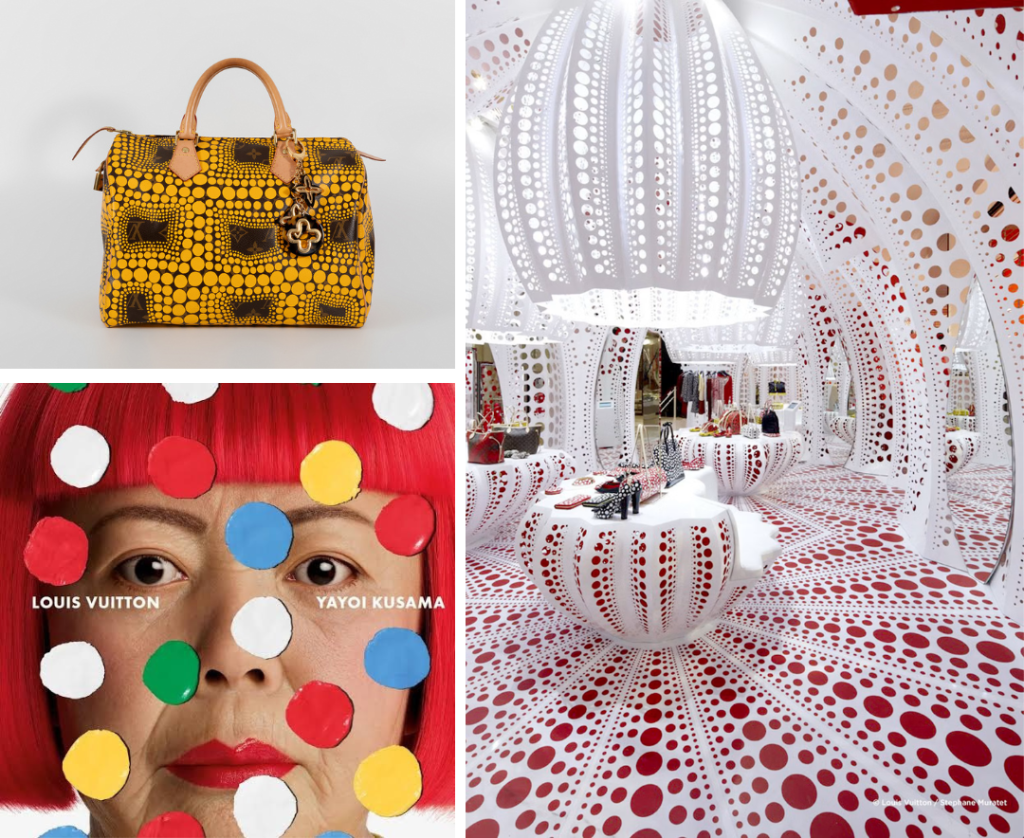
The collaboration between Louis Vuitton and Yayoi Kusama transformed one of the most recognizable symbols of contemporary art—her polka dots repeated to infinity—into a fashion language.
The Japanese artist, known for her immersive installations and her obsession with repetitive patterns, brought her visual universe to the French fashion house’s handbags, accessories, and clothing.
The result was a collection that seemed to blend a luxury store with an art installation: a space where the imagination knew no bounds.
The relationship between fashion and art remains one of the most fertile sources of innovation in contemporary creation. When fashion designers engage in dialogue with great artists, garments transcend their function and become vehicles of cultural expression. These collaborations demonstrate that art can step out of the museum and onto the street, while fashion takes on a heritage and collectible dimension that continues to fascinate both the public and the market.
The relationship between fashion and art demonstrates that creativity never evolves in isolation. Throughout history, major artistic movements have transcended the confines of museums to influence disciplines as diverse as haute couture, design, architecture, jewelry, and interior design. Similarly, many fashion designers have turned their collections into true tributes to the artists who transformed our understanding of the visual image. This ongoing dialogue between the two disciplines remains one of the greatest sources of innovation and creativity, reminding us that art continues to inspire the way we live, dress, and perceive the world.
If you’re thinking about starting or expanding your art collection, we invite you to explore our September auction catalog, where you’ll find a carefully curated selection of exceptional works and pieces that are now available for bidding.
If you liked this article, you may also be interested in: