José Gurvich (1927-1974) occupies a central place in Rio de la Plata and Latin American modern art. Born in Lithuania and emigrated with his family to Uruguay during his childhood, his biography is deeply marked by displacement, migration and the search for identity. That vital experience became one of the keys to his artistic production: a work that articulates memory, spirituality, Jewish tradition, daily life and modernity.
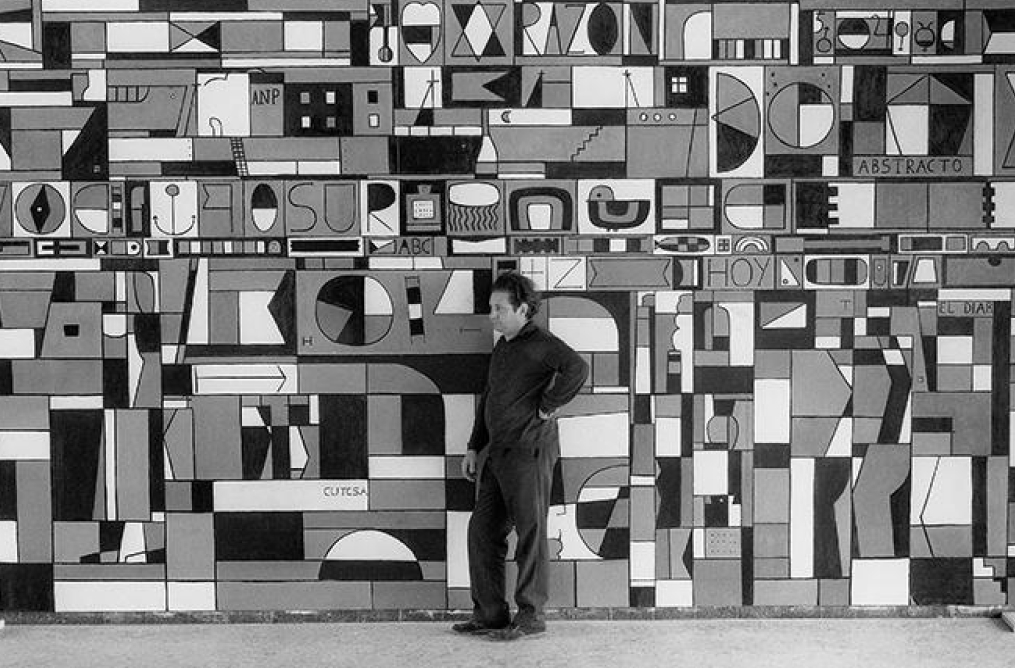
Settled in Montevideo, José Gurvich found in art not only a vocation, but a way of thinking. His entry into the Torres-García Workshop in the 1940s was decisive and transformative. There he became acquainted with the great master Joaquín Torres García, a fundamental figure of Latin American modernism, whose theory of Constructive Universalism proposed a synthesis between order, geometry, symbolism and a spiritual vision of art.
The link between José Gurvich and Joaquín Torres García: between continuity and transformation.
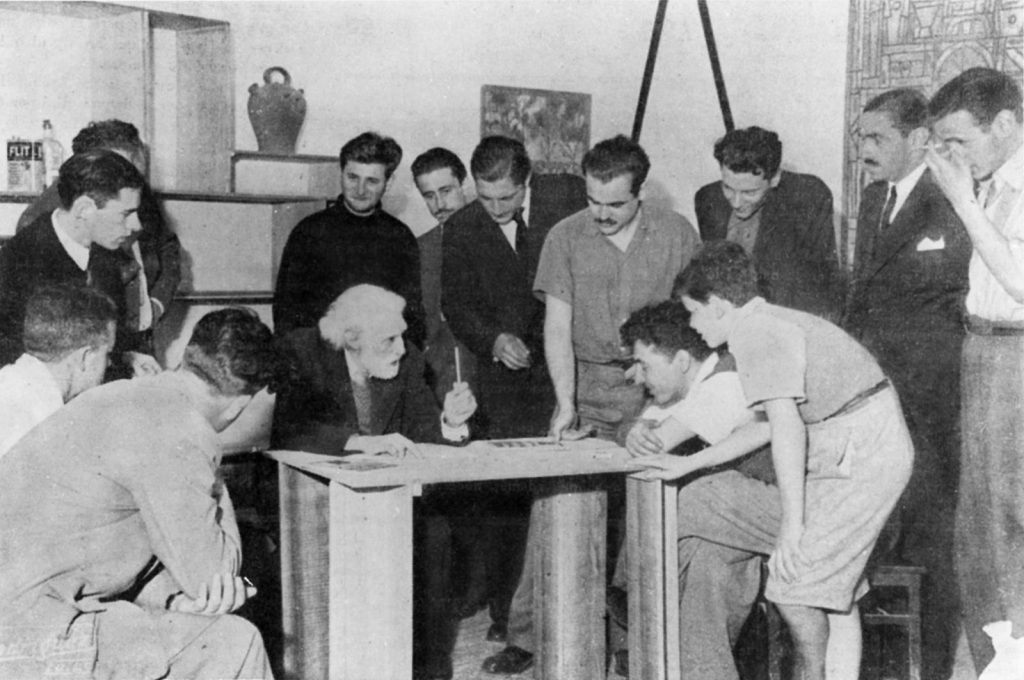
The relationship between José Gurvich and Joaquín Torres García constituted one of the most fertile dialogues in the history of Uruguayan and Latin American art in the twentieth century, and should be understood not simply as a pedagogical link between master and disciple, but as a true critical continuity between two deeply connected conceptions of art, although differentiated in their expressive objectives.
José Gurvich’s entry into the Taller Torres García integrated him into one of the most ambitious intellectual projects of regional modernity: the creation of a universal plastic language capable of transcending frontiers through the synthesis of geometry, symbol, spirituality and order.
De Torres García rigorously absorbed the fundamentals of Constructive Universalism – the structural grid, mathematical harmony, compositional hierarchy, formal reduction and the use of universal symbols – conceived as a transcendent response to the fragmentation of the modern world. However, the greatness of José Gurvich lies precisely in having assumed that system not as a closed doctrine, but as a platform from which to build his own voice.
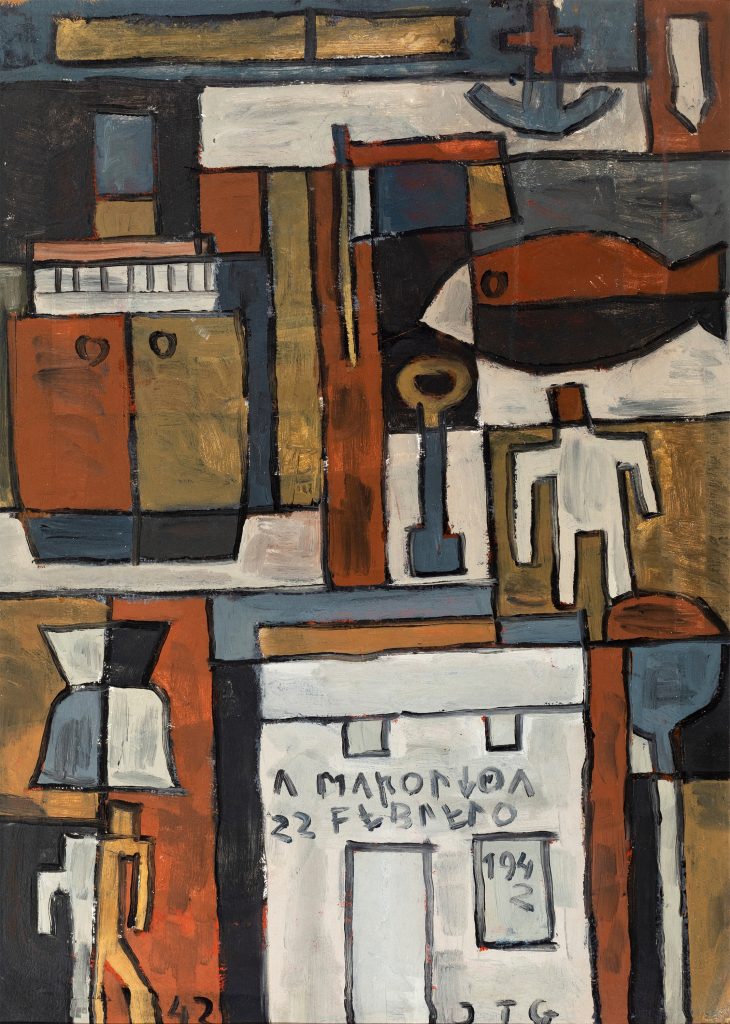
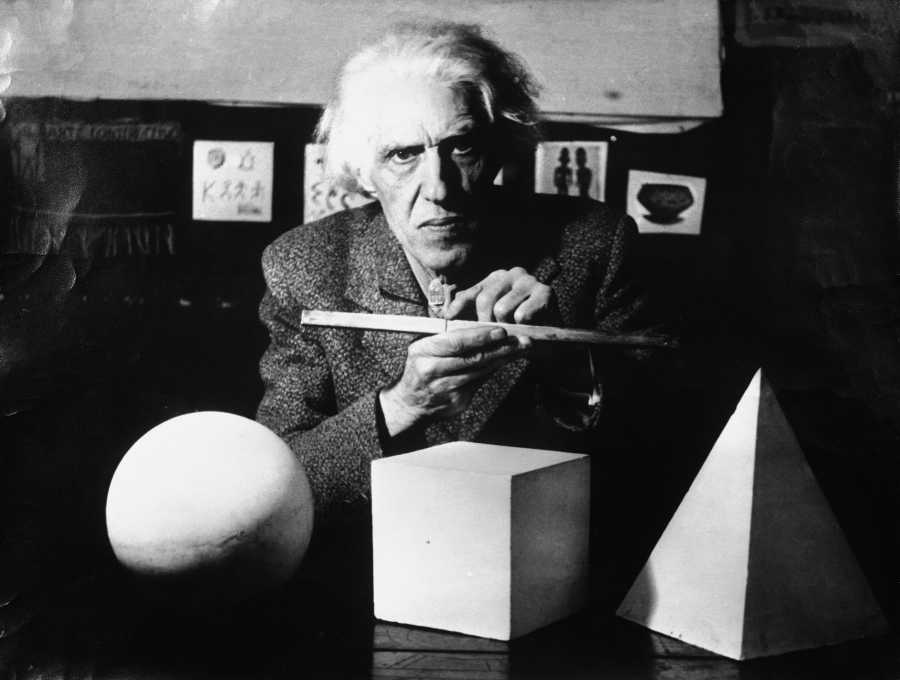
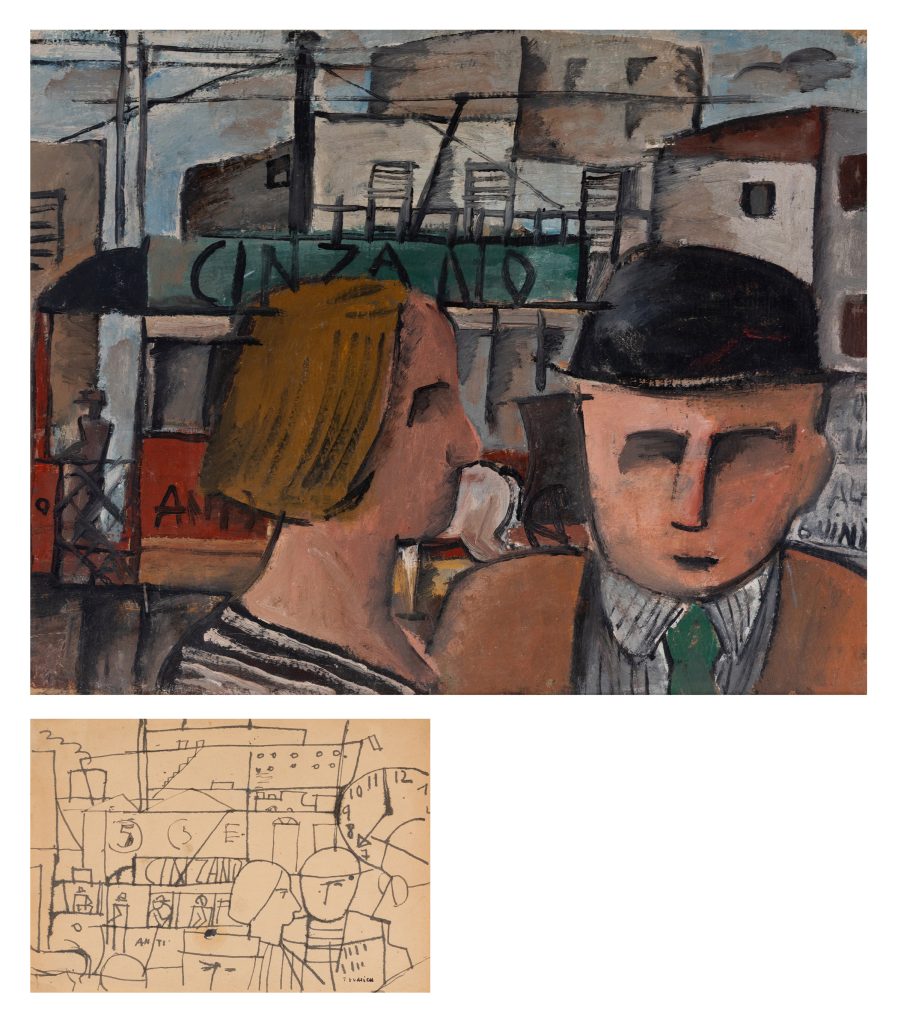
Where Joaquín Torres García pursued a more abstract universality, José Gurvich incorporated a narrative, emotional and deeply experiential dimension. His work maintained the constructive architecture, but filled it with personal experiences, cultural memory and references to everyday life: markets, musicians, artisans, urban scenes, popular traditions, biblical stories and evocations of the Central European Jewish world.
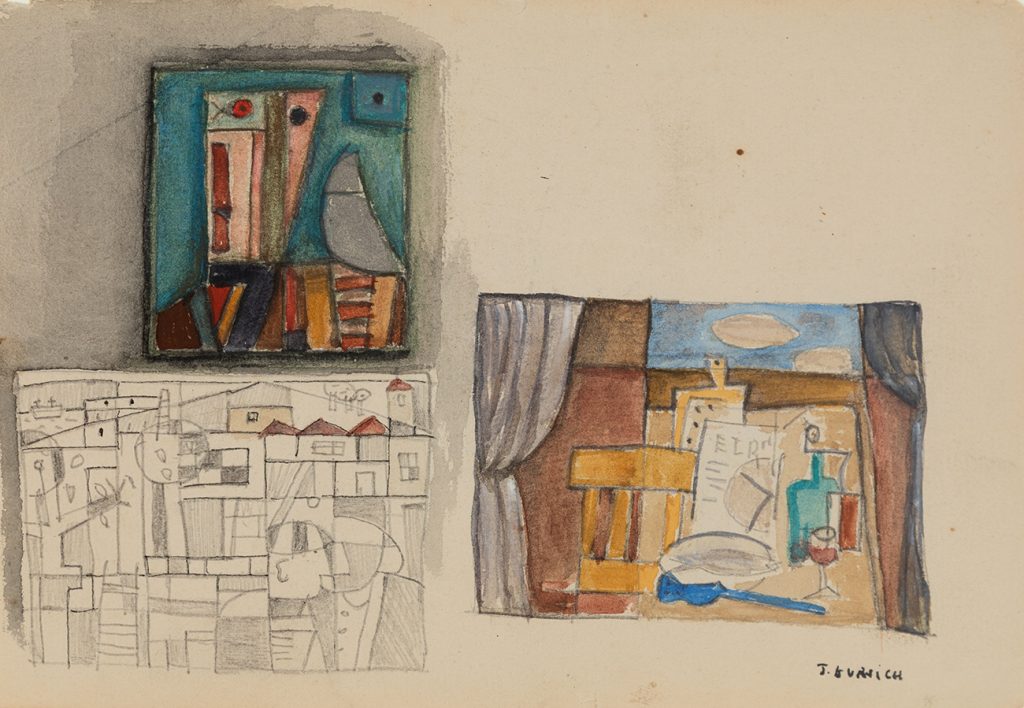
Thus, the inherited grid was transformed into a space of humanity, where order was opened to biography, migration and affective experience. One of his most relevant contributions was to expand Torresgarciano’s symbolism towards more specific identity territories. Faced with the master’s universal repertoire, José Gurvich integrated his Jewish heritage, the Diaspora and biblical spirituality, humanizing constructivism without breaking with it.
The grid ceased to be just a rational structure to become a living fabric of memory, tradition and spiritual quest. To this he added a greater chromatic warmth and narrative density, shifting Constructive Universalism from a primarily cosmological vision to a poetics of experience.
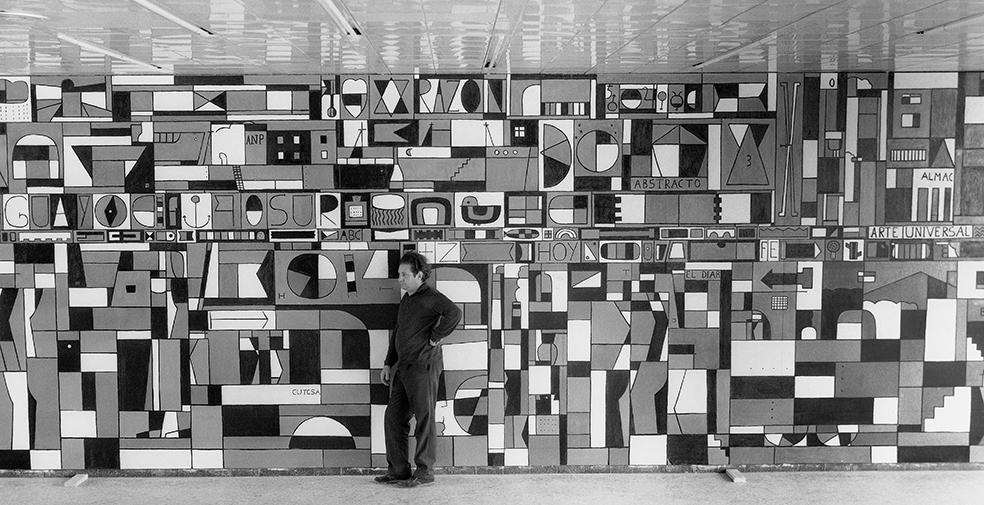
For this reason, the legacy of José Gurvich within the Torres García tradition is essential: he was not a mere continuator, but a renovator who demonstrated the elasticity and validity of Joaquín Torres García’s project. In José Gurvich, the master’s teaching is transformed into a language of its own; geometry becomes a story, the symbol becomes memory and universal order finds a profoundly human face.
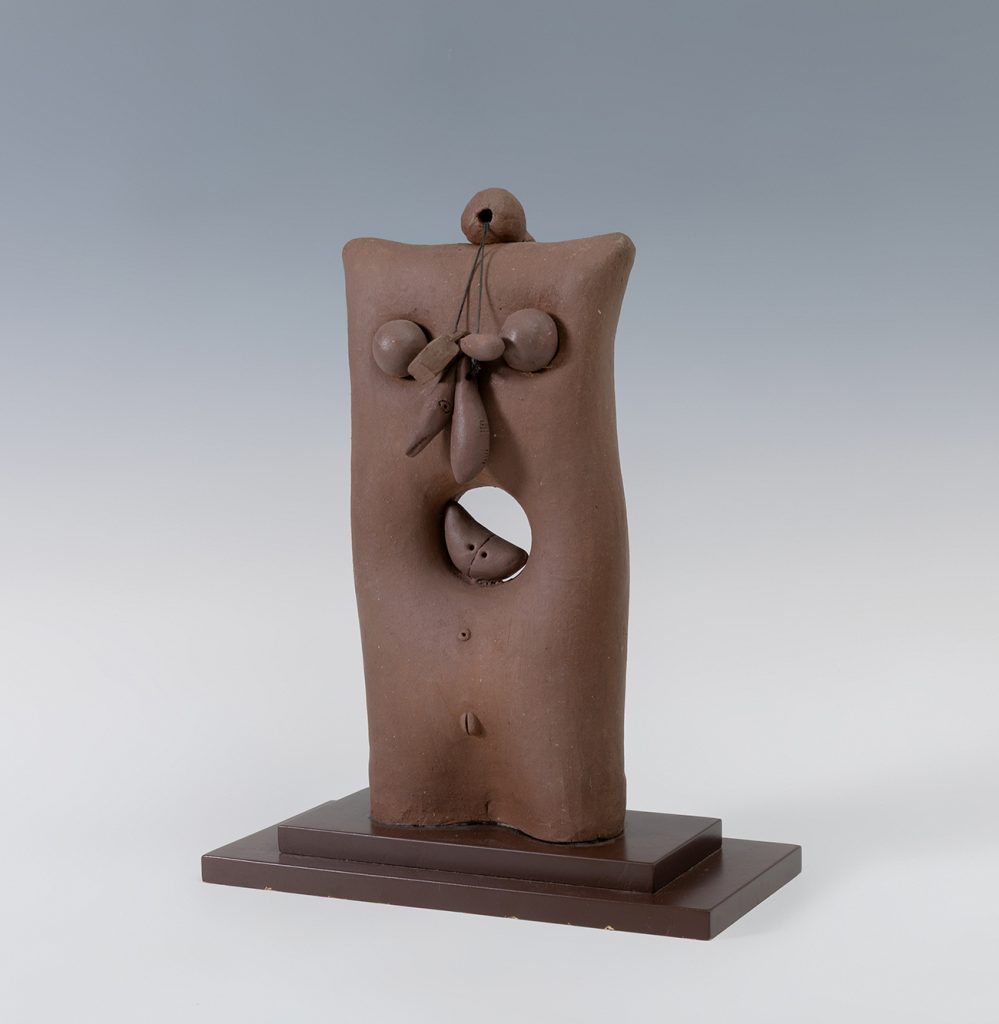
José Gurvich: an oeuvre between Montevideo, New York and Israel
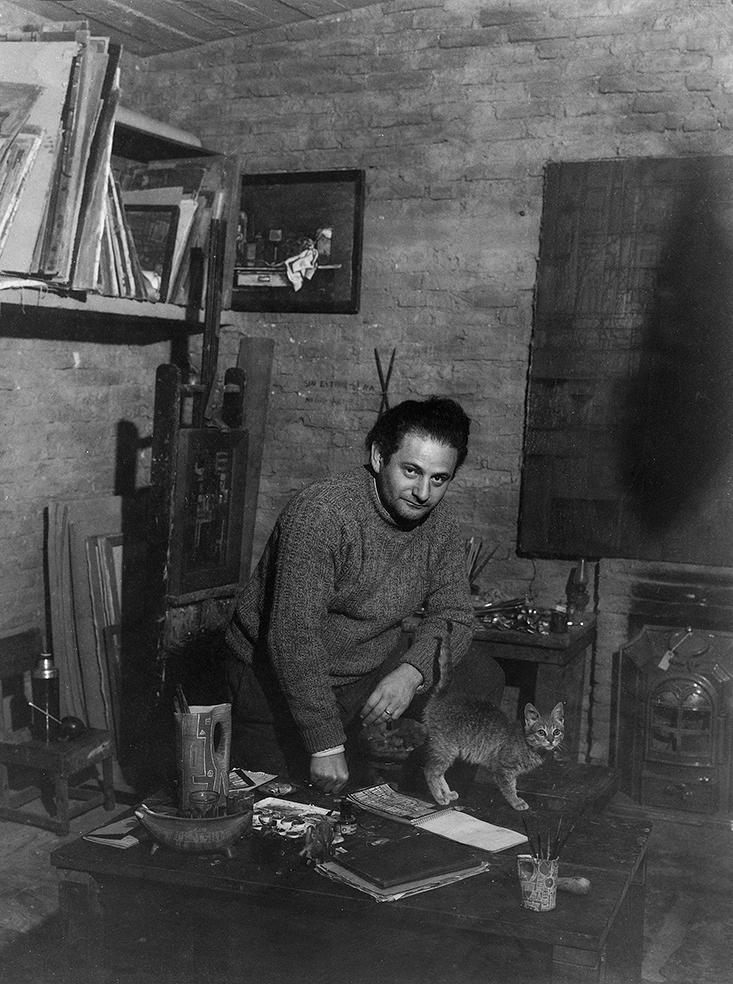
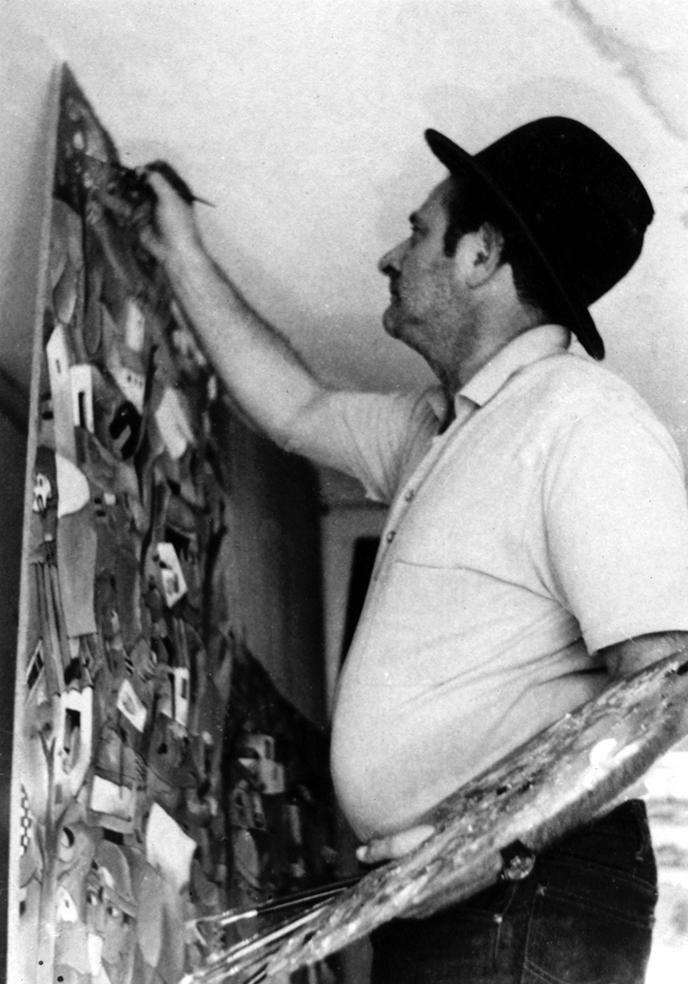
José Gurvich’s work was built through a life itinerary deeply marked by displacement and the crossing of cultures, between Montevideo, Israel and New York. Each of these geographies not only defined biographical stages, but also decisively broadened his aesthetic sensibility and his dialogue with different artistic currents, enriching his visual language with new symbolic dimensions.
His production thus incorporated increasingly complex reflections on diaspora, identity, belonging and the tensions of modernity: three fundamental scenarios in the configuration of his artistic identity.
Montevideo was the point of origin and formation, the place where José Gurvich’s language began to take shape under the decisive influence of the Taller Torres García, whose intellectual and aesthetic structure provided him with the foundations of Constructive Universalism.
In Israel, his encounter with his cultural and spiritual roots intensified the presence of elements linked to the Jewish tradition, giving José Gurvich’s work a renewed depth in terms of memory and transcendence.
New York, on the other hand, placed him in front of a dynamic, international and contemporary art scene, where he was able to expand his horizon without ever renouncing the conceptual structure of Constructive Universalism. Far from diluting his identity, these international experiences consolidated a body of work capable of integrating tradition, migration and modernity in a singular visual synthesis.
The importance of José Gurvich’s legacy
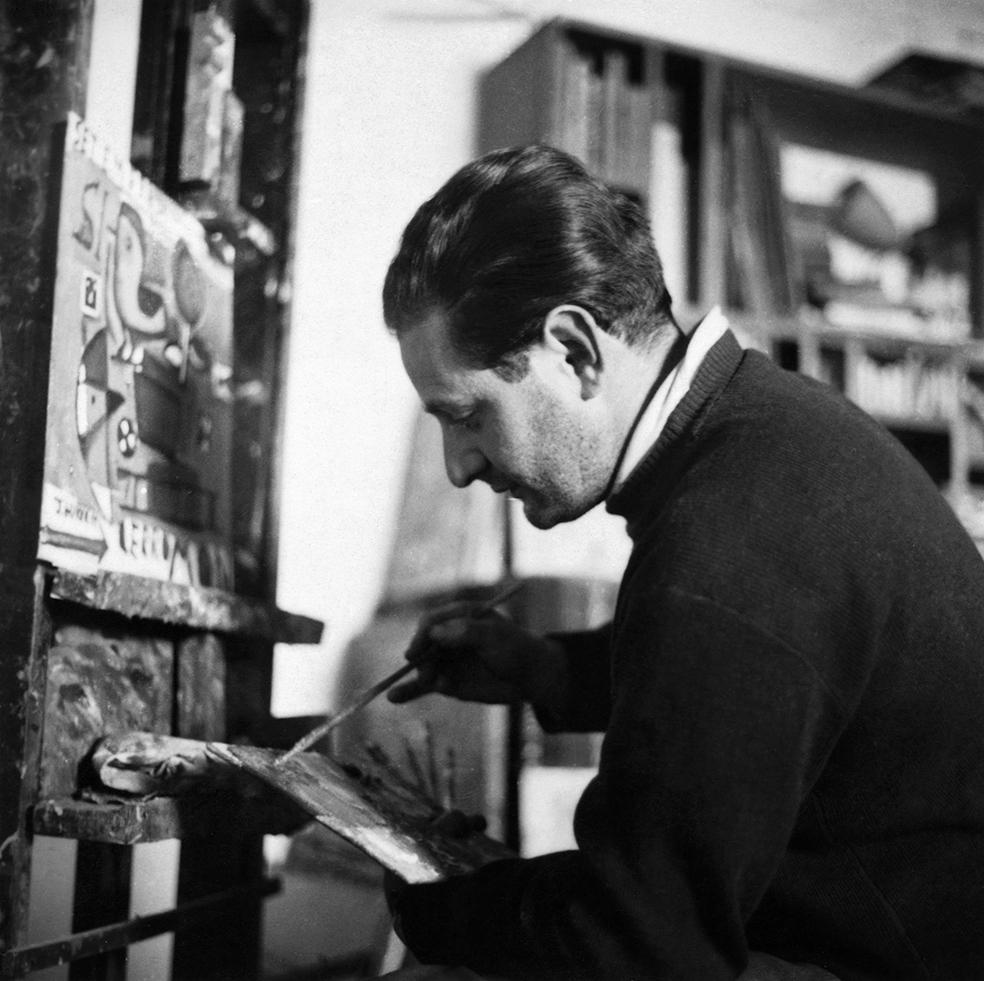
The relevance of José Gurvich’s legacy lies in the fact that he was one of the artists who most profoundly expanded Joaquín Torres García’s project without being subordinated to his influence. His work demonstrates that Constructive Universalism could transcend doctrine to become a deeply personal language, marked by the migrant experience, cultural memory and a notable emotional dimension.
His ability to connect tradition and modernity, geometry and narrative, structure and sensibility, consolidated a singular proposal within 20th century art. As a result, José Gurvich not only expanded the expressive possibilities of constructivism, but also contributed decisively to project Uruguayan art in a broader international context.
The relevance of José Gurvich resides, in short, in the fact that he was one of the artists who best managed to expand Torres García’s project without being subordinated to it. His work demonstrates that Constructive Universalism could also be deeply personal, migrant and emotional.
Do you own works by José Gurvich or another contemporary artist and are you considering selling them? At Setdart, you can request a free and confidential valuation, and our team of Contemporary Art specialists will get in touch with you.
If you liked this article you may also be interested in: