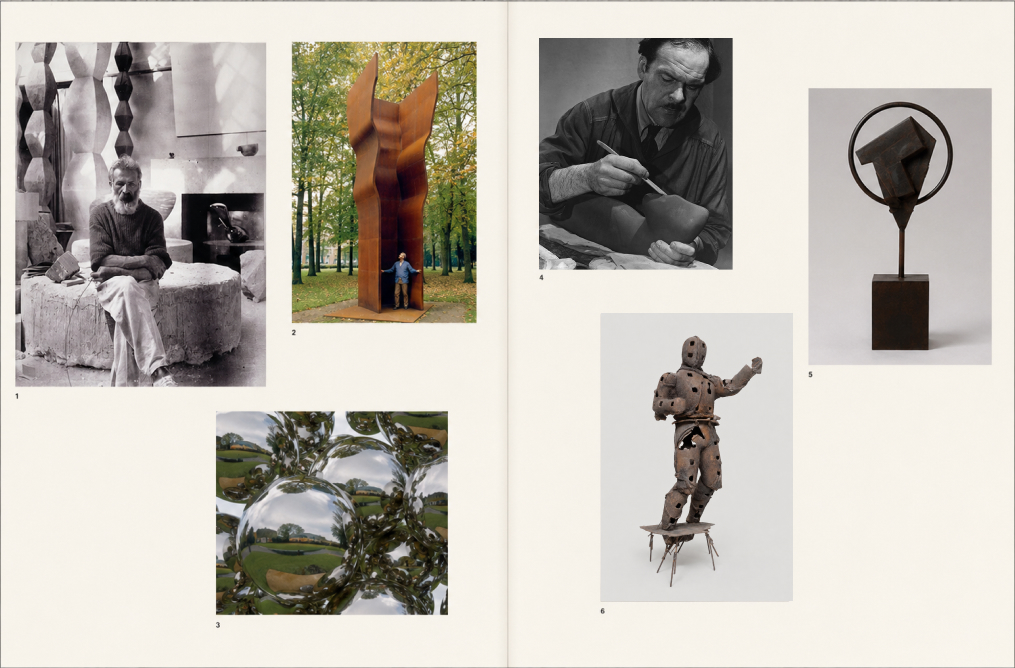
The history of sculpture can be seen as a succession of profound transformations. From classical ideals to the experimental practices of the 21st century, each era has redefined what it means to construct a form in space. However, few disciplines have undergone such a radical expansion as contemporary sculpture, which has transcended the limits of volume to become an experience, material research, and critical reflection.
Today, discussing contemporary sculpture means discussing processes, contexts, memory, and new ways of inhabiting space. A work of art is no longer limited to simply occupying a place: it establishes a dialogue with the viewer, with the environment that hosts it, and with the questions that define our time. Understanding this evolution of sculpture requires more than just knowing about artistic movements or recognizing key figures. It involves developing a perspective capable of interpreting how materials, space, and ideas have expanded the language of sculpture, transforming it into one of the most fertile realms of contemporary art.
1. Contemporary Sculpture: Form Ceases to Be an End in Itself and Becomes a Language
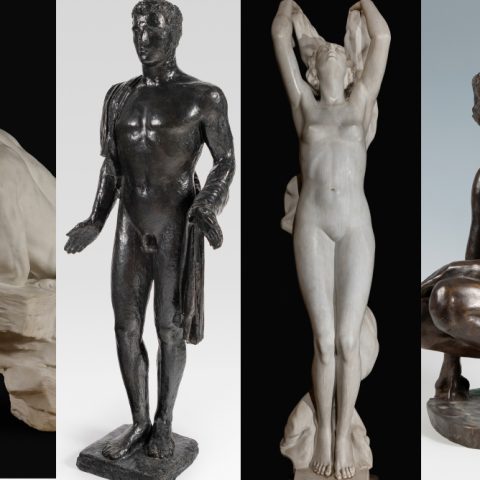
For centuries, sculpture was linked to representation and technical mastery of marble, stone, or bronze, with formal precision being its primary value. Contemporary sculpture breaks with this model: form is no longer an end in itself but rather a means of expressing ideas, processes, or critical stances.
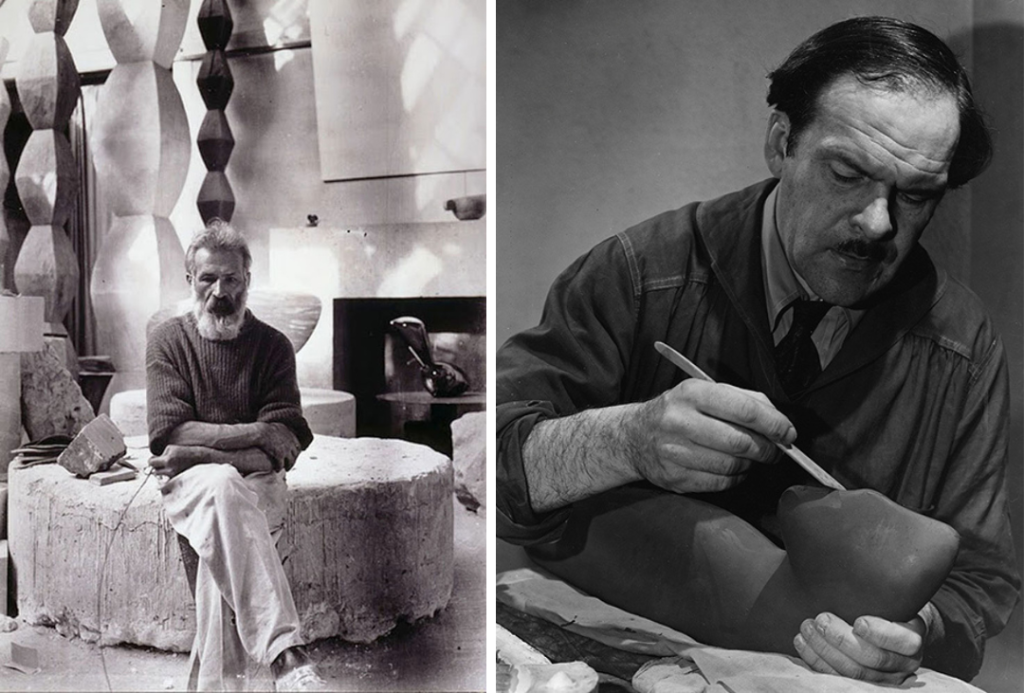
A work of art can be abstract or fragmentary without losing its expressive power. What matters is no longer what it represents, but rather the relationships it establishes with space, the viewer, and its context. This shift became evident in the avant-garde movements of the 20th century. Constantin Brancusi reduced form to its essence, seeking purity and synthesis. Alexander Archipenko, drawing on Cubism, reimagined the human figure through geometric planes, demonstrating that sculpture can think for itself without imitating reality.
Contemporary sculpture thus draws closer to thought: each volume and each void functions as part of a language open to interpretation.
2. Materials speak for themselves
One of the most obvious features of the evolution of contemporary sculpture is the almost limitless expansion of its material vocabulary.
While marble, wood, and bronze dominated Western tradition for centuries, contemporary art has incorporated steel, concrete, glass, resins, ceramics, textiles, recycled materials, organic elements, and even digital technologies and 3D printing. This diversity is not merely a technical matter, but reflects a deeper transformation of the language of sculpture itself.
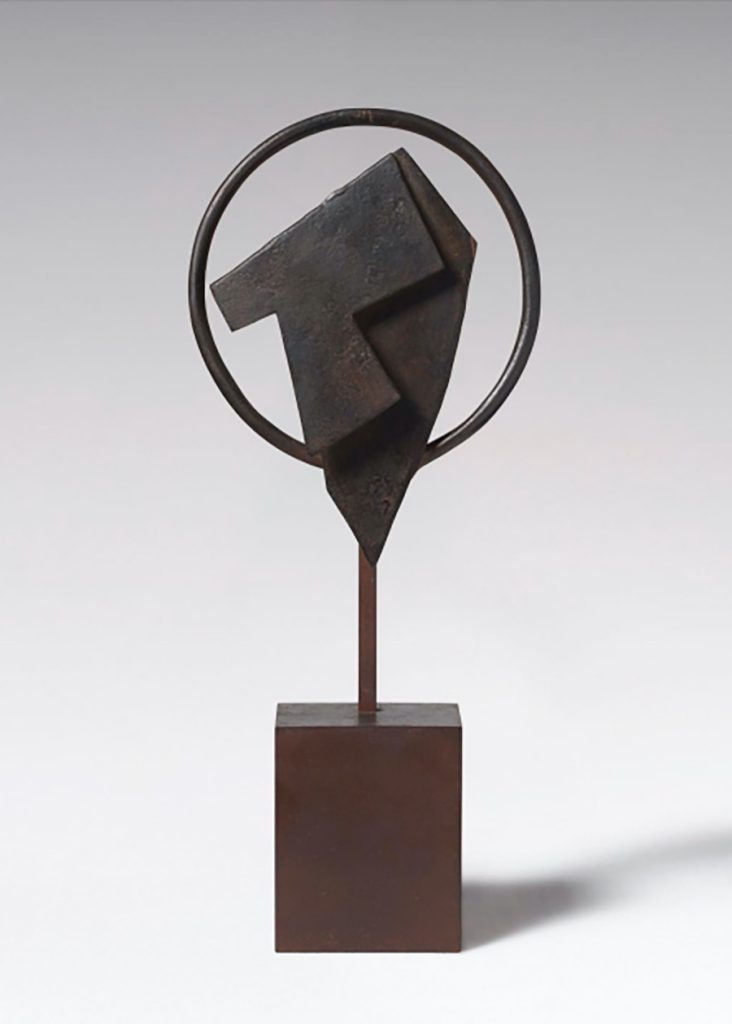
One of the major driving forces behind this change was Julio González, a pioneer in the use of welded iron as a means of expression. He transformed an industrial material into an artistic language, paving the way for contemporary sculpture constructed as an open structure. Pablo Gargallo also explored metal through cut-out sheets and voids that redefined the perception of volume.
Each material carries its own symbolic meaning, memory, and narrative potential. In contemporary sculpture, the material ceases to be merely a medium and becomes content in its own right. The choice of material is an inseparable part of the work’s meaning.
3. The space ceases to be a stage and becomes part of the play
Perhaps one of the most significant changes is the new relationship between contemporary sculpture and space. Traditionally, the environment was viewed as a mere container in which to place a finished piece. Contemporary art, on the other hand, views space as an active component of the creative process. Scale, light, architecture, shadows, the visitor’s path, and even the landscape not only influence the artwork but also play a direct role in its meaning.
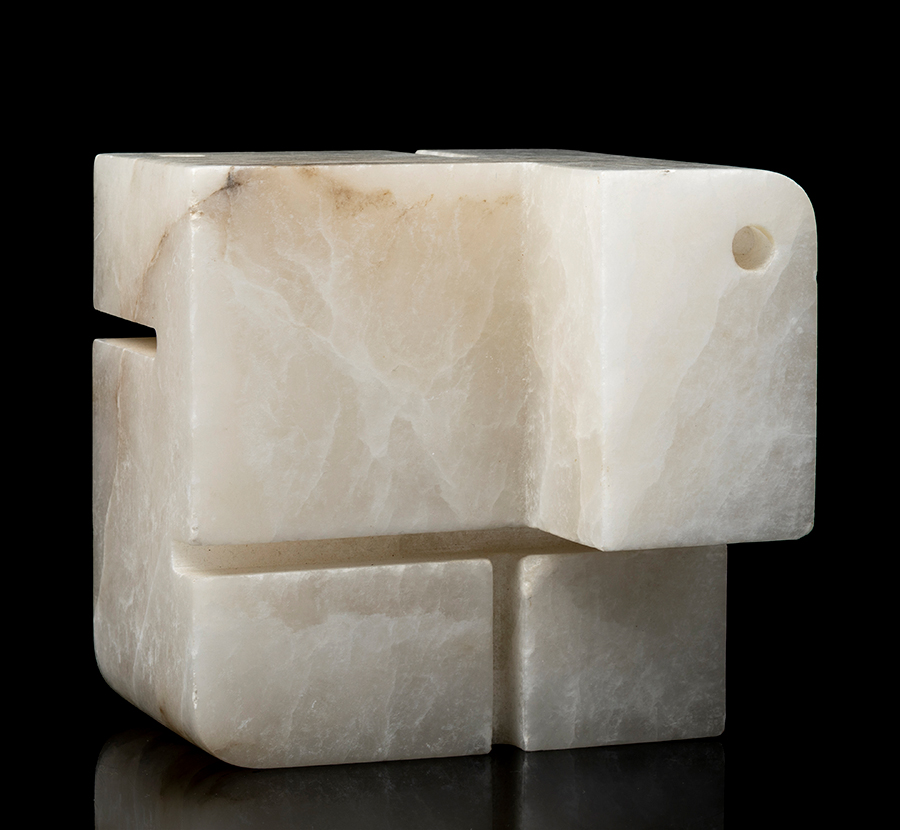
Few artists explored this idea as deeply as Jorge Oteiza and Eduardo Chillida. In Oteiza’s work, emptiness takes center stage: sculpture is understood as a clearing of space, as an operation on the invisible. Chillida, for his part, creates works that engage in a dialogue with architecture, landscape, and light, integrating the surroundings as an essential part of the piece.
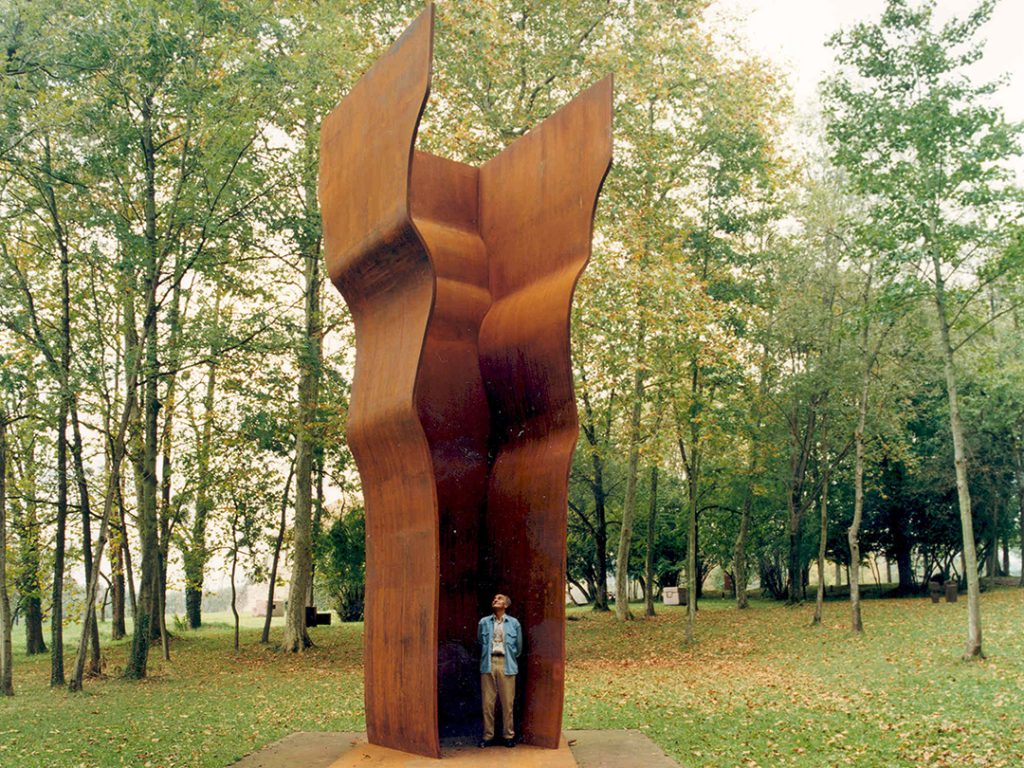
This concept takes on an even more radical dimension in the work of Richard Serra. His monumental Corten steel structures are not viewed from a single vantage point: visitors walk through them, traverse them, and transform their perception of space as their bodies move.
Rather than simply occupying a space, contemporary sculpture redefines it, brings it to life, and transforms it into an experience.
4. The viewer stops simply observing and begins to experience
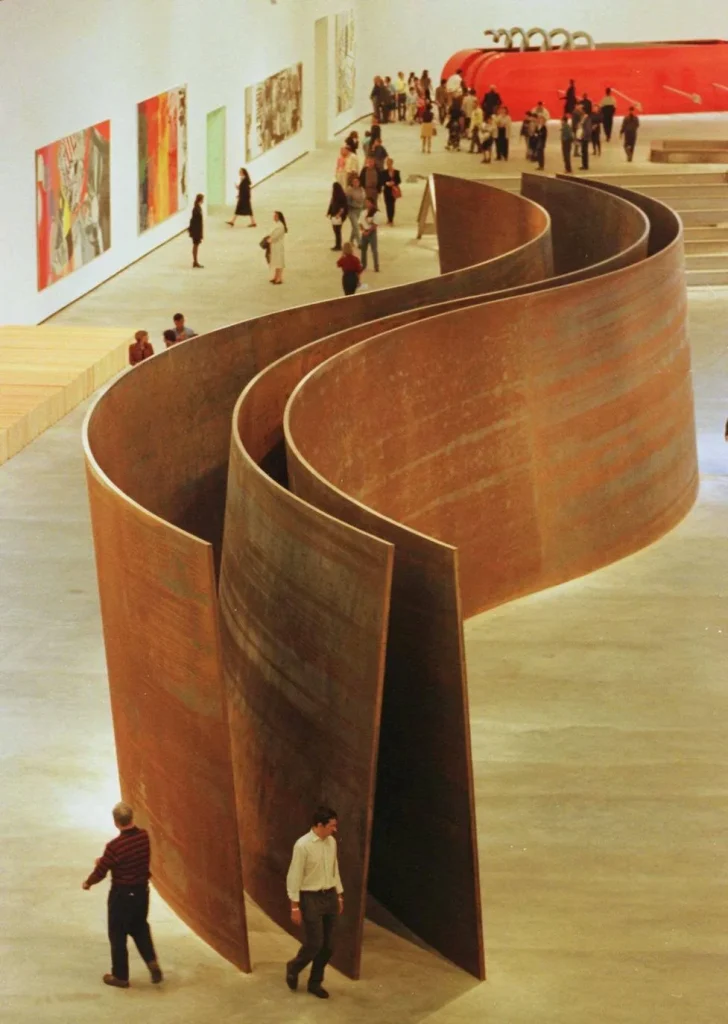
The relationship between the artwork and the viewer has undergone a decisive transformation. In contrast to the contemplative distance typical of the traditional museum, many contemporary sculpture installations invite visitors to move around, shift their perspective, or even become part of the experience. Sculpture is no longer merely viewed; it is discovered by walking through it, circling it, moving through its spaces, or experiencing how light, sound, and movement continually transform one’s perception.
The aforementioned Eduardo Chillida and Richard Serra are examples of this transformation, as they make the space and the viewer’s path an essential part of the work, integrating the physical experience as an inseparable component of the language of sculpture.
Similarly, Jorge Oteiza’s work proposes an understanding of emptiness as an active experience that reveals itself from multiple perspectives. Along these same lines, Jesús Rafael Soto introduces a kinetic and optical dimension in which the artwork is activated by the viewer’s movement, making perception an unstable and participatory phenomenon.
5. Contemporary sculpture engages with the major challenges of the present
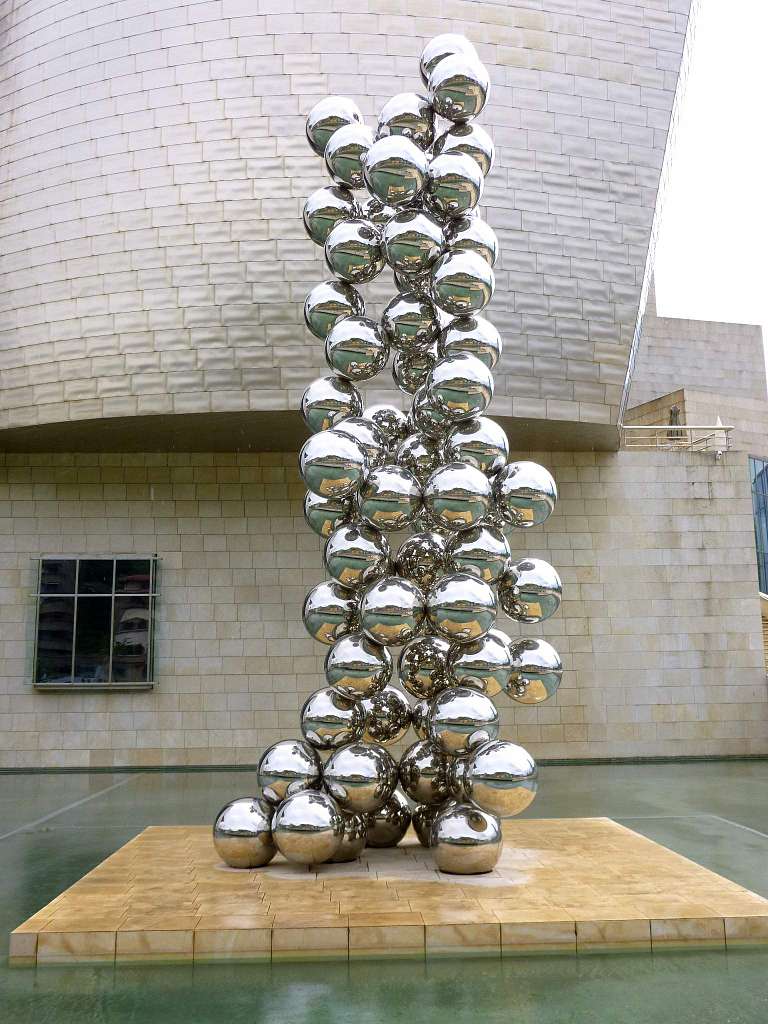
Every artistic practice is also a way of interpreting its time. Social, political, environmental, and technological concerns permeate much of today’s sculptural work.
This commitment was already present in the avant-garde movements, but contemporary sculpture expands that critical dimension. Artists such as Anish Kapoor explore emptiness, perception, and matter as sensory experiences; Antony Gormley investigates the relationship between the body and space through human presence; and Olafur Eliasson incorporates natural phenomena and environmental installations to reflect on climate change and our relationship with the environment.
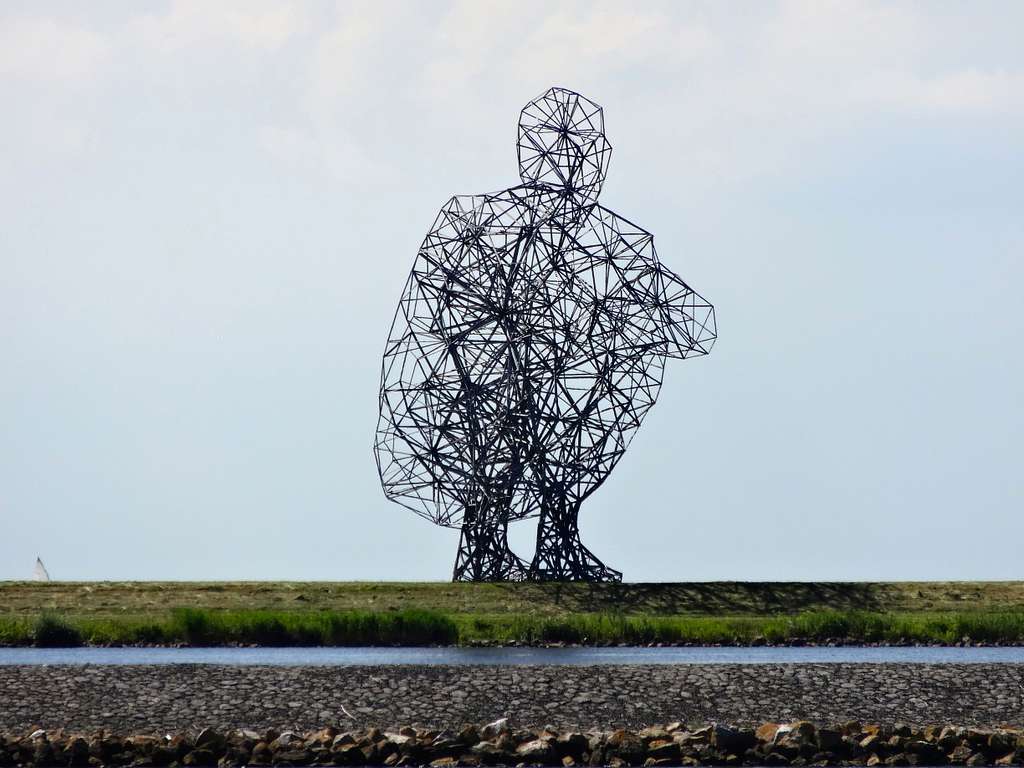
The evolution of sculpture shows that this discipline is no longer understood solely as an object to be contemplated. Today, contemporary sculpture is a space for experimentation where materials, ideas, and experiences interact to offer new ways of understanding the world we inhabit.
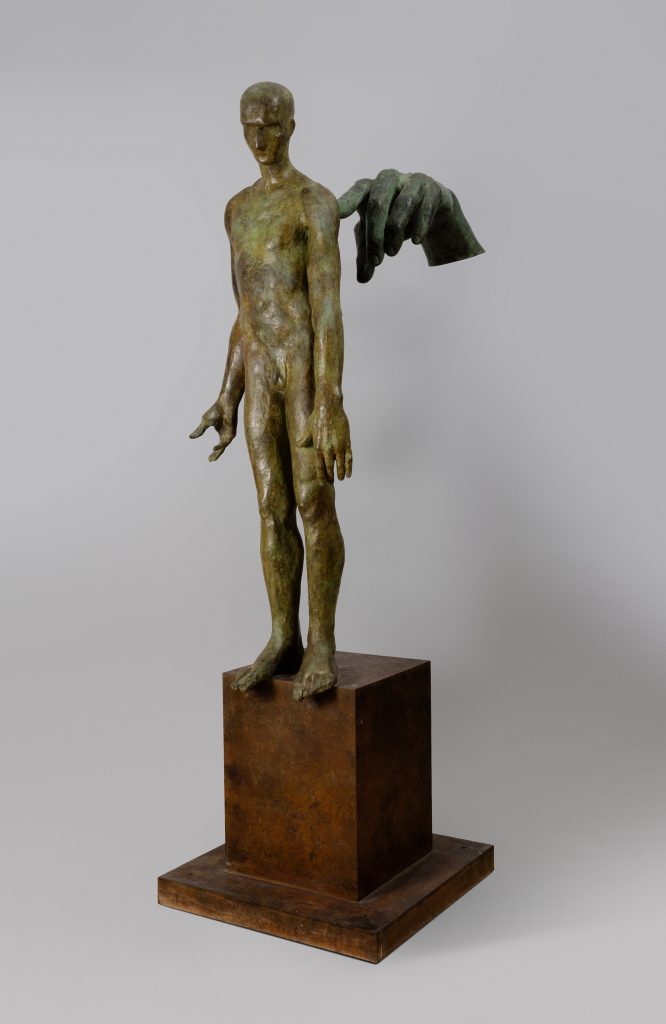
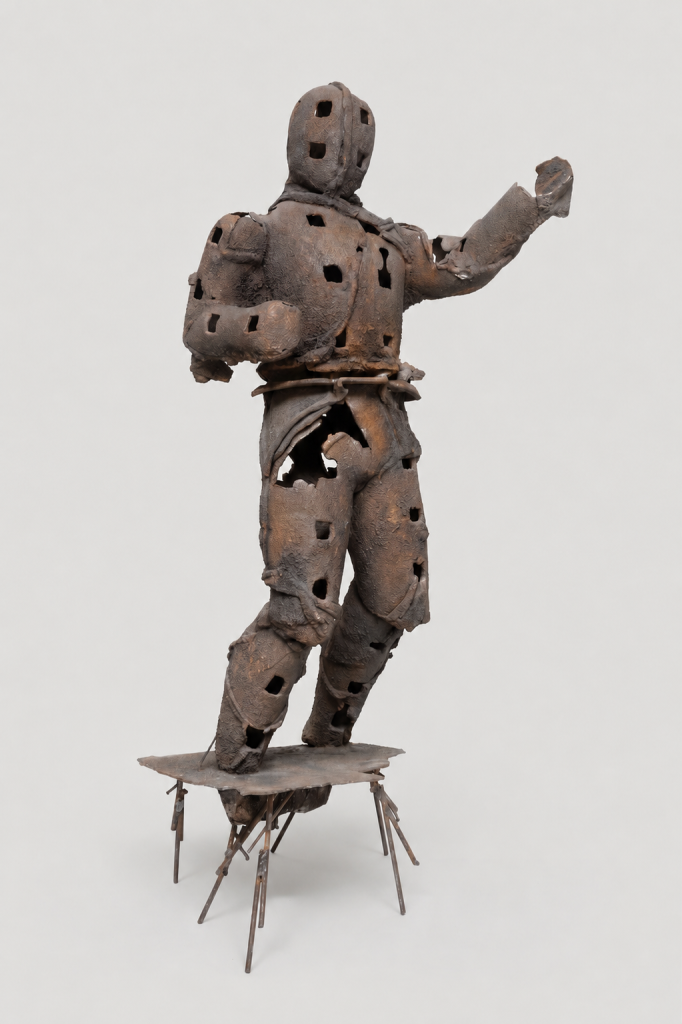
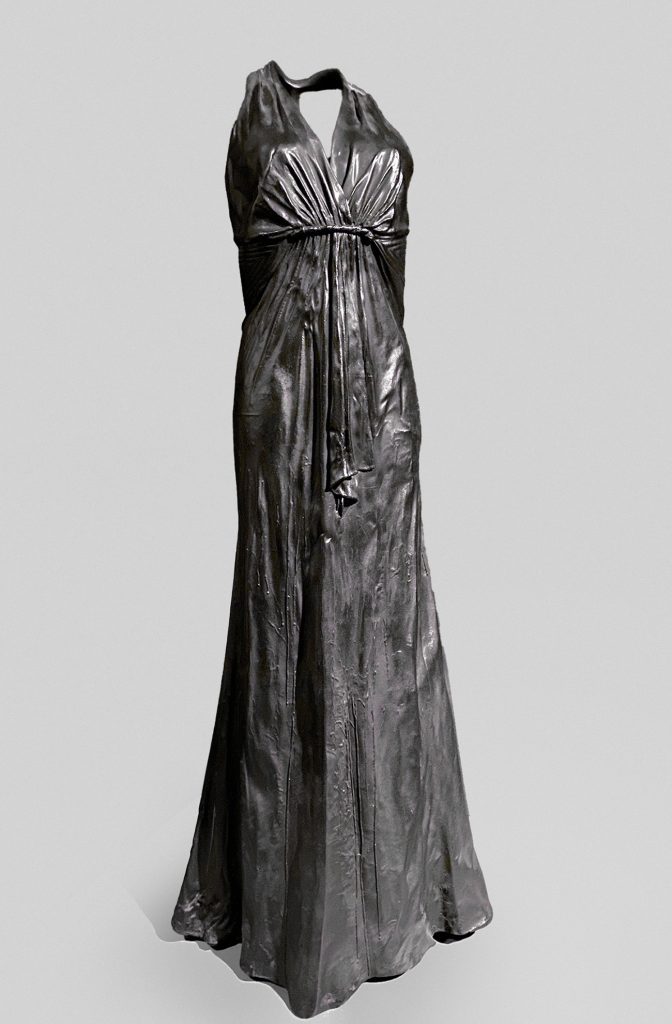
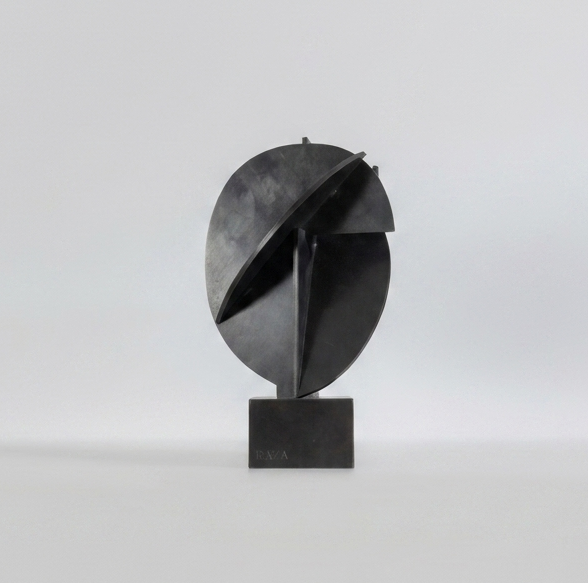
We invite you to discover our upcoming Contemporary Art and Latest Trends auction. An opportunity to experience contemporary sculpture through some outstanding figures.
If you liked this article, you may also be interested in: