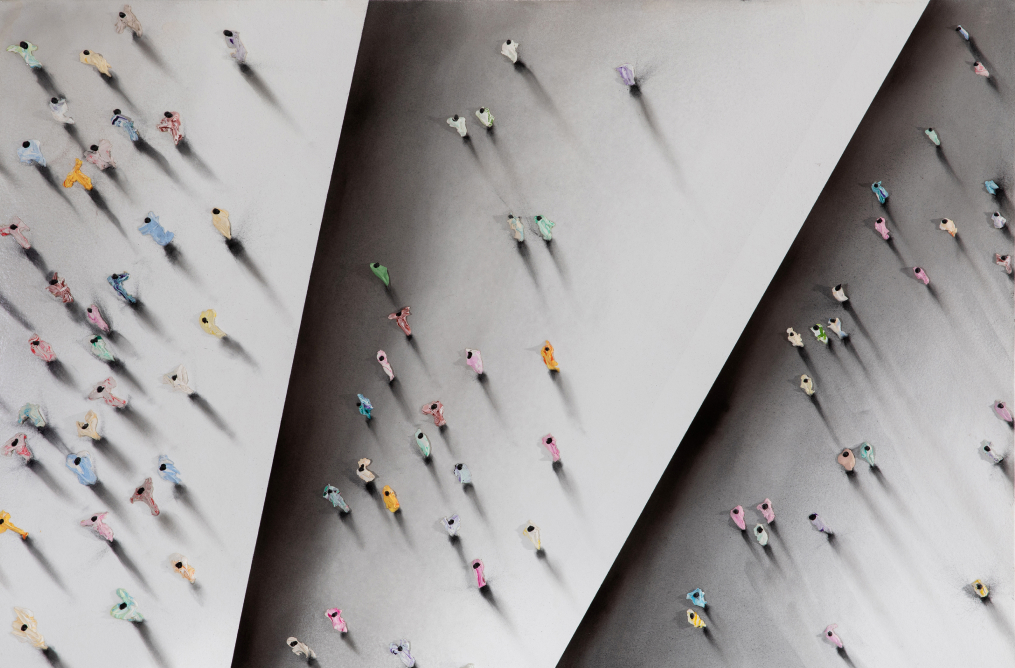
Within contemporary art, Juan Genovés occupies a unique position for the solidity with which he unites formal innovation, political commitment and institutional recognition. His work, which has become one of the most recognizable in the Spanish art scene of the 20th century, not only redefined the representation of the human figure and the crowd, but also consolidated a visual language capable of connecting historical memory, social criticism and the international market.
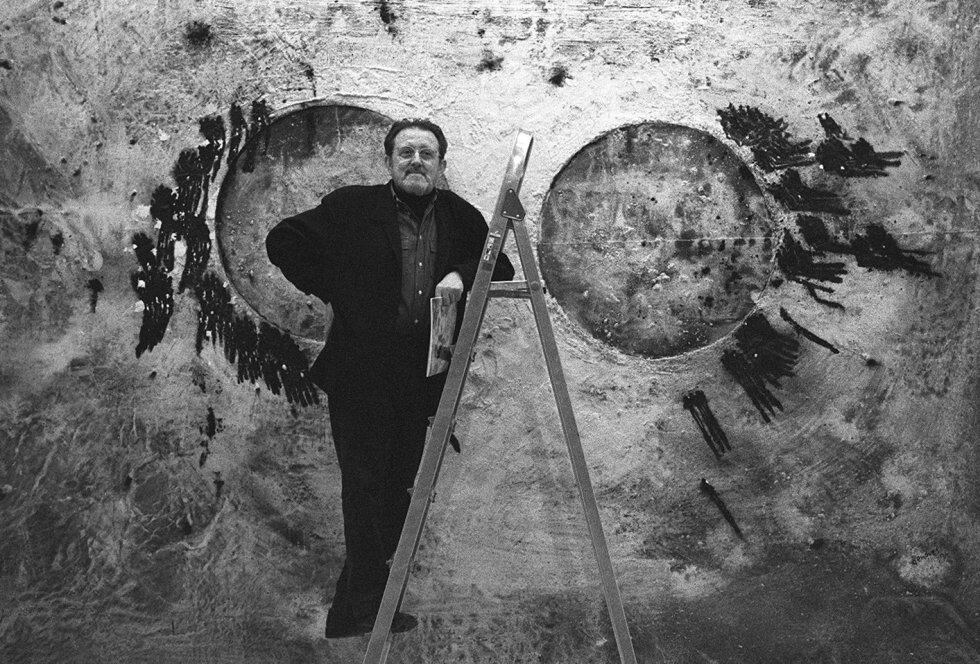
The beginnings of Juan Genovés: formation and post-war context
Born in Valencia in 1930, Juan Genovés grew up in a Spain deeply marked by the Civil War and Franco’s dictatorship, a context that decisively conditioned his vision of the individual in the face of power. Trained at the San Carlos School of Fine Arts, his early years were linked to traditional academic teaching, although he soon turned towards a search for aesthetic renewal.
During the 1950s and 1960s, his participation in collectives such as Los Siete and later Hondo was fundamental. These groups represented a break with the dominant artistic conservatism and placed Juan Genovés within the efforts to modernize the Spanish plastic language. During this period he experimented with different avant-garde currents, moving from more expressionist approaches to his own visual formulation.
The consolidation of an unmistakable language in the work of Juan Genovés.
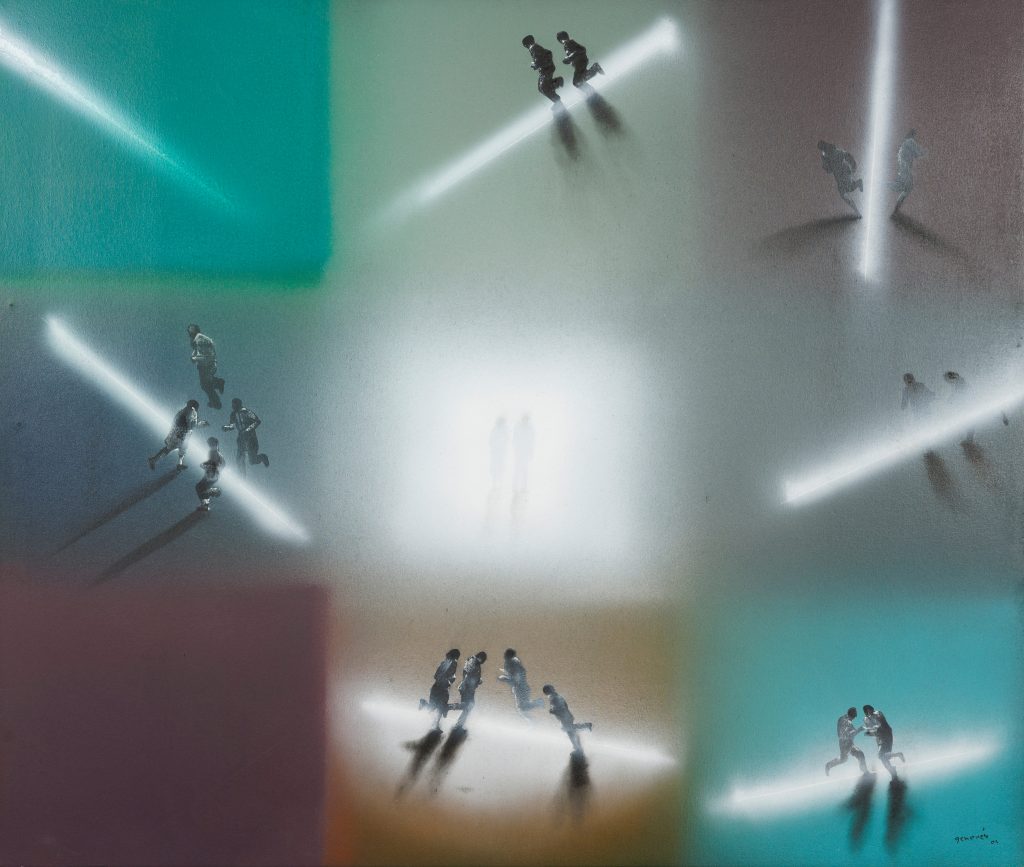
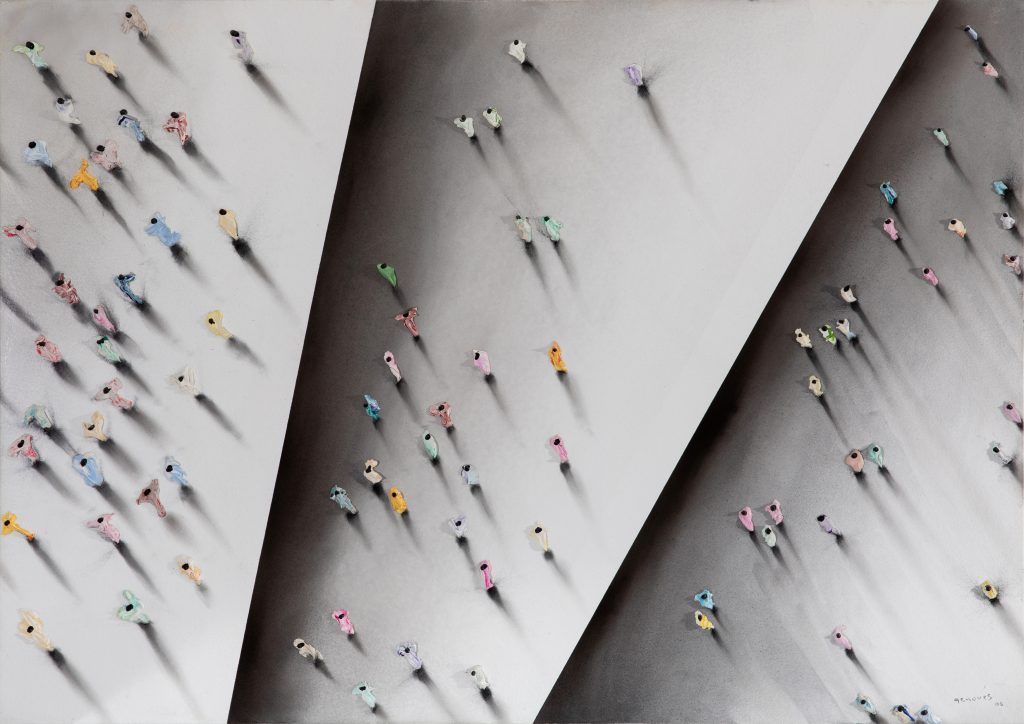
From the sixties onwards, the great turning point of his career took place: Juan Genovés developed compositions of crowds, escapes, concentrations and isolated figures observed from elevated perspectives. This visual resource radically transformed his production and made him an immediately identifiable artist.
Far from being a simple formal finding, these images functioned as metaphors for repression, structural violence, surveillance and the fragility of the individual within oppressive political systems. The crowd in the work of Juan Genovés is mass, but also psychological tension; anonymity, but also resistance.
This period marks his international consolidation by placing Juan Genovés’ work in dialogue with universal debates on freedom, control and the human condition, transcending the Spanish context.
Political commitment and “El Abrazo” (The Embrace)
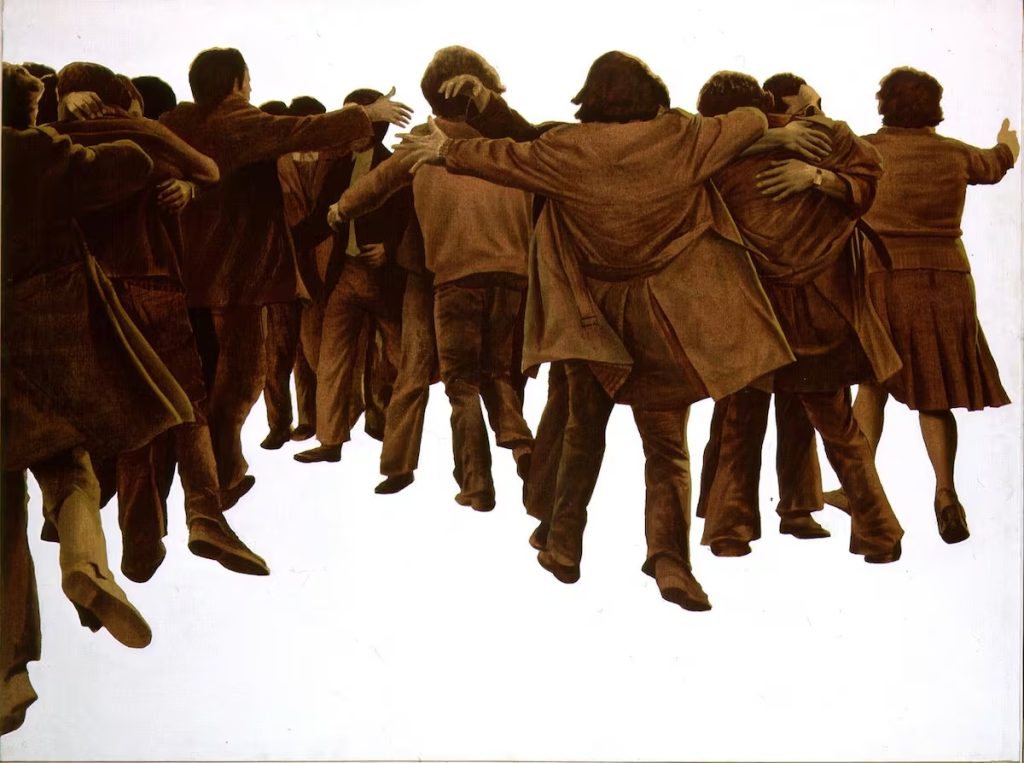
The political dimension of Juan Genovés’ work reached one of its most emblematic moments with El Abrazo ( 1976), an image that became a symbol of reconciliation and democracy during the Spanish Transition. This work reinforced its public dimension and made Juan Genovés an essential figure not only from an artistic point of view, but also within the democratic memory of the country.
His ability to synthesize history and collective emotion consolidated an exceptional critical reception, making him one of the most representative artists of the second half of the 20th century in Spain and of contemporary European art.
Institutional prestige and international recognition
One of the main pillars of Juan Genovés’ relevance lies in his strong institutional legitimacy. His work is part of important public and private collections, has starred in retrospective exhibitions and maintains a constant presence in the historiographic discourse of Spanish contemporary art.
This recognition is based on several factors:
- Recognizable visual innovation
- Historical value linked to Spanish political memory
- Museum presence and institutional collecting
- Sustained international projection
For the art market, this combination is especially valuable, as institutional stability tends to reinforce the confidence of collectors, investors and auction houses. For this reason, Juan Genovés at auction continues to arouse considerable interest both nationally and internationally.
Everything you need to know if you want to buy a work by Juan Genovés
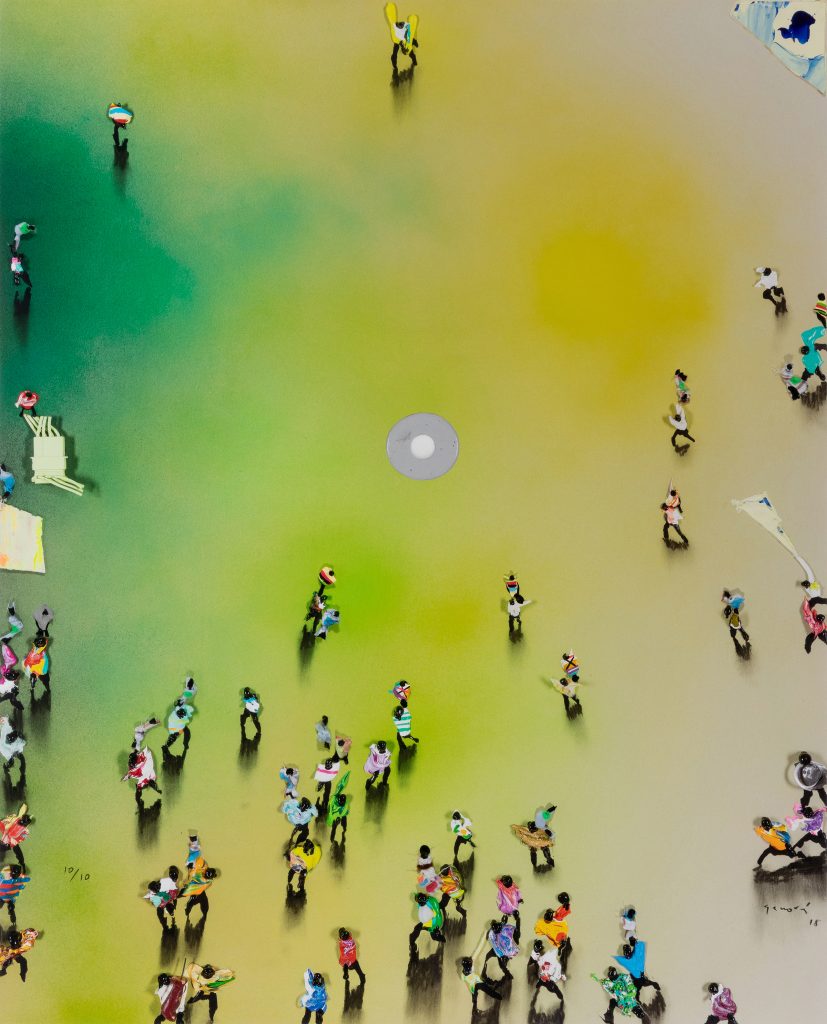
The demand for Juan Genovés in the secondary market remains strong thanks to the convergence of aesthetic strength, historical relevance and international recognition.
Collectors usually show special interest in:
- Works from the 1960s and 1970s
- Crowd-focused series
- Pieces with political content
- Large formats
- Works with documented provenance
In addition, Juan Genovés at auction represents an especially attractive opportunity for those seeking artists with strong institutional legitimacy and easily recognizable iconography. His visual language has a key advantage: it is immediate and conceptually powerful, two qualities especially valued in the contemporary art market.
Few Spanish artists have managed to maintain with such consistency critical validity, historical relevance and commercial strength. Juan Genovés belongs to a generation that transformed Spanish art, but his case stands out for having built a body of work that continues to dialogue with the present.
The legacy of Juan Genovés is strengthened through academic studies, exhibitions, collecting and a growing contextualization of his role in European cultural history. Today, the work of Juan Genovés continues to be an essential reference for understanding the evolution of Spanish contemporary art and its international projection.
Do you own works by Juan Genovés and are you considering selling them? At Setdart, you can request a free and confidential valuation, and our team of Contemporary Art specialists will get in touch with you.
If you liked this article, you may also be interested in: